

42 articles
Back in the 1700s and 1800s, Cornwall was the epicentre for global copper and tin production and was buzzing with mining activity! Cornish tin helped make super-useful bronze. Rich tin deposits from hard rock made Cornwall a powerhouse in the global tin mining industry, and its tin helped power the British Empire. People used it to make tools, weapons and ships all across the British Empire.
But it was not just the metal—Cornish mining technology revolutionised global mining. Smelting and steam technology spread worldwide. Renowned local legend, Richard Trevithick, came up with clever steam engines. People used them everywhere. Even in Mexico and Australia! Shaping mining districts on a global scale. When tin prices declined, Cornwall exported skills and technology to new countries. Entire mining towns in places like South Africa and Peru were shaped by Cornish know-how and even fuelled by Cornish pasties!
Ever wondered why some distant mining towns have Cornish names, accents, or chapels? This is the Cornish legacy in action. Tin shaped communities, powered global trade and left a mark that you can still walk through today.
How Old is Cornwall’s Tin Story?
For millenia, tin shaped everyday life in Cornwall. It built towns. It built trade. It cemented pride. Huge mines like South Crofty and Geevor were the engine rooms to her production. From the Bronze Age to steam engines, Cornwall kept the world moving. And the world noticed. Today, remnants of this powerful legacy still dot the landscape, offering curious travellers and future locals a chance to step into the boots of miners’ past. So, how did tin shape Cornwall—and what is left to explore?
c. 2,150 BC – Early Bronze Age: Cornwall’s Tin Story Begin
Tin mining in Cornwall started more than 4,000 years ago. Back then people used to collect tin straight from stream beds. They called it streaming. Pretty clever right? Tin was a big deal. People mixed it with copper to make bronze. That is what they used to make tools weapons and cool-looking ornaments. Cornwall had exhaustive underground tin reserved. This provided a natural advantage in making it one of the first places in Europe from where it was extracted and sold.
c. 1000 BC – Early International Trade: Phoenicians, Maybe?
We cannot say for sure, but it looks like Phoenician traders might have sailed from the Mediterranean to the southwest of Britain to get tin. That is how the old legend of the “Tin Isles” began—with faraway lands, long sea trips, and lots of mystery. Whether or not they were truly Phoenician, it is clear that Cornwall had international interest in its resources even in ancient times. International trade in Cornish tin began, likely reaching regions like what is now known as Myanmar.
c. 450 BC – Classical Mentions: Tin on the Global Map
Greek historians like Herodotus and Diodorus Siculus mentioned Britain as a major tin source, referring to the “Cassiterites” (believed to be Cornwall and surrounding areas). This made tin Cornwall’s first truly global export — well before pasties or cream teas hit the scene.
1st – 4th Century AD – Roman Britain: Local Control, Global Demand
The Romans knew all about Cornwall’s tin. But interestingly, they did not heavily develop the mines themselves. Instead, they allowed local Britons to keep extracting tin. Roman roads and trading systems helped distribute the tin across the empire, but Cornwall kept its autonomy over its tin industry during this time.
12th – 13th Century – Medieval Boom: Enter the Stannaries
By the Middle Ages, tin had become economically critical to the English crown. In 1305, King Edward I formally recognised this by granting Stannary Charters, legal rights allowing tin miners to govern themselves. They could form Stannary Parliaments and operate their own courts. Towns like Launceston, Lostwithiel, and Truro became central to the booming trade.
18th Century – Industrial Revolution: Going Deep
This was the time people stopped panning in rivers and started digging deep into the ground for tin. When Richard Trevithick built his steam engine, it changed everything. Miners could finally pump out water and dig way deeper. Mines like Dolcoath (once dubbed “the Queen of Cornish Mines”) became global industrial giants.
1830s – Peak Production: Cornwall Leads the World
By the 1830s, Cornwall was producing half of the world’s tin. The county became a mining superpower, and tin (alongside copper) drove the local economy. Towns like Redruth, Camborne, and St. Just boomed. Many local families owed their livelihoods to the mines, with multi-generational careers underground. Output reached tens of thousands of tonnes annually.
1860s–1890s – Overseas Competition and Decline
New tin sources were discovered in Malaysia, Indonesia, and Bolivia — and they were far cheaper to operate. Cornish tin suddenly struggled on the global market. After that, increasing numbers of Cornish miners sought to pursue increasing overseas prosperity in Thailand, Australia, South Africa and America to find work in new mines. You can still see the Cornish touch in mining towns across the world today.
Early 19th Century – Slow Decline
With prices low and mining costs high, Cornwall’s tin industry started fading. However, a few large-scale mines like Geevor, Wheal Jane, and South Crofty soldiered on. The industry still provided vital employment, but the golden age was well and truly over.
1939–1945 – WWII Revival
World War II created a temporary revival, with global demand for tin rising again. Some Cornish mines reopened, but it was a short-lived comeback. The 1950s and 60s brought further closures, despite a few technological upgrades.
1985 – Global Tin Market Collapse
The collapse of the International Tin Agreement in 1985 led to a global price crash. Cornwall’s tin mining areas fell silent. With prices in freefall, almost all Cornish tin mines were forced to shut their doors. This event spelled the near-complete end of the industry. The 1985 collapse became a turning point. It sparked debates about how dependent Cornwall was on traditional industries. In the years that followed, there was a shift toward tourism, heritage preservation, and more recently, the exploration of lithium and tech metals, possibly bringing mining back to Cornwall—but in a very different form.
1998 – South Crofty Closes: End of an Era
After 400 years in operation, South Crofty closed its doors in 1998. It was Cornwall’s last working tin mine and its signalled the end of an era. For the first time in millennia, Cornwall was no longer producing tin — but the heritage lives on through tourism and preservation.
20th Century-2000s–Today – The Comeback Trail
Cornwall is back in the spotlight. With tin now in demand for electronics and green energy (like batteries and solar panels), there’s renewed interest in restarting mining operations. Companies like Cornish Metals Ltd. are working to reopen South Crofty Mine using sustainable methods, with modern processing plants and potential on-site smelters. If successful, Cornwall could once again be a major tin producer. The latest news suggests that rising global demand, especially for solder used in circuit boards, could make Cornish tin a hot commodity again.
Where Can You See the Legacy Today?
Cornwall’s tin mining sites aren’t just for historians. Today, you can still visit these old mines. They are full of cool stories, hands-on stuff and secret tunnels to explore.
- At Geevor Tin Mine near Pendeen, you can walk through the real tunnels and check out the massive machines they used right up until 1990.
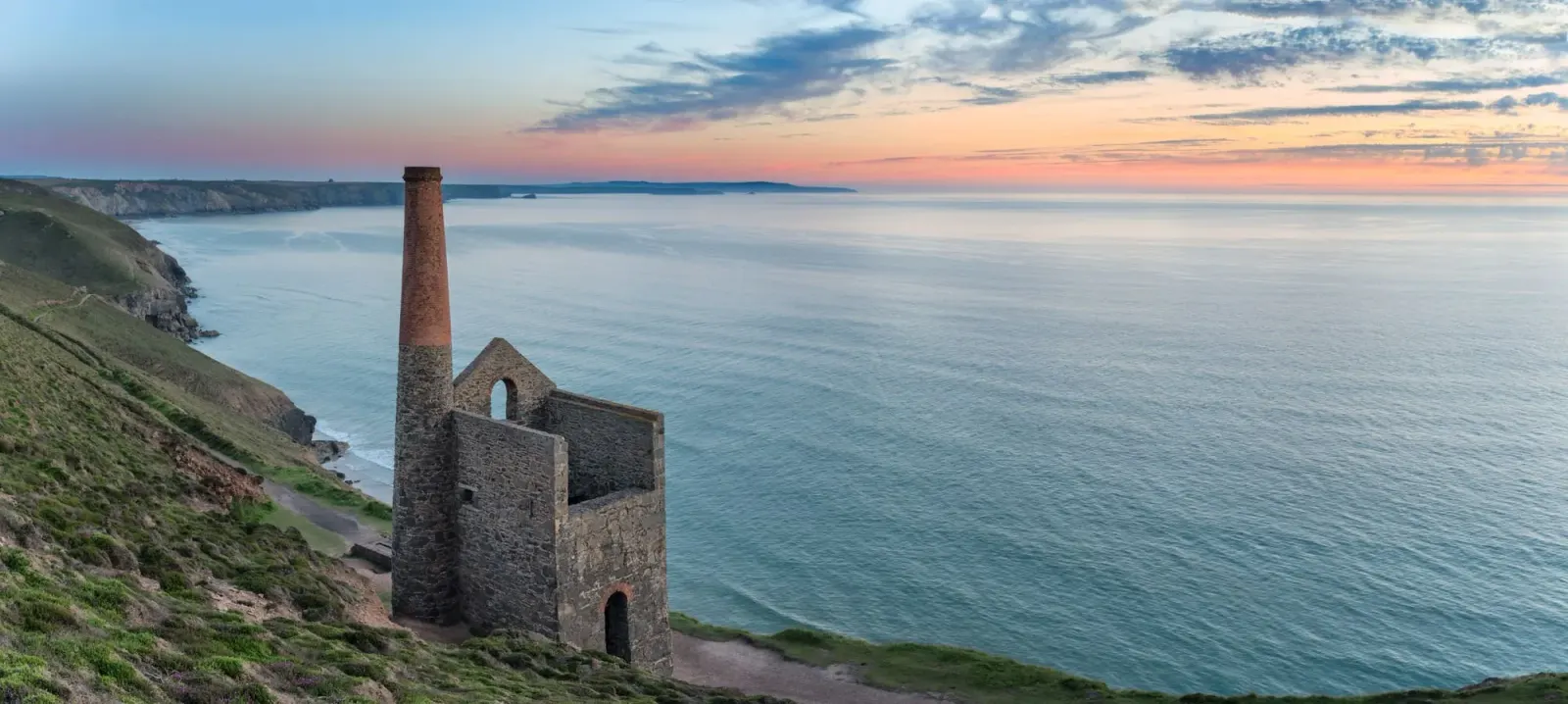
- Levant Mine, a National Trust site, sits dramatically on the cliffs near St. Just. It still has a working steam engine. Bonus: parts of Poldark were filmed here.
- Heartlands, near Redruth, is free to enter and mixes mining heritage with arts and culture. Great for all ages.
- King Edward Mine, near Camborne, offers quieter, guided tours that go deep into the working history.
What Was Life Like for the Miners?
Gruelling. They worked really long days. We are talking 12 hours a day, six days a week. The tunnels were dark, cramped and soaking wet. The pay was not great. And sadly, safety was not always a big deal either. Child labour was common until the late 1800s.
Yet despite the hardship, mining communities were tight-knit. Pubs, choirs, chapels, and rugby clubs sprang up wherever the mines did. If you’ve ever heard Cornish male voice choirs or seen local parades, you’re seeing echoes of that community spirit.
So Why Did It All Stop?
In the early 1900s, tin mining in Cornwall started to slow down. Other countries like Malaysia and Bolivia started producing tin more cheaply. Cornish mines became unprofitable. Things really went downhill in 1985 when the world tin market crashed. Cornwall’s last tin mine called South Crofty closed its doors in 1998.
But guess what? There’s still hope! People are now talking about bringing it back. That is because tin is super useful in electronics and green tech. By 2023, a company called Cornish Metals had already started working on it.
Why Should You Care?
If you are visiting Cornwall, the old mining spots are worth a look. You can walk through a World Heritage Site, touch the past, and imagine life underground. They are full of stories about hard work, clever ideas, and strong communities. And if you are thinking of moving here? You might just fall in love with it. Understanding Cornwall’s mining roots helps you connect with the place beyond the postcards.
Next time you pass a lonely engine house on a cliff, imagine the generations who worked beneath your feet. Would you have lasted a shift underground?
Frequently Asked Questions
Tin mining means digging tin out of the ground. Tin is a metal we use in loads of everyday things. People get it by removing rocks from the earth and then separating the tin from the rest. Tin mining is one of the oldest professions in the world.
Most of the UK’s tin came from Cornwall and Devon way down in the southwest. These areas were famous for tin mines a long time ago. While there isn’t much active tin mining now Cornwall still has a rich tin history.
Not at the moment. Cornwall’s tin mines closed years ago but there’s interest in starting again. Some companies are checking if it’s worth it. So tin mining could return one day.
Yes tin is still mined in other countries like China Indonesia and Bolivia. But the UK doesn’t really mine tin anymore. There’s talk about starting again in Cornwall but nothing big yet.
A tin mining report shows if a home or land is near an old tin mine. It’s important because old mines can cause the ground to sink or shift. This helps buyers avoid surprise problems.
Tin mining can hurt the land and water nearby. It can lead to dirty rivers damaged plants and fewer animals in the area. It also changes the shape of the land where digging happens.
It can cause water pollution soil damage and loss of wildlife. The digging breaks up land and can leave behind waste. Careful planning is needed to protect nature and clean up afterwards.
Written by
Rob has a background in publishing. After a 15-year stint in London and travelling the world, he returned to Cornwall to throw down roots. Fuelled by an insatiable appetite for knowledge and projects, he craves Cornwall, ribs Devon and deploys a strict ‘jam first’ policy!
42 articles published on Cornwall.co.uk
Read more from Rob →


Comments
No comments yet — be the first to share your thoughts.
Leave a comment
Your email won’t be published. Comments are checked before they appear.