

13 articles
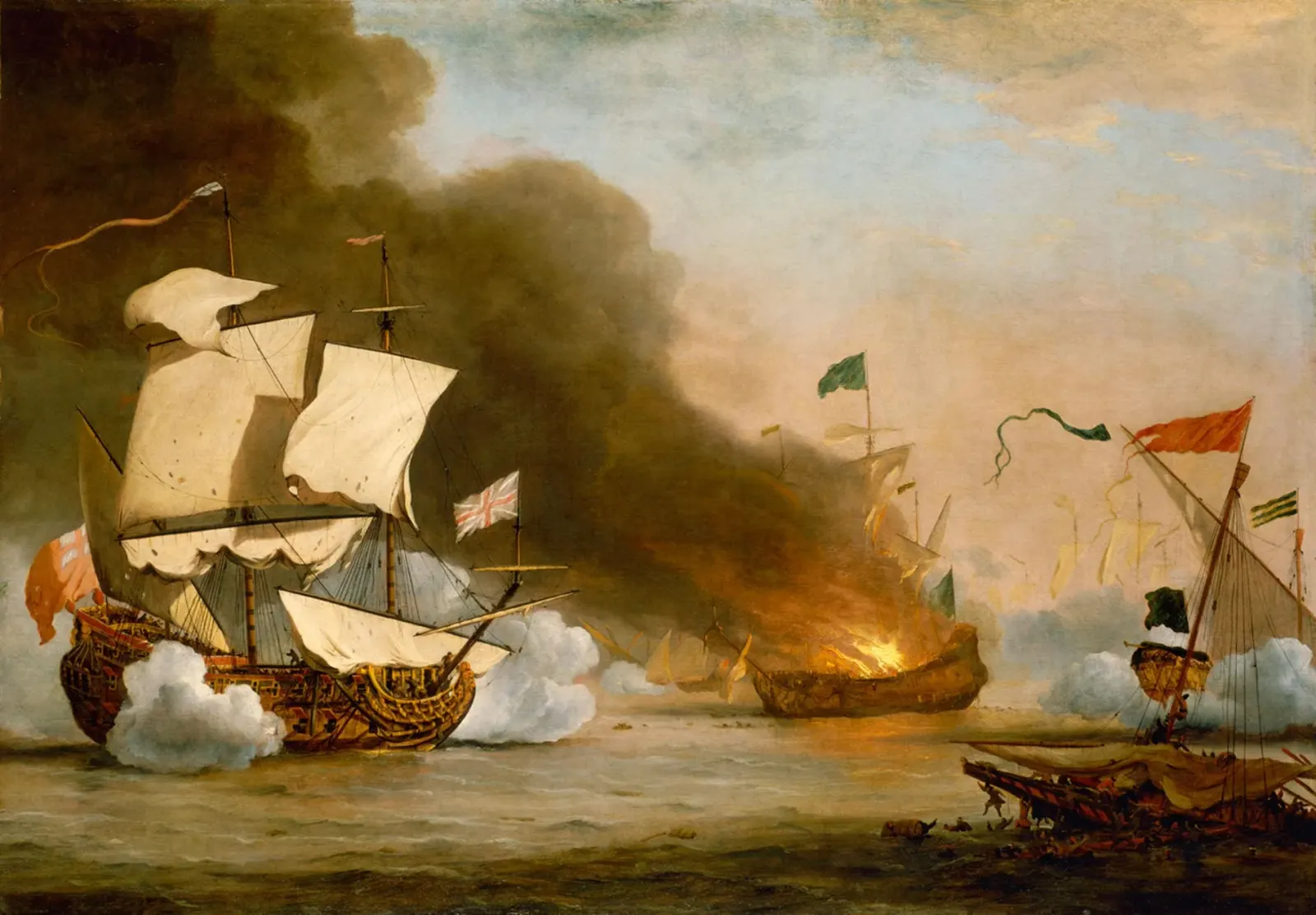
We’ve all heard the tales of pillaging and plunder from around the Cornish coast, but few know the forgotten story of the Barbary Pirates and Cornish slavery history. During the 16th and 17th centuries, Cornish communities lived in fear and grief, as the west coast was attacked by North African pirates. Men, women and children were taken as slaves never to be seen again and the Cornish fishing industry suffered as fishermen were seized along with their boats.
But who were these Barbary Pirates and why were there Barbary raids on Cornwall? Keep reading to uncover the story of their brutal actions, what it was like for those captured as slaves and how this terrible ravaging of the Cornish coastline finally came to an end.
Who Were the Barbary Pirates?
The Barbary Pirates were some of the most feared pirates attacking Britain during the 16th and 17th centuries, mostly because of their regular raids on West Cornwall and the Atlantic seaways.
Origins in the Barbary Coast: Morocco, Algiers, Tunis & Tripoli
The Barbary Pirates were operating from the north coast of Africa from the 16th to 19th century. Their activities in Europe, including a significant number of raids in west Cornwall, were at their height during the 16th and 17th centuries.1 They take their name from the Berber tribes who lived on the north African coast and were based primarily in Tripoli (Libya), Tunis (Tunisia), Algiers and Bône (Algeria), and Salli and Rabat (Morocco).
Also known as Barbary corsairs, they were Muslim raiders with a dual motive for attacking Christian ships – both for economic gain and as part of a wider ‘Holy War’ conflict between Muslims and Christians. There was great economic benefit to be had from capturing and selling European ships and prisoners on the Ottoman slave markets.2 The Barbary pirates only operated out of north Africa and not from the Middle East.
Ties to the Ottoman Empire
During the 16th century, Algeria and Tunisia were united as military states under Ottoman sultan Barbarossa (otherwise known as Khayr al-Dīn or Redbeard). Barbarossa maintained his revenue through acts of piracy, which would set a precedent for the next three centuries. Simultaneously, the Alawī sultans of neighbouring Morocco also turned to piracy to fund their endeavours.3
At first, these Moroccan and Turkish pirates used oared galleys to carry out their raids along Mediterranean coastlines. However, after being introduced to sailing ships by Flemish renegade Simon Danzer in the 17th century, the Ottoman pirates broadened their horizons. They began targeting coastal communities on the other side of the Bay of the Biscay – leading to Barbary raids on Cornwall and all the way up the Atlantic coastline to remote Icelandic fishing villages.2
By the mid-17th century, the Algerian and Tunisian pirates joined forces and a number of north African coastal towns broke free from Turkish rule to become military republics. They elected their own governors and continued to live wholly off what they could plunder.2
Privateers or Pirates?
The main difference between pirates and privateers is that the latter is a type of state-sanctioned pirate, supposedly operating within the confines of the law and carrying out raids on enemy ships and ports on behalf of the state’s leader. To that end, the Barbary Pirates were privateers, backed by north African rulers. Specifically, they were known as corsairs, a term specific to privateers operating in the Mediterranean Sea as part of the wider regional conflict between Christian and Muslim powers.4
The Barbary Slave Trade: Europe’s Forgotten Nightmare
Research suggests that as many as 1 million Europeans were taken as slaves to the Barbary coast between the 16th and 18th centuries. But who was taken captive and what happened to them?5
Why They Raided European Shores
The Barbary slave trade was a key component of why the Barbary pirates raided European shores. It proved to be a lucrative business with more than 20,000 Christian slaves sold at one market in Algiers during the first half of the 17th century alone. Whilst the Barbary slave trade was a terrible business, it wasn’t without its counterpart. Christians also raided the North African coasts and captured Muslim passengers and goods to make a profit from.2
Who Was Captured and Where They Were Taken
Initially, the Barbary slave trade took captives from European nations like Malta, Sicily, Italy, France and Spain in the Mediterranean Sea. However, once the Barbary corsairs upgraded their galleys to sailing vessels, they expanded their reach. By the mid-17th century they were conducting regular raids on the coasts of West England, Ireland, Scotland and Iceland. The people most at risk of being captured were regular people living in coastal towns and fishing men whilst working to provide for their communities – typically working from unarmed and therefore defenceless vessels.4
Once captured, these Christian slaves were held for ransom in North Africa – at Ottoman Empire slave markets like Tripoli and Algiers – or put to work on the ships they had been captured on.4 Some slaves were given the option to convert to Islam in exchange for better freedoms, though often under torture or great duress. Others would be bought as labourers, concubines, or the worst job – manning the oars of the Barbary galleys.5
Life as a Slave in North Africa
There are several accounts on what it was like to live as a slave in North Africa, with captives experiences differing depending on their social status, age, gender, and skills. Typically, once captured, individuals would be sold in Ottoman slave markets and be passed between multiple owners until their death, escape or liberation through the payment of ransoms.8 For those of humble origins, securing freedom through ransom was far less likely than for those of greater affluence.
According to the diary of Samuel Pepys, written upon speaking to those who had been enslaved in north Africa, captives were fed only bread and water and sustained regular beatings and violence.5 Bastinado – being tied upside down and whipped on the bottom of the feet – was a regular form of torture for non-compliant slaves.6 In addition to maltreatment and poor nutrition, many were also subjected to hard labour.10
Breakout panel: The story of Thomas Pellow
A Cornish boy captured at 11 years old, Thomas Pellow described how upon initially being subject to torture, he converted to Islam. He later acquired increasing privileges and opportunities, as he proved himself as a capable military leader of slave armies. Nonetheless, Pellow still sought his freedom and eventually escaped back to Cornwall after 23 years of servitude.6
Breakout panel: Life as a female captive
There are limited accounts on the experience of female captives, however the memoirs of Elizabeth Marsh describe how women were subject to less hard labour and less harsh living conditions than their male counterparts. The flip side, however, is that many were subject to sexual harassment and exploitation, including being sold as concubines.7
Barbary Pirates Cornwall: A Hidden History
By the 17th century there were regular Cornwall coastal raids conducted by an estimated sixty Barbary ships. This resulted in thousands of Cornish people being taken to north Africa with almost daily attacks.5
Barbary Raids on Cornwall
Though Barbary raids on Cornwall were a regular occurrence, some were deemed as particularly horrific and had a devastating impact on Cornish people.
- 1625 raid on Mount’s Bay, Mousehole, and Newlyn – In 1625 Barbary corsairs came ashore in Mounts Bay capturing 60 men, women and children, taking them from their homes and pressing them into slavery.5
- 1626 St Keverne suffered multiple attacks from Barbary pirates8 who terrorised the community and took captives.
- 1630s Looe Barbary raids – Turkish vessels conducted a series of Looe Barbary raids, which led to the loss of hundreds of men, with 80 mariners being captured in one attack alone during a deep sea fishing trip between England and Ireland.4
- 1636, St Keverne pirates captured seven fishing boats along with their crews, taking them to north Africa. The empty ships were left drifting in the ocean and those left behind were left in constant fear of future loss of men and destruction of the village.13
- 1640 three barques were captured in open view of Penzance. However, Mounts Bay had suffered multiple attacks in between this incident and the 1625 raid.4
- 1645, 240 men, women and children were kidnaped from the Cornish coast in a single Barbary slave raid.5
Other Raids on Cornwall
Cornwall had also suffered coastal raids from other European nations after England turned Protestant in the 16th century. The most documented incident was in July 1585 when 400 Spanish Catholic soldiers came ashore at Mousehole, Paul, Penzance and Newlyn. They set fire to the towns and held a Catholic mass before returning to their ships. Later, Spanish backed Irish Catholic ships attacked the British coast including Cornwall for the same reason. However, these were short-lived and expected raids after the British defeat of the Spanish Armada. The Barbary raids on Cornwall on the other hand lasted for centuries causing prolonged terror.9
Cornwall’s Response to the Raids
By the early 1700s, Cornish communities were suffering greatly. They needed support to resolve the Barbary problem.
Economic impact on Cornwall and England
By the early 17th century fishing was of vital economic and social importance to England. Not only was it important for sustaining West Country populations, but deep water fishing fleets were an important part of English trade with Europe of Newfoundland cod. The fishing industry also supported other trades including rope making, alehouses and many other industries. After repeated Barbary slave raids in Cornwall, fisherman refused to work through fear of being captured by Barbary corsairs, or to leave their families behind with no one to defend them. In some towns the slave trade had simply led to a reduced population of fishermen. Either way, the fishing industry was in peril which had an impact on Cornish civilians and the English maritime economy.10
Appeals to London
In 1624, a petition was presented to Parliament describing the attacks on Britain’s western coastline and the Barbary raids on Cornwall. Collections were ordered throughout the country to raise funds to pay for the ransoms of captives. However, much of the money was mismanaged and there was resistance from non-coastal communities who were unaffected by Barbary raids. English authorities were initially inadequate in resolving the Barbary slave raids, though, the King did commission a small fleet of ships commanded by Sir John Pennington to cruise the English Channel as a deterrent.13 This lack of action would later be listed amongst the offences committed by King Charles I before his execution in 1649.10
The Role of the Church and Ransom Payments
In the absence of sufficient support from the King, local churches and communities attempted to raise funds of their own towards ransom payments. Until 1720, the clergy did more than the Government to raise funds and secure release of Christian slaves. However, they were selective of those who were rescued. Those who converted to Islam – even under duress – and Christian women turned concubines who converted to stay with their children were exempt from church charity.16
Later National Support
By the 1940s, during the Interregnum, Barbary piracy was recognised by Parliament as causing substantial threat to the British fishing and maritime industry and therefore the economy. Finally, the issue was taken more seriously. In 1640, a Committee for Algiers was set up to oversee the ransoming of captives. In 1646, Edmond Cason was sent with substantial funds, however they were lost when his ship sunk. Nonetheless, he was able to rescue several hundred Barbary prisoners. A further two Parliamentary Acts were passed in 1650, which led to further efforts to redeem captives and the construction of naval convoy ships to escort merchant vessels.11
The Barbary Pirate Legacy
By the mid-17th century, expeditions were launched by the English Navy to put an end to Barbary interference in the British coastal economy. A number of other powers were drawn into wars with the Barbary states eventually leading to the end of the Barbary slave trade.
End of the Pirate Era: English Naval Retaliations and Treaties
In 1655, a fleet headed by Admiral Blake demanded redress for the Barbary impact on the British shipping industry. When refused, he attacked the forts and burnt nine pirate vessels based 40 kilometres north of Tunis.2
In 1675 naval Admiral Sir John Narborough managed to negotiate a peace with Tunis, but Tripolitan leaders refused to co-operate. After heavy naval bombardment of Tripoli, Narborough managed to secure a similar agreement. The Dey of Algiers was less forthcoming and so a number of attacks were made on Algiers by sea in a co-ordinated effort by the British, French and Spanish. Britain’s final attack alongside the Dutch was in 1816 when more than 4,000 Christian slaves were liberated. Finally, Algerian piracy was brought to an end when France annexed the country in 1830.18
The Barbary Wars and the U.S. Navy
Whilst the British and other European powers were locked in naval operations along the Barbary coast, there were also conflicts between the U.S. Government and the Barbary states. Following the 1785 War of Independence, the British Navy made it clear they would no longer protect American ships. In 1795, the US Government agreed to pay tribute to the the leaders of Tripoli, Tunis and Algiers in exchange for prisoners and for them to halt attacks on American merchant ships. US Congress also decided to construct the first ships of the U.S. navy – six frigates.
- First Barbary War (1801 – 1805) – In 1801, the First Barbary War began, when the Pasha of Tripoli demanded further tribute from the U.S. Government. President Thomas Jefferson refused and in 1803 a large squadron was sent to the Mediterranean. The conflict was concluded in 1805, when Tripolitan forces were defeated by U.S. Marine Corps and naval powers. However, the Tripolitans did manage to capture the U.S. ship Philadelphia and take its crew as prisoners.
How the Raids Shaped Cornish Folklore and Memory
Following centuries of turmoil and living in fear, it’s surprising how little the Barbary pirates have influenced Cornish folklore and memory. For the most part little is know about this Cornish slavery history. Pirate history in Cornwall prefers narratives of smugglers and wreckers, or even the fabled Pirates of Penzance. However, scratch below the surface and there are many clues relating to Barbary pirates in Cornwall.
How Barbary slave raids compare to the Atlantic slave trade
Some historians attempt to draw parallels between the suffering of Europeans at the hands of the Barbary corsairs and the Atlantic slave trade. However, there are significant differences. The African and Caribbean slave trade was a one way movement of African slaves purely for Western economic benefit and was much greater in scale with an estimated 12 million slaves taken from Africa. Lasting racialised economic inequalities are still felt around the globe by the descendants of these slaves today.
In contrast, whilst Christian Europeans undoubtedly suffered at the hands of the Barbary pirates, it was part of a larger regional and religious conflict. Muslim North Africans were also captured and traded by Europeans. A key difference is that rather than leaving a painful legacy for the descendants of these slaves, Barbary pirate history has been mostly forgotten by western communities.
Discovering the History Today in Cornwall
Want to see Cornwall’s Barbary pirate history for yourself? Visit these places to discover more.
Memorials, Plaques & Hidden Clues
Whilst much of Cornwall’s pirate history focuses on smuggling and pirate outlaws there are still clues alluding to the time of the Barbary pirates.
- The Turks Head, Penzance – The oldest pub in Penzance, this traditional inn takes its name from the Turks who raided the town in the 17th century.12
- Truro Cathedral Plaque – Owen Phippen, who escaped from the Barbary pirates in the early 17th century is buried in Truro Cathedral. A plaque commemorating his tomb and his escape from north Africa was once visible there. However, today it is hidden from public view. His brother’s plaque, however, can be seen on the wall of the St Mary’s aisle in the cathedral.21
- Kresen Kernow – Parish registers stored by Kresen Kernow reveal money being raised by communities for the ransom of Barbary slaves.13
Best Walks & Locations for Pirate History Enthusiasts
For a broader exploration of pirate history in Cornwall, visit these walks, tours, locations and attractions.
- Cornish Smugglers East Tour – Join Experience Cornwall tours to learn about Cornish smuggling and why local fishermen turned to this illegal trade. You’ll explore famous smugglers haunts in Fowey, Polperro, Bodmin Moor and the UNESCO World Heritage Site in Charlestown.23
- The Smugglers Way – This challenging 38 mile hike takes you cross-county from Looe to Boscastle, winding along disused smugglers paths and past ancient landmarks. Best enjoyed over three days, you’ll pass through pretty towns and hike through Bodmin Moor.24
- Jamaica Inn – Inspiration for Daphne du Maurier’s book of the same name, which tells the tale of fictional smugglers, Jamaica Inn has long been a favourite stop-off point for fans of pirate history in Cornwall.14
- Penzance and Mounts Bay – Gaze out at the beautiful Mounts Bay and try to imagine Barbary corsairs sailing over the horizon as they once did in the 16th to 18th centuries. Afterwards, head to the Admiral Benbow pub which is bedecked in piratical paraphernelia and inspired Robert Louis Stevenson’s book Treasure Island. The nearby Prussia Cove is also known as the home of one of Cornwall’s most famous smugglers.15
Conclusion
Despite being a significant event in Cornish, British, and European history, the Barbary Pirate raids are often overlooked. Whilst some historians are working to revive knowledge of the events and their impact, popular piratical narratives favour the Golden Age of Piracy, which took place in the 17th and 18th centuries. Perhaps it’s because rogue figures like Blackbeard and Henry Morgan are more easily romanticised. It could also be because the end of the corsairs is intertwined with the uncomfortable narrative of European colonisation in North Africa, or simply because its impacts are no longer directly felt today.
Regardless, remembering the Barbary pirates provides deeper insight into the history of Cornwall, Britain, and Europe, and the pressures faced by coastal communities between the 16th and the 19th centuries. It helps us confront a complex point in European history and understand how it affected everyday people.
Article Sources
- University of Chicago (no date). Barbary Pirates [online]. Available at: https://penelope.uchicago.edu/thayer/e/gazetteer/topics/history/american_and_military/barbary_pirates/britannica_1911*.html University of Chicago[↩]
- Oxford Reference (no date). Barbary Pirates [online]. Available at: https://www.oxfordreference.com/display/10.1093/oi/authority.20110803095446817#:~:text=Quick%20Reference,general%20and%20Spain%20in%20particular Oxford Reference[↩]
- Britannica (no date), Barbary Pirates [online]. Available at: https://www.britannica.com/place/Barbary Britannica[↩]
- Britannica (no date). Pirates, Privateers, Corsairs, Buccaneers: What’s the Difference? [online]. Available at: https://www.britannica.com/story/pirates-privateers-corsairs-buccaneers-whats-the-difference Britannica[↩]
- Ohio State University (no date). WHEN EUROPEANS WERE SLAVES: RESEARCH SUGGESTS WHITE SLAVERY WAS MUCH MORE COMMON THAN PREVIOUSLY BELIEVED [online]. Available at: https://web.archive.org/web/20110725220038/http://researchnews.osu.edu/archive/whtslav.htm Ohio State University[↩]
- TROZE (2016). ‘[H]eer will be noe fishing’: 17th century Barbary Piracy and the West Country Fisheries [online]. Available at: https://nmmc.co.uk/wp-content/uploads/2018/04/Barbary_piracy_and_SW_fishing.pdf National Maritime Museum Cornwall[↩]
- Historic UK (no date). Barbary Pirates and English Slaves [online]. Available at: https://www.historic-uk.com/HistoryUK/HistoryofEngland/Barbary-Pirates-English-Slaves Historic UK[↩]
- Capp, B. (2022). British Slaves and Barbary Corsairs, 1580-1750. Publisher: OUP Oxford[↩]
- Historic UK (no date). Remarkable Life of Thomas Pellow [online]. Available at: https://www.historic-uk.com/HistoryUK/HistoryofBritain/Thomas-Pellow-Barbary-Slave Historic UK[↩]
- University of Michigan (no date). Barbary Captivity Narratives [online]. Available at: https://clements.umich.edu/exhibit/barbary-wars/captivity-narratives University of Michigan[↩]
- Historic UK (no date). Elizabeth Marsh, Female Captive [online]. Available at: https://www.historic-uk.com/HistoryUK/HistoryofBritain/Elizabeth-Marsh-Female-Captive-Barbary-Pirates/#:~:text=In%20July%201756%2C%2020%2Dyear,was%20captured%20by%20Barbary%20pirates%E2%80%A6 Historic UK[↩]
- St Keverne Local History Society (no date). Canon Diggens Archive [online]. Available at: http://www.st-keverne.com/history/diggens/d9.php- St Keverne Local History Society[↩]
- St Keverne Local History Society (no date). Canon Diggens Archive [online]. Available at: http://www.st-keverne.com/history/diggens/d9.php St Keverne Local History Society[↩]
- Cornwall Forever (no date). The Spanish raid on west Cornwall [online]. Available at: https://www.cornwallforever.co.uk/history/the-spanish-raid-on-west-cornwall Cornwall Forever[↩]
- TROZE (2016). ‘[H]eer will be noe fishing’: 17th century Barbary Piracy and the West Country Fisheries [online]. Available at: https://nmmc.co.uk/wp-content/uploads/2018/04/Barbary_piracy_and_SW_fishing.pdf National Maritime Marine Museum Cornwall[↩]
- National Maritime Museum Cornwall (2013). Barbary piracy [online]. Available at: https://www.maritimeviews.co.uk/focus-on-falmouth/barbary-piracy/#:~:text=The%20role%20of%20the%20church,eventually%20inflated%20the%20slave%20prices.%20%5B Maritime Views
- Historic UK (no date). Barbary Pirates and English Slaves [online]. Available at: https://www.historic-uk.com/HistoryUK/HistoryofEngland/Barbary-Pirates-English-Slaves/ Historic UK
- Office of the Historian (no date). Barbary Wars, 1801–1805 and 1815–1816 [online]. Available at: https://history.state.gov/milestones/1801-1829/barbary-wars#:~:text=In%201812%2C%20the%20new%20Dey,a%20favorable%20position%20for%20negotiation Office of the Historian
- University of Michigan (no date). The First Barbary War: The Tripolitan War [online]. Available at: https://clements.umich.edu/exhibit/barbary-wars/first-barbary-war University of Michigan
- Turks Head (no date). Home page [online]. Available at: https://www.theturkshead.pub/ Turks Head
- The Cornish Bird (no date). Owen Phippen – Captured by Barbary Pirates, Buried in Truro Cathedral [online]. Available at: https://cornishbirdblog.com/owen-phippen-captured-by-barbary-pirates-truro-cathedral The Cornish Bird Blog
- Kresen Kernow (no date). Maritime [online]. Available at: https://kresenkernow.org/our-collections/collections-guides/maritime/#:~:text=Smuggling%20features%20in%20our%20collections,in%20Cornwall%20is%20particularly%20intriguing Kresen Kernow
- Experience Cornwall Tours (no date). Experience Smugglers East Tour [online]. Available at: https://experiencecornwalltours.co.uk/tour/cornish-smugglers-east-tour Experience Cornwall Tours
- Visit Cornwall (no date). Smugglers Way [online]. Available at: https://www.visitcornwall.com/things-to-do/walking/the-smuggler-s-way Visit Cornwall
- Jamaica Inn (no date). History of Jamaica Inn [online]. Available at: https://www.jamaicainn.co.uk/history Jamaica Inn
- Love Penzance (no date). Avast, Ye! The Real and Shocking Truth About Pirates and Penzance [online]. Available at: https://lovepenzance.co.uk/blog/pirates-and-penzance-the-truth/ Love Penzance
Frequently Asked Questions
The Barbary pirates attacked European fishing fleets and coastal towns including those of West Cornwall so they could take Christian slaves. The Barbary states’ economy was mostly reliant on the slave markets and what they could plunder through piracy.
The Barbary pirates were mostly Muslim, though some were defectors of British or Dutch heritage. Most came from Islamic nations including Libya, Algeria, Tunisia and Morocco.
Those captured by the Barbary pirates were taken as slaves and sold in North African and Ottoman slave markets. They would then work as labourers or concubines until their death, escape or liberation through the payment of ransoms.
Thousands of Cornish people were enslaved by the Barbary pirates, many of them taken from fishing boats and coastal villages. Notable Cornwall slave raids include those at St Keverne, Looe, Penzance and other villages in Mounts Bay.
There are no exact figures on how many people were enslaved by the Barbary pirates. However, estimates suggest that up to 1 million Europeans were taken between the 16th and 18th centuries.
Cornwall had limited resources to fight back against the Barbary pirates and for the most part they were defenceless. After failed appeals to King Charles I, local communities raised funds alongside the church to secure ransom payments for hostages. However, until later naval intervention the pirates continued to attack the Cornish coastline.
Eventually, the Barbary pirates were defeated after international efforts. This included attacks from British, French, Dutch and Spanish navies – plus from the US in the First Barbary War and Second Barbary War. Eventually, the Barbary corsairs were defeated when France attacked and annexed Algeria in 1830.
Barbary pirates attacked Cornwall mainly in the late 16th and early 17th centuries, especially between 1580 and 1640, when North African corsairs raided Cornish coastal towns and fishing villages, capturing people for slavery in the Barbary States.
Barbary pirates had a lasting impact on Cornwall by causing fear, population loss, and economic disruption. Raids on coastal towns and fishing villages in the 16th and 17th centuries led to kidnappings, enslavement, abandoned settlements, and improved coastal defences.
Yes, Barbary pirates attacked parts of England, particularly Cornwall, Sussex, and the southern coast. In Cornwall, villages like Mousehole, Penzance, and Newlyn were raided, with captives taken for slavery in North Africa during the 16th and 17th centuries.
Cornish captives taken by Barbary pirates were sold into slavery in North Africa. Many endured harsh conditions, forced labor, and attempts at ransom, while some were eventually freed or escaped, leaving a lasting impact on Cornish coastal communities in the 16th and 17th centuries.
Several Cornish villages were attacked by Barbary pirates, including Mousehole, Penzance, Newlyn, and St Ives. Raids in the 16th and 17th centuries targeted fishing communities, capturing villagers for slavery in North Africa and stealing goods from the coast.
Written by
Lydia Paleschi is a Falmouth local and freelance writer whose family have been based in Cornwall for many generations. However, it wasn’t until she spent several years living in Cardiff and London that Lydia realised that living next to the ocean is where she belongs. After moving back to Falmouth and launching her freelance career in order to make the most of a Cornish lifestyle determined by weather and tides, Lydia now spends most of her free time wild swimming and sailing in Cornish waters. And despite being lucky to travel far and wide – sailing as far away as Central America – it is the Cornish coastline that Lydia finds provides the greatest nourishment to her soul. More recently, Lydia has been exploring Cornwall in her van, which has only made her fall in love with her home county more. Lydia’s book A Guide to Wild Swimming in Cornwall aims to help others share in her love of the Cornish coastline and the wellbeing benefits that can be enjoyed by spending time there.
13 articles published on Cornwall.co.uk
Read more from Lydia Paleschi →
Comments
No comments yet — be the first to share your thoughts.
Leave a comment
Your email won’t be published. Comments are checked before they appear.