

35 articles
Camborne is an understated town, but give it a minute, and it’ll surprise you, in a good way. Located right in the spine of west Cornwall, it’s known for its mining past, but there’s more here than old shafts and stonework. This is a working town: strong on community, proud of its roots, and full of details you only notice once you slow down. From local cafés to coast-to-coast trails, Camborne’s quieter charm tends to grow on you, and whether you’re visiting for a day or thinking about making it home, this guide will help you get to know the town a little better – its past, its people, and the shape of Camborne today.
Camborne images
Things to See and Do in Camborne
Camborne isn’t asking to be noticed as such, but that doesn’t mean there’s nothing to do. In fact, if you’re the sort of visitor who likes to take their time, this town might suit you perfectly. There’s history, of course, but also wide skies, walking trails, old engines, and some genuinely good places to eat.
Historical Attractions
Camborne doesn’t dress its history up, and you won’t find polished visitor centres with gift shops on every corner. What you will find, however, are remnants of a proud and gritty past. This town played a key role in shaping the industrial world, and if you’ve a mind to wander and a bit of curiosity, you’ll find the past waiting for you at every turn.
King Edward Mine: Just south of the town centre, King Edward Mine is more than a museum – it’s a working piece of Cornwall’s industrial soul. The site dates back to the late 1800s and was used by the Camborne School of Mines to train engineers. Today, you can still see original Victorian equipment in motion, from ore crushers to stamps, restored and demonstrated by volunteers who know their way around a pithead. The on-site café serves up a proper pasty and a strong brew too – worth knowing after a stomp through the grounds.1
South Crofty: Though not currently open to visitors, South Crofty deserves a mention because it’s such an important part of Camborne’s long history. This was actually the last working tin mine in Europe, closing in 1998, and it still casts a long shadow in the community. Recent moves to reopen South Crofty have been rumbling along slowly, backed by the idea that Cornwall’s mining days might not be entirely over. Watch this space.2
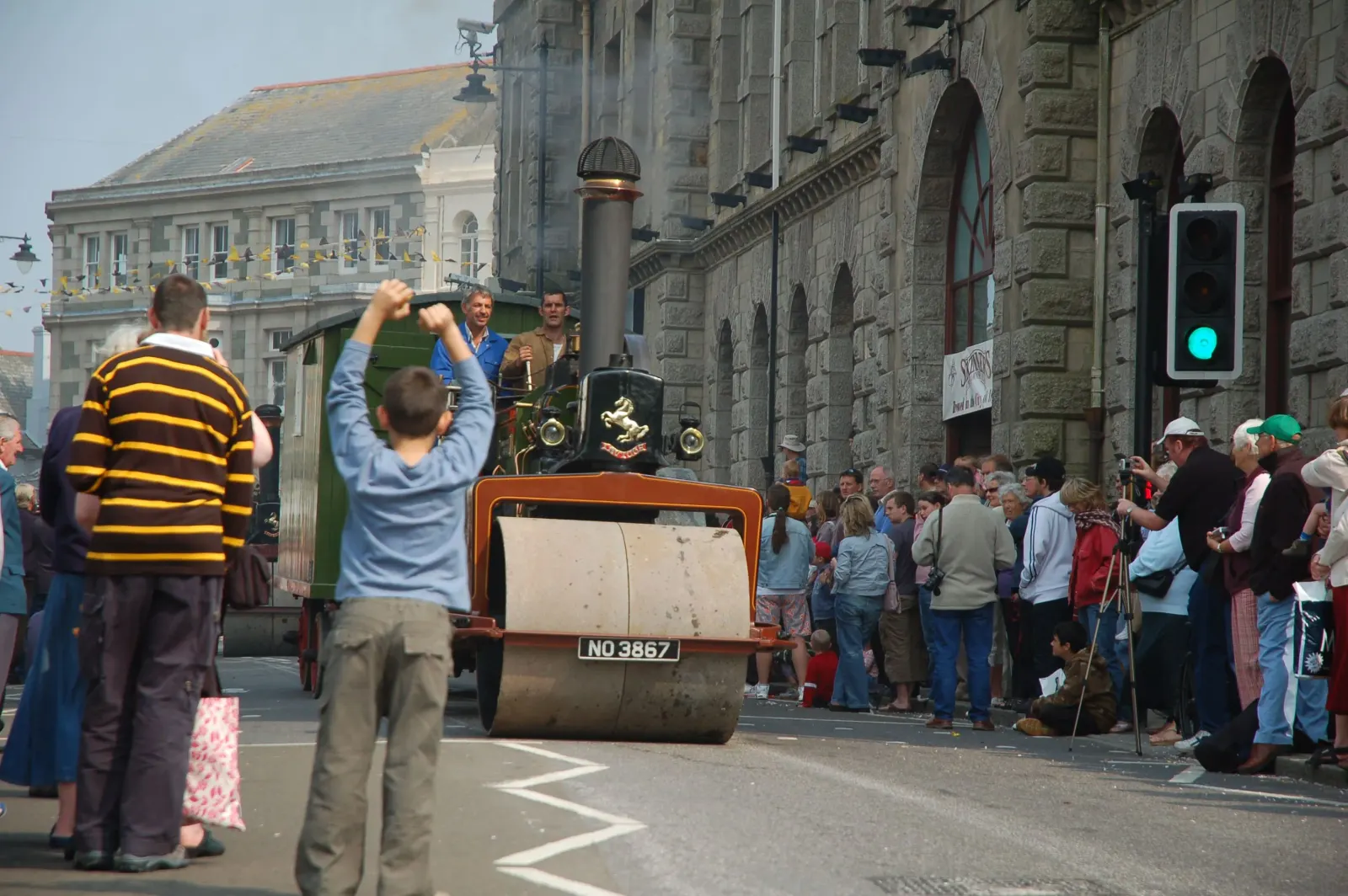
Trevithick Heritage and Trevithick Day: Richard Trevithick, Camborne’s best-known son, built the world’s first full-scale road-going steam engine – the ‘Puffing Devil’ – and drove it up Camborne Hill in 1801, and if you’ve ever heard the local rhyme ‘up Camborne Hill, coming down,’ that’s what it refers to. You’ll find a statue of Trevithick on Commercial Square. Every April, Trevithick Day transforms the town and steam engines roll in from across the country. It’s loud, joyful, and properly Cornish.3
Wesleyan Chapels: There was a time when Camborne rang with hymn singing every night of the week, and in the 18th and 19th centuries, the town was a real stronghold of Cornish Methodism – not just for worship, but for shaping daily life. Miners returning from east Cornwall and beyond brought their beliefs home with them, and soon Camborne had chapels on almost every street. Many have vanished or found new lives as flats or shops, but the impact remains.
Carwynnen Quoit: Long before steam and shafts, there were stones, and Carwynnen Quoit is one of the oldest. Just outside Camborne, across a couple of quiet fields, stands a trio of great slabs known locally as The Giant’s Quoit, and this Neolithic burial chamber dates back over 5,000 years. It collapsed in the 60s and lay in pieces until local groups worked to raise it again, using original methods.4
Family Activities
Heartlands Adventure Playground: Just down the road in Pool, Heartlands is a firm favourite with local families, and for good reason. The adventure playground is one of the best in the area and parents can watch from the café terrace with a coffee. Plus the whole site is free to enter.5
Tehidy Country Park: Tehidy is one of west Cornwall’s best-loved outdoor spots, and it’s just a short drive from Camborne; there are over nine miles of woodland trails, plus lakes, ducks to feed, picnic areas and even a small café tucked among the trees. Some of the paths are buggy-friendly, and older kids will enjoy the wilder bits, especially if you let them run around and explore.6
Tuckingmill Valley Park: A bit more local, Tuckingmill Valley Park is Camborne’s own green lung. Once part of the industrial landscape, it’s now a quiet space for walks, dog-watching and bike rides, plus there’s a small skatepark, open space for kicking a ball around, and a shallow stream that’s ideal for stone-skimming or welly-paddling in warmer weather.7
Outdoor Activities
Carn Brea and the Basset Monument: Towering above Camborne and Redruth, Carn Brea is one of the most striking landmarks in west. The summit is marked by a 90-foot granite monument to Francis Basset, who made his fortune from the mines below. It’s a favourite spot for local walkers, and on a clear day, you can see from coast to coast, from St Ives Bay in the north to Falmouth and the south coast.8
Great Flat Lode Trail: If you’re more about loops than summits, the Great Flat Lode Trail is a 12km circular route that starts just outside Camborne, and it weaves through the old mining landscape, passing engine houses, chimney stacks, and sweeping views of the surrounding mining area. It’s great for walkers and cyclists alike, especially those interested in industrial heritage without needing to go indoors.9
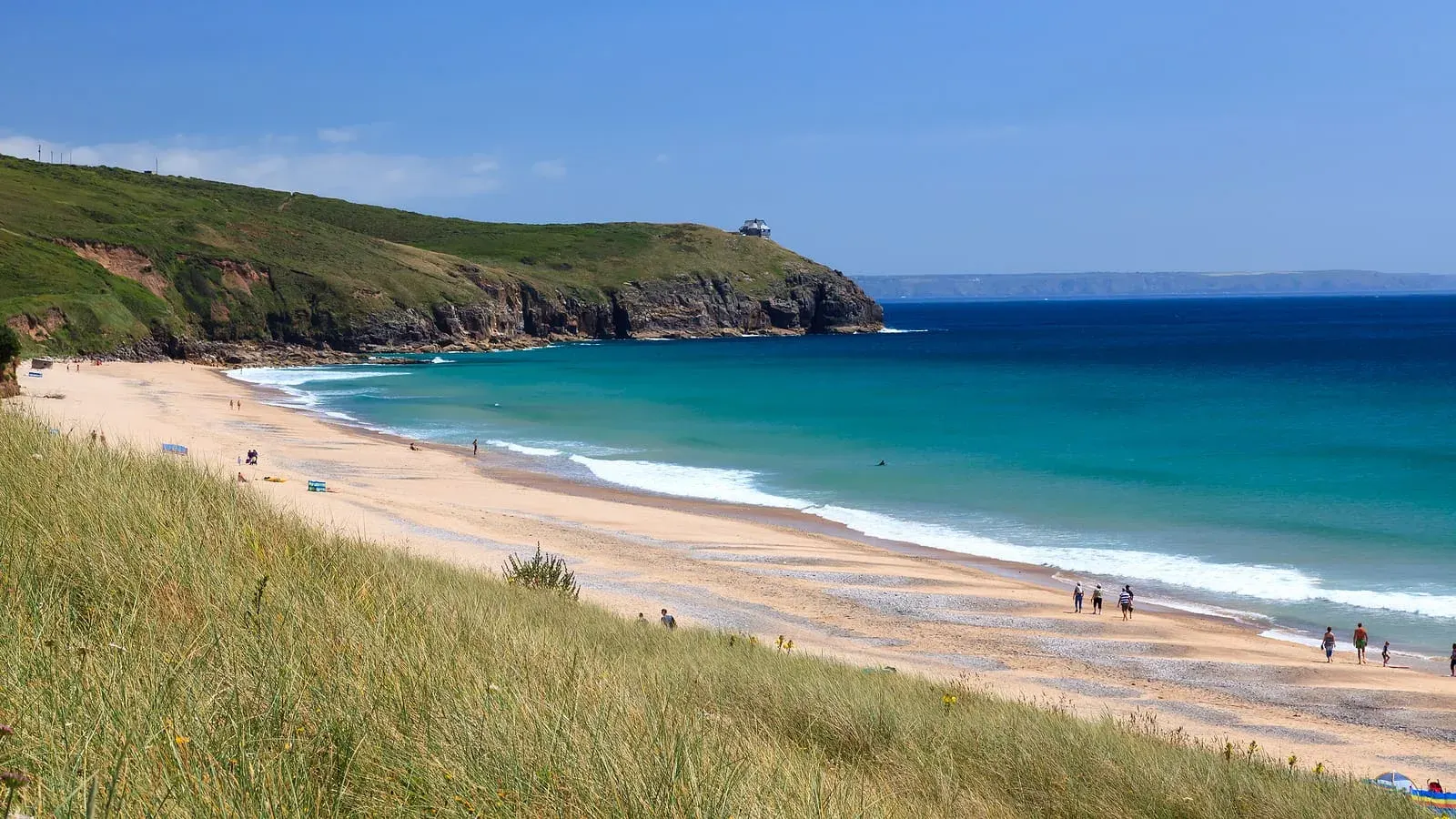
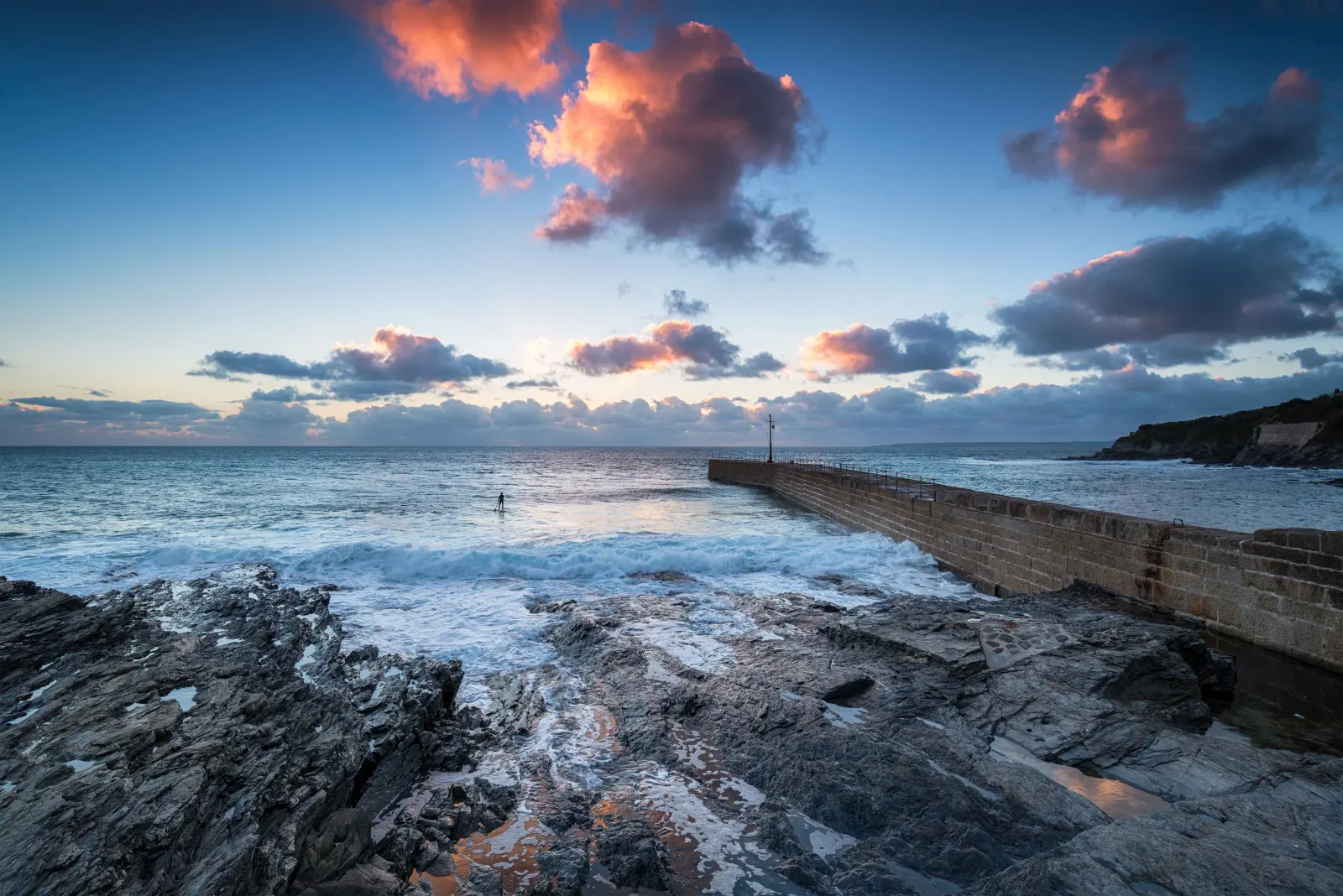
Nearest Beaches: Portreath and Gwithian: Camborne might not be a beach town, but you can be on the sand in under 20 minutes. Portreath is the closest, with a long stretch of dark-golden sand, decent surf, and a few cafés just off the front, and it’s popular with bodyboarders and paddleboarders, plus there’s a sheltered end for families too. If you want something a little wider and wilder, Gwithian Towans is about half an hour away and has one of the best views in Cornwall, across St Ives Bay to the Godrevy lighthouse. Parking can get tight in summer, so arrive early or go late for a sunset walk, where you’ll get some lovely photos for social media.10
Local Trails and Woodland Wanders: Within Camborne itself, Pendarves Wood is one of the town’s quieter green spots. Tucked behind residential streets, it’s a peaceful place for a short stroll, and you’ll find bluebells in spring, plus birdsong all year round. Elsewhere, sections of the Mineral Tramways Trail connect Camborne with nearby towns and historic sites via shared-use paths, perfect for a slow cycle or longer walk without needing to hop in the car.
Food And Drink
The great thing about Camborne is that if you know where to look, there’s good food, proper coffee, and a few very decent pasties to be had. This is a town that feeds its people well, with cafés that double as community hubs and chippies that haven’t changed in years (for good reason). Whether you’re after a fry-up, a pint, or something sweet after a stomp on the Flat Lode, there’s plenty here to fill your belly and fuel your day.
Cafés and Coffee Houses
Miss Molly’s Tearoom: You’ll find Miss Molly’s on Dolcoath Road, and it’s a local favourite with a vintage feel (mainly because it’s like a little museum of bric-a-brac) and homemade everything. The cream teas are done the Cornish way (jam first, of course), and there’s always a gluten-free option or two if you ask.11
Espressini Artisan Coffee: This café’s in Falmouth, about 11 miles from Camborne, and it’s a smaller, independent spot that’s picked up a loyal local following. They serve ethically sourced coffee, great espresso, and a small range of cakes and light lunches.12
Pubs
Tyacks Hotel: A proper Camborne institution, Tyacks Hotel has been pulling pints and welcoming travellers since 1780. Step inside today and you’ll still catch the echoes of its coaching inn past, with its grand Georgian façade giving way to a warm, wood-panelled bar that locals swear by. Regular live music gives the place a buzz, but there’s just as much charm in a quiet corner with a local ale and a proper Sunday roast.13
The White Hart: The White Hart on Commercial Street is simple and unpretentious, with live sports on the screens, friendly staff, and a solid pint. You’ll often find the place buzzing during football matches or with groups enjoying the jukebox, and it’s got the feel of a place that’s been around for decades – because it has – and The White Hart’s local following says a lot.14
The Waggoners Arms: The Waggoners Arms is your go-to if you’re after something a bit more lively; it’s popular with locals for its regular karaoke nights, music events, and that just-right mix of friendly banter and community feel. The building isn’t anything grand, but inside it’s got that familiar pub cosiness.15
The Copper Coast: The Copper Coast is another local favourite. Big, bright, and family-friendly, this pub’s known for its daily carvery, generous portions, and relaxed atmosphere. You can relax knowing you’ll get all the usuals: burgers, grills, and puddings that could feed a small army. But what makes it popular is its space; there’s a good-sized beer garden, plenty of seating, and that makes it a solid choice for families looking for an easy lunch after a walk at nearby Tehidy.16
The Trevithick Inn: You can’t really have a Camborne pub guide without mentioning Richard Trevithick, and this one wears the name proudly. The Trevithick Inn sits near Tehidy Country Park and is more food-focused than some of the other pubs on this list – it’s part of the Table Table chain, which means it’s a comfortable spot for family meals, Sunday roasts, and the occasional pint.17
Breweries and Distilleries
Keltek Brewery: Keltek’s the kind of brewery that’s kept its roots while building a name for itself across Cornwall. Just outside Camborne in Redruth, this family-run operation makes proper, no-nonsense beer using traditional methods – no gimmicks, just good brewing. Locals swear by their bold Beheaded ale and the darker Grim Reaper, and you’ll spot their bottles in plenty of pubs and shops across the region. There’s a real pride to their approach, and they’ve built a steady, loyal following simply by doing things right.18
Sharp’s Brewery: If you’ve ever ordered a Doom Bar, you’ve tasted Sharp’s; their most famous brew, named after the sandbank near the Camel Estuary, has gone national. But the brewery itself still calls Rock home. It’s modern, coastal, and very much inspired by its surroundings, and from clean lagers to punchier pale ales, Sharp’s has grown rapidly since it opened in 1994, but it still carries that North Cornwall soul. You won’t find a taproom on-site (yet), but their beers are stocked all over the region, and beyond.19
The Wrecking Coast Distillery: This one’s a bit different, and all the better for it. The Wrecking Coast Distillery is based up in Tintagel and has become known for one very Cornish creation: clotted cream gin. It might sound odd, but it works – smooth, creamy, and surprisingly refreshing. Their range is small but imaginative, often drawing on local ingredients and the dramatic north coast for inspiration.20
Farm Shops
Trevaskis Farm: Just a few miles down the road from Camborne, Trevaskis Farm is one of those places locals return to again and again, and not just for the fruit picking; it’s a working farm, a top-notch farm shop, and a restaurant all rolled into one. The shop is packed with local produce, from just-dug veg to Cornish cheeses, meats, chutneys, and bakes, and they’re big on traceability, so you’ll know exactly where your bacon or broccoli came from – often just a field or two away. The seasonal pick-your-own is a favourite with families in the summer, and the butchery is one of the best in the area.21
Etherington’s Farm Shop: Head east towards Scorrier and you’ll come across Etherington’s, a proudly Cornish, family-run farm shop with over 65 years of history behind it. The in-house butchery is the star of the show, with dry-aged beef, Cornish lamb, and handmade sausages flying off the counter. But it’s not just about meat – the deli’s excellent, and they stock a wide range of local pantry staples too. They’ve also made big strides in sustainability, including using solar panels and working with local schools to teach kids about where their food comes from.22
Places to Stay in Camborne
Expedia.com:
If you want an easy way to browse accommodation without spending hours researching, Expedia.com is a solid option. It brings together everything from B&Bs to coastal cabins, with handy filters for price, views, parking, and more. It’s especially useful for flexible bookings, as many places offer free cancellation, and verified guest reviews give a reliable sense of what to expect. Check latest deals & availability.
Best Value Hotels:
Enjoy a great mix of comfort, location, and value with Camborne’s top-rated mid-range hotels—ideal for exploring Cornwall’s mining heritage and nearby coast. Check latest deals & availability.
Boutique & Character Stays:
Discover distinctive places to stay in Camborne, from traditional inns to cosy countryside retreats rich in Cornish charm. Check latest deals & availability.
Dog-Friendly Places to Stay:
Travelling with your dog? Many Camborne stays are pet-friendly, with easy access to countryside trails, woodland walks, and the nearby coast. Check latest deals & availability.
Self-Catering & Cottages:
For extra space and flexibility, choose from Camborne’s range of cottages, apartments, and peaceful rural lodges. Check latest deals & availability.
Featured Camborne Hotels & Accommodation
Tyacks Hotel:
Right in the centre of Camborne, Tyacks is a local institution – it’s been around since the 1700s, back when stagecoaches rattled through town, and it still has that old-world feel with exposed beams, a proper pub downstairs, and a welcome that feels genuine. Rooms are simple but comfy, and if you’re after location, you can’t get much more central. Check latest deals & availability.
The Vyvyan Arms:
This is one for those who don’t mind a bit of pub noise with their pillow. The Vyvyan Arms is a traditional boozer with rooms above, popular with locals and travellers alike, and true, there’s no spa or room service, but you’ll get a warm welcome, a solid pint, and a front-row seat for Camborne’s community chatter. Check latest deals & availability.
Hallegan Annexe:
Found in the peaceful countryside on the edge of Camborne, Hallegan Annexe is a self-contained hideaway that feels far from the bustle without being miles off the map. It’s surrounded by trees, fields, and birdsong, with its own private garden and woodland access, and inside, it’s cosy and well-equipped, plus you’re close enough to local walking routes and coast-hopping adventures. Check latest deals & availability.
Lolgorien:
If you’re travelling with a group or extended family, Lolgorien offers space to breathe. Set in the countryside near Camborne, this large house sleeps up to eight and has all the essentials including a roomy kitchen, a log burner, and enough bathrooms to keep the peace. It’s ideal for people who want a proper Cornish base, without squeezing into a B&B or battling beach crowds outside the front door. Check latest deals & availability.
History of Camborne
Long before Camborne became a centre of tin mining, this part of west Cornwall was home to people who worked the land, raised livestock, and built their lives close to the earth. Evidence of Neolithic life can still be found nearby at Carwynnen Quoit, a striking megalith known locally as the Giant’s Quoit. Set in a quiet field just south of town, this ancient burial site dates back more than 5,000 years and hints at a time when this landscape was already considered special.23
By the Iron Age, the region was dotted with small farming settlements, and one of the most significant is Carn Brea, the hill that rises dramatically between Camborne and Redruth. Excavations here have revealed the remains of a fortified settlement complete with ramparts, roundhouses, and artefacts that date from around 400 BC.24 The site later became a beacon for early mining, making it one of the rare places in Cornwall that spans both ancient domestic and industrial use.
These early communities laid the groundwork for Camborne’s relationship with the land – not just as farmers, but as people who worked with what lay beneath it. That same instinct would re-emerge thousands of years later during the mining boom.
Roman and Early Medieval Period
Unlike other parts of Britain, Roman rule left only faint traces in this Cornish town. There are no great roads or villas in Camborne itself, but isolated finds such as Roman coins and pottery suggest limited contact with the occupying forces.25 It’s possible the Romans were aware of Cornwall’s mineral wealth, but they never fully exploited it – a gift, perhaps, for those who came after.
This relative isolation preserved the area’s distinct identity and left it less Romanised than much of southern Britain, and as a result, the local culture remained more Celtic in flavour throughout the early medieval period.
The 18th Century: From Quiet Village to Mining Powerhouse
It wasn’t until the 18th century that Camborne really started to change. And change it did – fast. What was once a quiet farming village suddenly found itself at the centre of the tin mining world, and alongside nearby Redruth, Camborne sat atop some of the richest mineral deposits in Europe. Copper was the big draw at first, with tin continuing to dominate as deeper seams were discovered. The town became known as ‘the richest square mile in the world’ – and with good reason.26
At its peak, Camborne was surrounded by over 340 working mines, up from around 75 just a few decades earlier. The largest and most famous of these was Dolcoath Mine, nicknamed the ‘Queen of Cornish Mines’,27 which reached over 3,500 feet deep – an astonishing achievement for the time. Not far behind was South Crofty, which started life in the 16th century and carried on until its eventual closure in 1998, marking the final chapter of deep mining in Cornwall.28
1801: The Invention That Changed the World
Camborne wasn’t just digging minerals out of the ground – it was shaping the future. In 1801, local engineer Richard Trevithick famously built and demonstrated the world’s first full-scale, working steam engine that ran on high-pressure steam.29 It was up Camborne Hill that Richard Trevithick’s ‘Puffing Devil’ huffed and puffed its way into the history books – the world’s first full-scale steam-powered road vehicle making its debut right here in town. Locals still mark the occasion every year with Trevithick Day, a proper Cornish celebration packed with vintage engines, music, dancing, and more than a bit of pride. Camborne was putting itself on the global map, not just as a mining town, but as a centre for technical excellence and engineering training.
That same spirit of invention led to the founding of the Camborne School of Mines in 1888. Back then, it was tucked away in the town centre, training up a generation of engineers who would eventually take their skills to mines all over the world, from South America to South Africa. Even now, the school (now based in Penryn) still carries Camborne’s name like a badge of honour.30
The 19th Century: The Social Fabric of a Cornish Town
Mining wasn’t just an industry – it was a way of life; generations of families worked underground or supported the operations on the surface. You’d find engineers, blacksmiths, haulage men, and the bal maidens (women and girls who broke and sorted ore at the surface, often in harsh and dangerous conditions) all working together, and often all from the same family.
Camborne’s tight-knit community spirit was forged in this era, but that’s not to say life was easy – far from it. Protests and strikes were common, like the Camborne Riots of 1873, when miners protested declining wages and rising prices.31 But through it all, the town developed a strong sense of identity, independence, and pride – one that still runs deep today.
The 20th Century: Mining Decline and Industrial Resilience
By the early 20th century, things were starting to shift. Global competition – especially from countries like Bolivia and Malaysia – made Cornish tin less viable. Many local mines began to close, unable to match the lower prices overseas. Still, South Crofty hung on, finally switching off the pumps in the late 1990s.
Despite the downturn, Camborne’s industrial muscle didn’t fade overnight, and firms like the Holman Brothers stepped up, producing mining drills and air compressors that were exported worldwide. Their most famous invention, the Cornish Rock Drill, became a global standard and cemented Camborne’s reputation for hard work and innovation.32
Looking Ahead: Camborne Today
These days, Camborne is proud of its past, and there’s hope for the future, too. Talks about reopening South Crofty continue, with interest in tin rising again due to its use in electronics. If the pumps are restarted, it would bring jobs and pride back to the town and remind the world that Camborne isn’t just part of Cornwall’s past. It may well be part of its future, too.
Modern Developments
Camborne might be steeped in mining history and hard graft, but don’t be fooled into thinking it’s stuck in the past. This Cornish town is quietly – but confidently – reinventing itself. And with over £23 million in government funding from the Town Deal,33 change is no longer a pipe dream. It’s happening right now, in streets, schools, and shared spaces all over town.
Breathing New Life into the Town Centre
Let’s be honest; Camborne’s high street has had better days. But that’s exactly what Camborne Renew is tackling. The result should be wider pavements, safer crossings, better lighting, and a bit of greenery where concrete once ruled. Add in more space for bikes and buggies, and you’ve got a town centre that’s starting to feel like a place people want to linger, not just rush through.34
Supporting Local Enterprise
It’s not all about the roads and pavements, though. There’s also a big push to help local businesses thrive again, and Project A-Void35 is offering grants to small traders willing to breathe life back into empty shopfronts. Meanwhile, a new Co-Working Space is being set up to give freelancers and start-ups somewhere bright, connected, and caffeinated to work from, without heading up the line to Truro or beyond.
A Proper Cornish Creative Space
One of Camborne’s best-loved buildings – the Donald Thomas Centre – is getting a new lease of life too. It’s being transformed into a Contemporary Crafts Hub, where makers and artists can showcase their work, run workshops, and keep Cornish creativity ticking.36
Park Gerry: From Tired Field to Community Favourite
If you’ve lived here a while, you probably remember Park Gerry as a tired old playing field with not much going for it. That’s changing. Big plans are in place to turn it into a proper community park, with a skate area, sports pitches, wildflower meadows, and even a little performance space. It’s the kind of thing Camborne’s been missing for a while, and it’s got people excited for a greener, livelier town.37
Education That Keeps Pace
And it’s not just the landscape changing. Cornwall College Camborne is in line for major upgrades – better labs, smarter classrooms, and new spaces to train the next generation of engineers, builders, and techies. It’s the same college that’s shaped thousands of careers across West Cornwall, and it’s finally getting the investment it deserves.38
Key Buildings in Camborne
Wesley Chapel: The Wesleyan Methodist Chapel on Chapel Street is one of Camborne’s best surviving links to its spiritual past. Built in the early 19th century, it reflects the town’s place in the heart of Cornwall’s Methodist movement, and while many chapels in the area have been lost or converted, this one still holds its own – its granite façade a familiar sight to generations of Camborne families.39
Basset Centre: Named after the influential Basset family – once owners of vast tracts of land and tin mining rights across west Cornwall – the Basset Centre is one of Camborne’s most striking Victorian buildings. Originally opened in 1896 as a grammar school, it’s now pretty much empty apart from the ground floor which is where Cranborne Public Library is currently situated. There are plans to bring it all back to life, however, as a community hub.40
Harriet Shaft Engine House: You can’t talk about key buildings without tipping your hat to Dolcoath, the so-called ‘Queen of Cornish Mines.’ The Harriet Shaft Engine House is all that remains of what was once the deepest mine in Britain – over 3,500 feet below ground at its peak. It’s now part of the Great Flat Lode Trail, and while the buildings are no longer in use, standing beside the granite walls gives you a real sense of the scale and ambition that once drove this town.41
King Edward Mine Buildings: Just outside the town centre, the King Edward Mine complex includes several preserved buildings that once trained generations of mining engineers. The count house, workshops, and distinctive tin dressing floors now house a museum and cafe, and it remains one of the best places to experience Cornwall’s tin mining industry and heritage up close.42
Famous People from Camborne
- Richard Trevithick: No list of Camborne’s notable figures would be complete without Richard Trevithick, the pioneering engineer who built the world’s first high-pressure steam engine, and in 1801, his ‘Puffing Devil’ made its historic journey up Camborne Hill, a moment still celebrated annually on Trevithick Day.43
- John Harris: Born in the nearby village of Bolenowe, John Harris was a miner turned poet who captured the beauty and hardship of Cornish life in his writings. Despite limited formal education, his works gained national recognition, and he remains a cherished literary figure in Cornwall.44
- Mark Guy Pearse: A Methodist preacher and author, Mark Guy Pearse was born in Camborne and became known for his religious writings and sermons. His book Daniel Quorm and his Religious Notions was widely read, and he was a prominent figure in the Methodist movement.45
- Charles Thomas: Born in Camborne in 1928, Charles Thomas CBE grew up surrounded by Cornish heritage – his grandfather was manager of the Dolcoath Mine, and he later became one of Cornwall’s most respected historians. After national service and studies at Oxford, Thomas turned to archaeology, eventually leading digs at Gwithian and publishing extensively on early Christianity and Cornish antiquities.46 In 1971, he became the founding director of the Institute of Cornish Studies, a role that cemented his legacy as a champion of Cornwall’s cultural identity.47
Education in Camborne
Primary Schools in Camborne: For families settling in this part of Cornwall, schools are often one of the first things on the checklist – and Camborne has a few well-rooted options. Local primaries like Rosemellin Community Primary51 and St Meriadoc Infant and Junior Academies52 have served generations of children.
Secondary Schools in Camborne: Ask anyone who grew up around here where they went to secondary school, and chances are they’ll say Camborne Science and International Academy – or CSIA, as it’s now known. It’s been part of the town since 1908, evolving from its more traditional roots into a modern school with a strong science and technology focus. As Camborne today continues to adapt and attract new families, CSIA is doing the same, with international links, a growing sixth form, and an increasing focus on careers and future pathways.53
Colleges Near Camborne: Once GCSEs are done, students tend to look slightly further afield – though not too far. Cornwall College Camborne is right on the town’s doorstep and has been part of the education scene here for decades.54
You’ve also got Truro and Penwith College55 not too far away, which is a bit of a go-to for students looking to head down a more academic or creative route. With strong ties to Falmouth University, it’s especially popular with young people into art, design, media, and performance.
Demographics of Camborne
For a town that still feels like a tight-knit Cornish community, Camborne has seen its numbers grow in recent years, and as of the 2021 Census, the parish was home to just over 23,800 people, up from around 20,800 a decade earlier.56 It’s a clear sign that more people are being drawn to this part of west Cornwall, whether it’s for the pace of life, the connections to Truro, Redruth and Falmouth, or just the chance to put down roots in a proper Cornish town.
Who Lives Here?
There’s a good spread of ages in Camborne, though it does lean a little older than the national average. Around 5,000 children and teens live here, while over 13,500 people fall into the working-age bracket (18–64), and there are just over 5,200 residents aged 65 and above.57 Gender-wise, it’s pretty evenly split – about half and half, give or take.
A Strong Cornish Identity
Most of the town’s residents (around 96.8%) identify as White British, but dig a little deeper into the census data and you’ll find something else – Cornish identity matters here. In 2021, roughly 14% of people across Cornwall identified as ‘Cornish only,’ with another 1.6% describing themselves as both Cornish and British.58
Work and Wages
Camborne’s working roots are still very visible – it’s not a commuter town or a place where everyone works from a laptop in a café (though that’s changing slightly). Around 78% of working-age people in the wider Camborne and Redruth area are in employment, with roughly 9% self-employed.59
Housing and Homes
Housing in Camborne is a mixed bag. Some people own their homes outright or with a mortgage, others rent privately or through social housing. Across Cornwall, about two-thirds of households are owner-occupied, 19.7% rent privately, and just under 13% live in council or housing association properties.60 House prices here are still a bit more manageable than in coastal hotspots like St Ives or Penzance, but for many locals, especially younger people, getting on the ladder can feel like a bit of a climb.
Belief, Belonging, and Background
In terms of religion, Camborne mirrors much of the wider region and around 46% of residents in Cornwall say they have no religion, while about 45% identify as Christian. Other religions are present in smaller numbers, and there’s a growing sense of secularism, but local churches and chapels still play a big part in the fabric of the community.61
Crime in Camborne
As of 2023, Camborne recorded a crime rate of 64 crimes per 1,000 people – that’s nearly double the Cornwall average,62 and that’s one of the highest in the county, which might surprise visitors who only see the sunny side of this Cornish town, but it’s important to put this in perspective – Camborne is one of the larger towns in the area, so it naturally sees more incidents than quieter rural villages, with Camborne Trelowarren being a hotspot. And although the figures are higher than average, they’re certainly improving, thanks largely to the tourist trade and the Camborne Town Council and the government stepping in with its Safer Streets initiative.63
Transport in Camborne
Trains: The railway station sits right in the middle of town, with regular services to Truro, Redruth, Penzance, and even London Paddington if you’re heading further afield.64 It’s especially handy for anyone commuting or visiting family across west Cornwall, and the ride comes with some proper coastal views if you’re lucky with the weather.
Buses: Camborne’s bus network does a decent job of linking the town with places like Falmouth, Pool, and Tehidy. You’ll find local routes run by Go Cornwall Bus and First Kernow, and the Transport for Cornwall65 scheme has helped simplify things a bit – plus capped fares mean it won’t break the bank to get around.
Driving, Parking, and that A30: If you’re driving, the A30’s your main route in and out – useful, but don’t count on breezing through in summer. Parking in town is manageable, but it can get tight during events like Trevithick Day or busy weekends.
Is Camborne Worth Visiting?
If you’re after polished resorts and picture-perfect harbours, Camborne might not be your first stop – but if you’re curious about real Cornwall, it’s well worth a look. This Cornish town wears its history on its sleeve, from the proud legacy of tin mining and steam engine innovation to the tight-knit communities and unpretentious charm you don’t always get in tourist hotspots. You’ll find stories carved into engine houses, brilliant walks around Carn Brea and the Great Flat Lode, and a proper sense of place that’s hard to fake. Camborne’s got heart, and for some visitors, that’s exactly what makes it memorable.
Article Sources
- Discover Cornish tin mining at former working mine (no date) English. Available at: https://www.kingedwardmine.co.uk/ King Edward Mine Museum[↩]
- Saghir, H. (2025) National Wealth Fund commits £28.6m to revive Cornwall’s South Crofty Tin Mine, Sustainable Times. Available at: https://www.sustainabletimes.co.uk/post/national-wealth-fund-commits-28-6m-to-revive-cornwall-s-south-crofty-tin-mine Sustainable Times[↩]
- Richard Trevithick – history worth celebrating (no date) About Camborne Trevithick Day. Available at: https://www.trevithickday.org.uk/ Trevithick Day[↩]
- Giants Quoit (2018) Camborne Town. Available at: https://www.cambornetown.com/about-camborne/the-local-area/giants-quoit/ Camvorne Town[↩]
- Adventure playground – heartlands Cornwall (no date) Heartlands Cornish visitor attraction and Mining World Heritage Site. Available at: https://www.heartlandscornwall.com/adventure-playground/ Heartlands Cornwall[↩]
- Tehidy Country Park (no date) Tehidy Country Park – Cornwall Council. Available at: https://www.cornwall.gov.uk/parks-leisure-and-culture/parks-and-open-spaces/country-parks/tehidy-country-park/ Cornwall Council[↩]
- Tuckingmill Valley Park (no date) Tuckingmill Valley Park – Cornwall Council. Available at: https://www.cornwall.gov.uk/parks-leisure-and-culture/parks-and-open-spaces/parks-and-gardens/tuckingmill-valley-park/ Cornwall Council[↩]
- Camborne Town. (n.d.). Carn Brea Monument. [online] Available at: https://www.cambornetown.com/about-camborne/the-local-area/carn-brea-monument/ Camborne Town[↩]
- Visitcornwall.com. (2025). Visit Cornwall | Arts & Culture: The Great Flat Lode Trail. [online] Available at: https://www.visitcornwall.com/things-to-do/cycling/the-great-flat-lode-trail Visit Cornwall[↩]
- Visitcornwall.com. (2025). Visit Cornwall | Beaches: Gwithian Towans Beach. [online] Available at: https://www.visitcornwall.com/things-to-do/beaches/gwithian-towans-beach Visit Cornwall[↩]
- Esdale77 (2018). The Marvellous Miss Molly’s Tearoom- a rather curious hidden treasure! – The Cornish Bird. [online] The Cornish Bird. Available at: https://cornishbirdblog.com/the-marvellous-miss-mollys-tearoom-a-rather-curious-hidden-treasure/ The Cornish Bird Blog[↩]
- Facebook.com. (2022). Espressini. [online] Available at: https://www.facebook.com/Espressini/ Facebook – Espressini[↩]
- Tyacks Hotel. (2022). About Tyacks Hotel – Hospitality and History in Camborne, Cornwall. [online] Available at: https://tyackshotel.co.uk/about-us Tyacks Hotel[↩]
- Tripadvisor. (2025). Tripadvisor. [online] Available at: https://www.tripadvisor.co.uk/Restaurant_Review-g528829-d27870111-Reviews-The_White_Hart-Camborne_Cornwall_England.html Tripadvisor[↩]
- Camborne Town. (2018). Waggoners Arms – Camborne Town. [online] Available at: https://www.cambornetown.com/directory-listing/waggoners-arms/ Camborne Town[↩]
- The Copper Coast. (2025). The Copper Coast in Camborne – Pub & Restaurant. [online] Available at: https://www.coppercoastpubcamborne.co.uk/ Copper Coast Pub[↩]
- Tabletable.co.uk. (2025). The Trevithick Inn Table Table restaurant in Camborne, Cornwall | Table Table. [online] Available at: https://www.tabletable.co.uk/en-gb/locations/cornwall/the-trevithick-inn?cid=yext_40534330 abletable.co.uk[↩]
- Keltek Brewery. (2025). Keltek Brewery – Buy our ales and lager online – Legendary Cornish Ale. [online] Available at: https://keltek-brewery.co.uk/ Keltek Brewery[↩]
- Sharp’s Brewery. (2024) [online] Available at: https://www.sharpsbrewery.co.uk/blogs/beer Sharps Brewery[↩]
- The Wrecking Coast Distillery. (2025) [online] Available at: https://wreckingcoast.com/ The Wrecking Coast Distillery[↩]
- Trevaskis Farm. (2025). The Market. [online] Available at: https://www.trevaskisfarm.co.uk/the-market Trevaskis Farm[↩]
- Etherington’s Meats. (n.d.). Etherington’s Award Winning Farm Shop in Cornwall. [online] Available at: https://www.etherington-meats.co.uk/etheringtons-farm-shop-in-cornwall/ Etherington’s Meats[↩]
- Carwynnen (n.d.). Cornwall Heritage Trust The Sustainable Trust Carwynnen Quoit Grid reference: SW650373 Near Troon, Camborne, West Cornwall. [online] Available at: https://www.cornwallheritagetrust.org/wp-content/uploads/2020/05/Carwynnen-Quoit.pdf Cornwall Heritage Trust[↩]
- Cornwall Guide. (2016). Carn Brea. [online] Available at: https://www.cornwalls.co.uk/redruth/carn_brea.htm Cornwalls.co.uk[↩]
- SeaDogIT (2020). Roman Cornwall | Cornwall Heritage Trust. [online] Cornwall Heritage Trust. Available at: https://www.cornwallheritagetrust.org/timeline/roman-cornwall/ SeaDogIT[↩]
- Guide, T.C. (2011). The Mineral Tramways Trails. [online] Cornwall Guide. Available at: https://www.cornwalls.co.uk/history/industrial/mineral_tramways.htm Cornwalls.co.uk[↩]
- A Cornish Mine Images – History in Black and White. (2023). Dolcoath Mine – Cornish Mine Images – History in Black and White. [online] Available at: https://www.cornishmineimages.co.uk/dolcoath/ Cornish Mine Images[↩]
- Northern Mine Research Society. (2024). South Crofty Mine – Northern Mine Research Society. [online] Available at: https://nmrs.org.uk/mines-map/metal/cornwall-devon-mines/camborne-area/crofty/ Northern Mine Research Society[↩]
- Historytoday.com. (2018). Richard Trevithick’s First Steam Carriage | History Today. [online] Available at: https://www.historytoday.com/archive/richard-trevithicks-first-steam-carriage Historytoday.com[↩]
- University of Exeter (2018). Camborne School of Mines | Earth and Environmental Sciences | University of Exeter. [online] University of Exeter. Available at: https://dees.exeter.ac.uk/csm/ University of Exeter[↩]
- Francis Edwards ~ The Cornish Historian. (2023). The Camborne Riots of 1873: Part One. [online] Available at: https://the-cornish-historian.com/2023/09/30/the-camborne-riots-of-1873-part-one/ The Cornish Historian[↩]
- Cornwall-calling.co.uk. (2025). Holman Mining Machinery, Cornwall. [online] Available at: https://www.cornwall-calling.co.uk/mines/holman.htm Cornwall Calling[↩]
- Camborne Town Deal. (2024). Home – Camborne Town Deal. [online] Available at: https://cambornetowndeal.com/ Camborne Town Deal[↩]
- Let’s Talk Cornwall. (2025). Camborne Town Deal Transport Schemes. [online] Available at: https://letstalk.cornwall.gov.uk/camborne-renew Let’s Talk Cornwall[↩]
- Camborne Town. (2024). Project A-Void – Camborne Town. [online] Available at: https://www.cambornetown.com/about-camborne/useful-info/project-a-void/ Camborne Town[↩]
- Create CIC. (2025). About | Create CIC | Camborne Contemporary Crafts Hub. [online] Available at: https://www.createcic.co.uk/about Create CIC[↩]
- Deal, C.T. (2024). £1.8million green space re-invention steps closer – Camborne Town Deal. [online] Camborne Town Deal. Available at: https://cambornetowndeal.com/1-8million-green-space-re-invention-steps-closer Camborne Town Deal[↩]
- Townsend, A. (2025). Huge project at Cornwall College St Austell moves forward. [online] The Cornish Times. Available at: https://www.cornish-times.co.uk/news/education/huge-project-at-cornwall-college-st-austell-moves-forward-788153 The Cornish Times[↩]
- Chct.info. (2024). Camborne Wesley Methodist Church – Cornwall Historic Churches Trust. [online] Available at: https://www.chct.info/histories/camborne-wesley-methodist-church/ CHCT[↩]
- Johnston, P. (2023). Repurposing the Bassett Centre in Camborne – CPRE Cornwall. [online] CPRE Cornwall. Available at: https://www.cprecornwall.org/repurposing-the-bassett-centre-in-camborne/ CPRE Cornwall[↩]
- Historicengland.org.uk. (2025). Harriet Shaft Engine House, Camborne – 1142665 | Historic England. [online] Available at: https://historicengland.org.uk/listing/the-list/list-entry/1142665 Historic England[↩]
- Kingedwardmine.co.uk. (n.d.). History of Cornish Tin Mining at King Edward Mine. [online] Available at: https://www.kingedwardmine.co.uk/about/history King Edward Mine[↩]
- Cornwall For Ever! (n.d.). Richard Trevithick & Puffin’ Devil |. [online] Available at: https://www.cornwallforever.co.uk/people/richard-trevithick Cornwall Forever![↩]
- John Harris Society (2025). Welcome to the Official Website of the John Harris Society, Cornwall. [online] Available at: https://www.johnharrissociety.org.uk/john-harris-timeline John Harris Society[↩]
- Hymnary.org. (2025). Mark Guy Pearse | Hymnary.org. [online] Available at: https://hymnary.org/person/Pearse_MG Hymnary.org[↩]
- By The Newsroom (2016). Obituary: Professor Charles Thomas, CBE. Archaeologist. [online] The Scotsman. Available at: https://www.scotsman.com/news/obituary-professor-charles-thomas-cbe-archaeologist-1478451 The Scotsman[↩]
- Thomas, A. and Edwards, N. (2023). Charles Thomas. Biographical Memoirs of Fellows of the British Academy, [online] 21, pp.445–465. Available at: https://www.thebritishacademy.ac.uk/documents/5053/Memoirs-21-16-Thomas.pdf The British Academy[↩]
- Letcher, L. (2025). Celebrated composer among lost loved ones in latest funeral notices. [online] Cornwall Live. Available at: https://www.cornwalllive.com/news/cornwall-news/celebrated-composer-among-loved-ones-10073511 Cornwall Live[↩]
- Edwards, F.- The Cornish Historian. (2025). Cornish Sporting Heroes, #4: John Collins: Camborne, Cornwall and England Rugby. [online] Available at: https://the-cornish-historian.com/2025/05/03/cornish-sporting-heroes-4-john-collins-camborne-cornwall-and-england-rugby/ The Cornish Historian[↩]
- Herbert, T. (2024). The ultimate rugby team from players in the South-West. [online] . Available at: https://www.torbayweekly.co.uk/news/sport/1494301/the-ultimate-rugby-team-from-players-in-the-south-west.html Torbay Weekly[↩]
- Rosemellin School. (2024). Welcome to Rosemellin Primary School – Rosemellin School. [online] Available at: https://rosemellin.croftymat.org/ Rosemellin Community Primary[↩]
- St Meriadoc CE Nursery and Infant Academy. (2025). Landing. [online] Available at: https://www.st-meriadoc-inf.cornwall.sch.uk/ St Meriadoc CE Nursery and Infant Academy[↩]
- Camborne Science & International Academy. (2017). Home – Camborne Science & International Academy. [online] Available at: https://www.cambornescience.co.uk/ Camborne Science & International Academy[↩]
- Cornwall College. (2025). Cornwall College Camborne – Cornwall College. [online] Available at: https://www.cornwall.ac.uk/locations/cornwall-college-camborne/ Cornwall Council[↩]
- Truro & Penwith College. (2019). College courses in Cornwall – Truro and Penwith College. [online] Available at: https://www.truro-penwith.ac.uk/ Truro and Penwith College[↩]
- Citypopulation.de. (2021). Camborne (Parish, United Kingdom) – Population Statistics, Charts, Map and Location. [online] Available at: https://citypopulation.de/en/uk/southwestengland/admin/cornwall/E04011413__camborne/ City Population[↩]
- Citypopulation.de. (2021). Camborne (Parish, United Kingdom) – Population Statistics, Charts, Map and Location. [online] Available at: https://citypopulation.de/en/uk/southwestengland/admin/cornwall/E04011413__camborne City Population[↩]
- Office for National Statistics (2023). How life has changed in Cornwall: Census 2021. [online] sveltekit-prerender. Available at: https://www.ons.gov.uk/visualisations/censusareachanges/E06000052/ Office for National Statistics[↩]
- Nomisweb.co.uk. (2020). Labour Market Profile – Nomis – Official Census and Labour Market Statistics. [online] Available at: https://www.nomisweb.co.uk/reports/lmp/wpca/1929379927/report.aspx Nomis[↩]
- Office for National Statistics (2023). How life has changed in Cornwall: Census 2021. [online] Available at: https://www.ons.gov.uk/visualisations/censusareachanges/E06000052/ Office for National Statistics[↩]
- Office for National Statistics (2023). How life has changed in Cornwall: Census 2021. [online] Available at: https://www.ons.gov.uk/visualisations/censusareachanges/E06000052 Office for National Statistics[↩]
- Crimerate.co.uk. (n.d.). Camborne Crime and Safety Statistics. [online] Available at: https://crimerate.co.uk/cornwall/camborne Crimerate.co.uk[↩]
- Ferguson, E. (2023). Safer Streets in Camborne and Redruth with £454,000. [online] Falmouth Packet. Available at: https://www.falmouthpacket.co.uk/news/23890920.safer-streets-camborne-redruth-454-000 Falmouth Packet[↩]
- Great Western Railway (2025). Camborne train station [online] Gwr.com. Available at: https://www.gwr.com/stations-and-destinations/stations/camborne Great Western Railway[↩]
- Transportforwww.cornwall.co.uk. (n.d.). Transport for Cornwall | Buses, trains, public transport information. [online] Available at: https://www.transportforwww.cornwall.co.uk/ Transport for Cornwall[↩]
Frequently Asked Questions
Yes — Camborne can be a great place to live if you’re looking for affordable housing, good transport links, local schools, and access to Cornwall’s coast and countryside. It has strong mining heritage, community events, and everyday amenities, though it’s quieter than tourist hotspots and more practical than picture-postcard.
Camborne is close to the coast — the nearest beach is Portreath, about 4–5 miles away (10–15 minutes by car). You’re also within easy reach of Gwithian and Godrevy, around 5–7 miles (15–20 minutes’ drive).
Camborne is famous for its mining heritage, once at the heart of Cornwall’s tin and copper industry. It’s known for Dolcoath Mine (the “Queen of Cornish Mines”), engineering innovation, and its role in the Industrial Revolution — history that’s still celebrated across the town today.
For staying close to Camborne’s main attractions — including Heartlands, King Edward Mine Museum, and Tehidy Country Park — good options include Tyacks Hotel in the town centre, the Premier Inn Camborne (easy A30 access), and the Clowance Estate for a more resort-style stay a short drive away. All give convenient access to top things to do in Camborne and West Cornwall.
Camborne has good public transport links. There’s a mainline railway station with direct trains to Truro, Penzance, Plymouth and London, plus regular bus services to Redruth, Hayle, St Ives and Falmouth. Taxis are available in town, and the A30 makes onward travel by coach and car easy.
The top things to do in Camborne include exploring the Cornish Mining World Heritage Sites, visiting Heartlands heritage park, walking to Carn Brea, and touring historic engine houses. Nearby, you can enjoy coastal walks, local shops and cafés, and easy trips to beaches like Portreath and Gwithian.
Camborne can be a good place to live if you want affordable housing, good transport links and easy access to Cornwall’s coast and countryside. It has schools, shops and services, plus strong mining heritage. Some areas feel more urban and busy, so it’s worth researching neighbourhoods before moving.
Yes — Camborne is dog-friendly, with many parks, countryside walks, and local cafés and pubs welcoming dogs on leads. Nearby Bodmin Moor and coastal paths offer great options for off-leash walks and outdoor adventures.
Camborne is partially accessible for people with limited mobility, with paved streets, accessible shops, and some cafés and public buildings. Hilly areas and historic sites may be challenging, so planning ahead is recommended.
The best walks near Camborne include Carn Brea hill and castle, trails across Bodmin Moor, riverside walks along the Red River, and routes to nearby coastal beaches like Portreath. These offer scenic views, historic sites, and varied terrain for all levels of walkers.
Yes — Camborne has public toilets in the town centre, near the bus station, and at key parks and attractions. Facilities are maintained for visitors, families, and people exploring local shops and heritage sites.
Yes — Camborne is generally more affordable than many Cornish towns, with lower house prices and rental costs than popular coastal destinations like St Ives, Padstow, or Falmouth. It’s a practical choice for families, first-time buyers, and commuters while still offering access to Cornwall’s countryside and coast.
Written by
Lisamarie is a writer and researcher with a long-standing love for Cornwall – its towns, coastlines, folklore, and everything in between. Most of her work involves blogging and articles, often focused on places and people, which pairs neatly with her fiction writing since both sides of her work let her balance research with imagination (and indulge a fondness for obscure facts). She lives with her husband, daughter, and a cat called Cheryl in a cottage in the Kent countryside, where she writes, paints, and watches horror films.
35 articles published on Cornwall.co.uk
Read more from Lisamarie Lamb →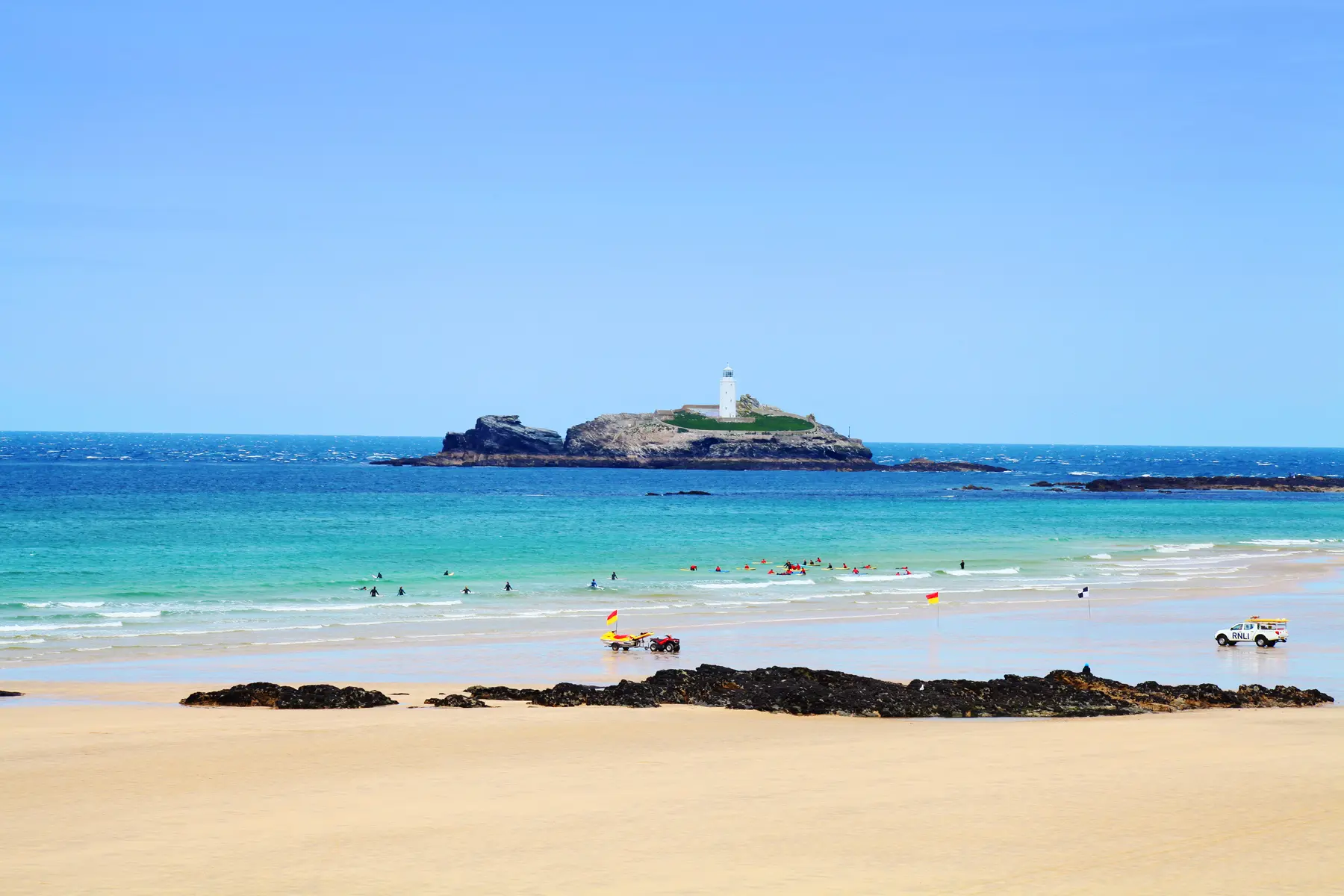
Comments
No comments yet — be the first to share your thoughts.
Leave a comment
Your email won’t be published. Comments are checked before they appear.