

35 articles
St Ives doesn’t introduce itself; it beams. The harbour turns like a mirror, lanes are just about wider than a surfboard, and the light makes even a drying wetsuit look curated. Painters still chase it, beach-goers still lose hours to it, and the gulls operate a brisk pasty-tax with no right of appeal. You can slip from gallery hush to wave noise in a minute, then back to fish on a paper tray, sand tucked between receipts. It’s Cornwall, yes, but it doesn’t run on the clock, it runs on the tide. You might come chasing a beach day or a look round the galleries, and then you find yourself still there hours later, just waiting to see what the sky’s going to do next, because it never looks the same twice.
Things to See and Do in St Ives
The trick with St Ives is that you can’t really separate things to see from things to do – they blur together and one minute you’re peering into an art gallery, the next you’ve wandered onto a beach café terrace with sand still clinging to your ankles. The cobbled streets lead you in loops, past studios, pubs, and sudden sea views that stop you mid-stride, and whether it’s sculpture gardens, surf breaks, or just people-watching on the harbour wall, everything folds into the same day in that slightly messy, wonderfully Cornish way. It feels every inch a seaside town, but with quirks that stop it being predictable.
Historical Attractions
St Ives doesn’t shout about its history, but it’s there if you glance past the buckets and surfboards, and what began as a fishing village still lingers in the back lanes, in the granite walls that have stood up to centuries of Cornish weather, and in the stories people say were once whispered about smugglers. A few corners still carry those echoes if you stop long enough to notice.
St Ives Museum: Near the harbour, the St Ives Museum1 is a volunteer-run rabbit warren of rooms filled with everything from shipwreck relics to mining tools, and it’s a reminder that St Ives wasn’t always about golden sands and art galleries – people lived and worked hard here, and it shows in the fishing gear, photographs, and oddities crammed onto the shelves.
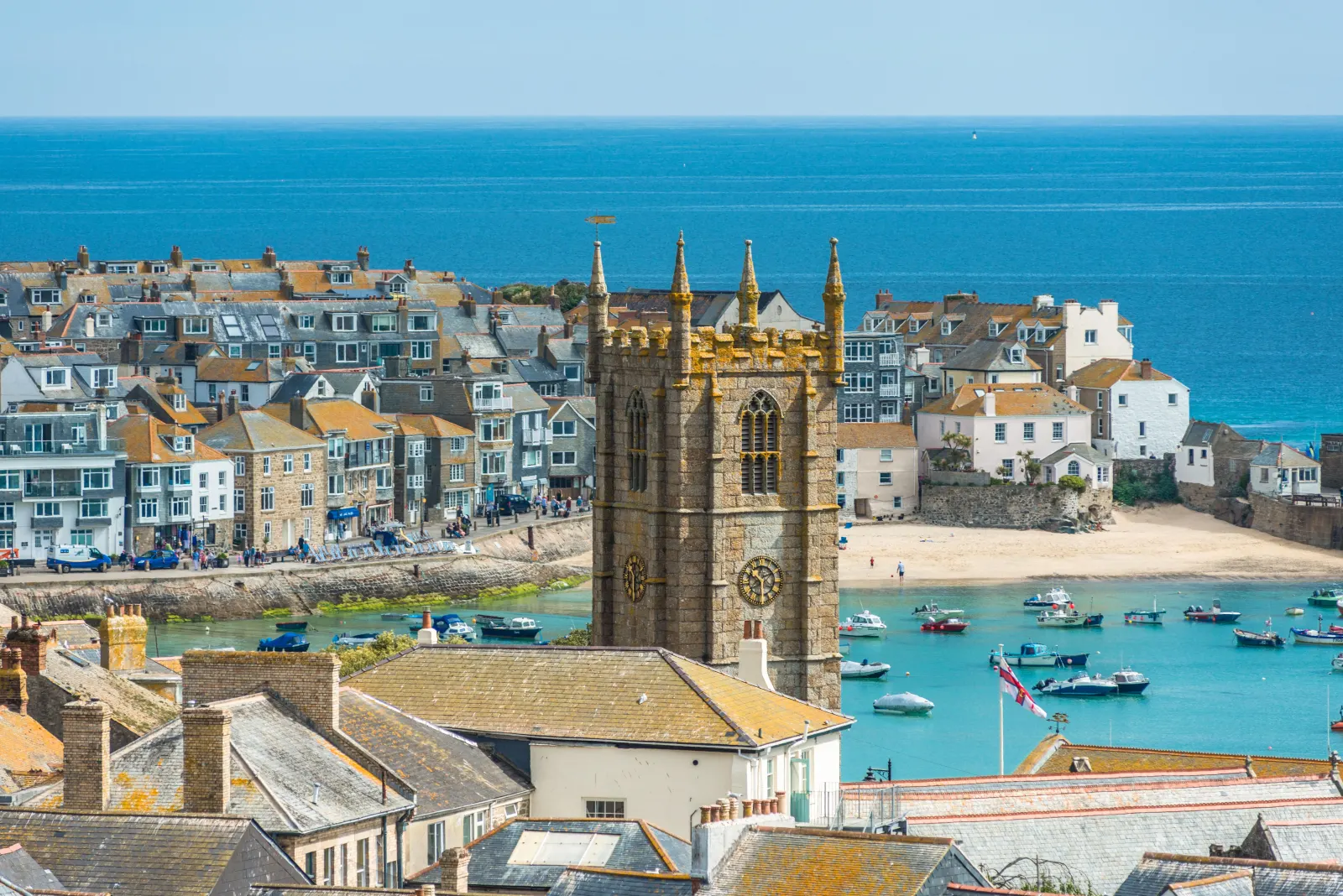
The Parish Church of St Ia: Right in the centre of town stands the Parish Church of St Ia, solid granite and impossible to miss. It takes its name from a 5th-century Irish saint who, legend has it, floated over to Cornwall on a leaf2 – not the most practical crossing, but certainly a memorable one. The church itself went up in the early 1400s and still rules the skyline above the harbour. Wherever you wander through the back streets, that tower has a way of reappearing, like a landmark reminding you where the heart of St Ives really is.
Chapel of St Nicholas (The Island): Up on The Island sits the Chapel of St Nicholas,3 small and weather-beaten, but it’s been keeping an eye on the bay since the 1400s. Sailors, smugglers, storms – it’s seen the lot. After crumbling into ruin, it was patched back together in 1904, and these days it’s one of those places everyone ends up pointing a camera at. With Porthmeor rolling out on one side and the harbour tucked in on the other, it feels like St Ives laid out in a single view.
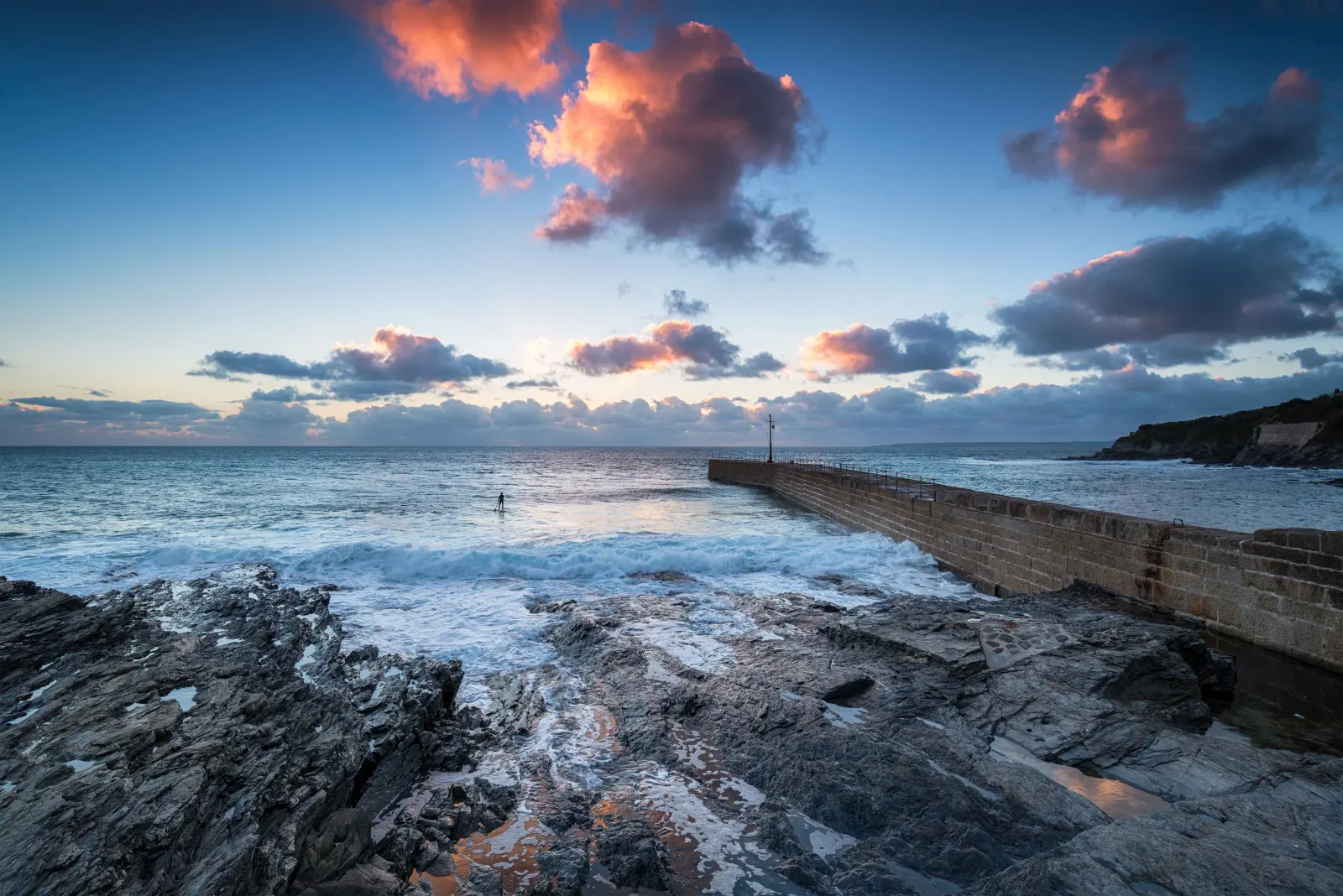
Smeaton’s Pier: The long granite arm stretching into the harbour isn’t just a nice place to wander – it’s part of the town’s survival story. Originally designed by engineer John Smeaton in 1767 to protect fishing boats from rough seas, the pier was later lengthened in 1890, and without it, St Ives Harbour might never have developed as it did, and the fishing industry here could have been far smaller.4
The Malakoff: On the hillside above the harbour sits The Malakoff, a Victorian railway viewing terrace named after a Crimean War fortress. Built in the 1860s, it was originally intended as a grand hotel platform but instead became one of the best vantage points in town, and today it’s the spot where most visitors first gasp at the sweep of St Ives Bay as they step off the train from St Erth.5
Barbara Hepworth Museum and Sculpture Garden: Although not “old” in the medieval sense, this is actually one of the town’s most significant historic spaces. Barbara Hepworth settled in St Ives during the Second World War and made her home and studio here until her death in 1975, and today the museum is run by Tate, with her sculptures standing in the garden just as she left them – a piece of modern art history rooted in Cornish granite and sea air.6
Family Activities
St Ives might have a reputation for art and sea views, but it’s also built for kids with sandy shoes and parents trying to juggle buckets, spades, and pasties. Families don’t have to work hard here to keep everyone entertained – the town does most of the heavy lifting itself. And with Porthminster and Porthmeor counted among Cornwall’s most friendly beaches, you’re never far from a spot where kids can run wild while adults breathe out for a bit.
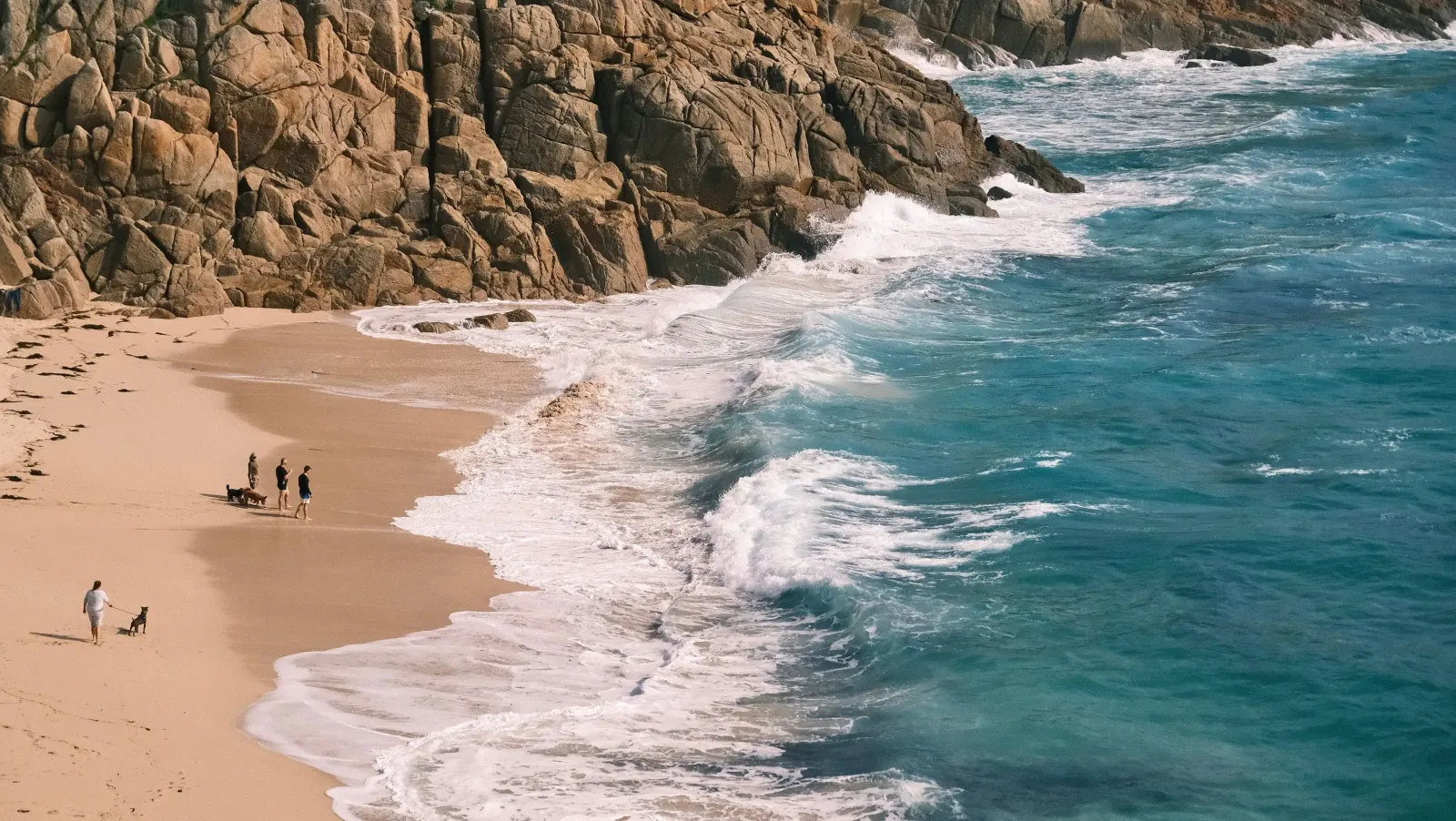
Porthmeor Beach: This is the big family draw: a Blue Flag sandy stretch right in front of Tate St Ives. It’s lifeguarded in summer, great for surfing lessons, and dotted with rock pools at low tide. Kids run wild here, teens grab boards, and parents can at least cling to the promise of a coffee from the beach café while the chaos unfolds.7 Did you know? Porthmeor is one of just ten Cornish beaches with Blue Flag status, recognised for water quality and safety.8
Porthminster Beach: Softer waves and a gentler atmosphere make Porthminster the family beach of choice if bodyboards feel a bit ambitious. The golden sands stretch long enough for games of cricket or just an excuse to stretch out a picnic rug. It’s only a few minutes’ walk from the train station, so it’s also one of the easiest beaches to reach if you’re arriving by rail.
St Ives Harbour & Harbour Beach: Right in town, the harbour doubles as a safe family beach at low tide. It’s a place where kids paddle in shallow water while fishing boats bob just beyond. The bonus is you can slip straight off Fore Street for an ice cream without needing to pack up the whole day’s beach kit.9
Tate St Ives: Yes, even galleries can work for families. Tate St Ives runs family-friendly workshops and trails that stop kids from yawning in front of canvases. The building itself is light, airy, and close enough to Porthmeor that you can bribe the little ones with beach time after a quick spin through the exhibits.10
Boat Trips from St Ives Harbour: If the sea is calm, boat trips head out from the harbour to spot seals off Seal Island,11 fish along the Cornish coast, or just give kids the thrill of being on the water. Operators range from glass-bottom boats to fast RIBs, depending on how brave you’re feeling.
Outdoor Activities
Being outdoors in St Ives isn’t really optional – the town tilts you towards the sea and the sky whether you meant to or not. Between the coast path, the golden beaches, and the viewpoints that sneak up on you as you turn a corner, most days end up with salt in the air and sand in your shoes.
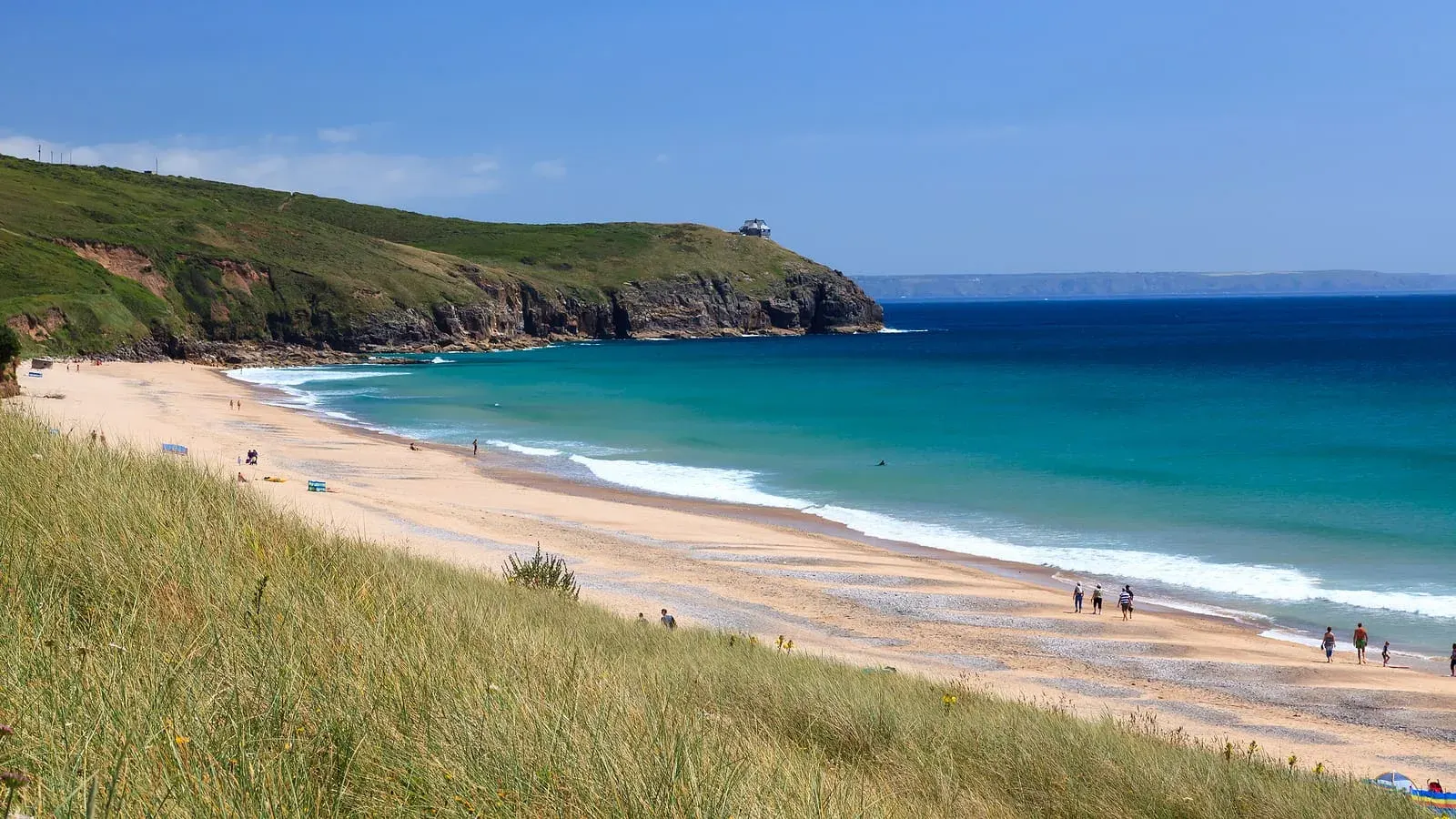
St Ives Bay Walks: The arc of St Ives Bay is best appreciated on foot, especially if you take the coast path east towards Hayle. You’ll get long stretches of golden sand, glimpses of Godrevy Lighthouse, and the kind of wide Cornish skies that make even a short walk feel like a proper adventure.13
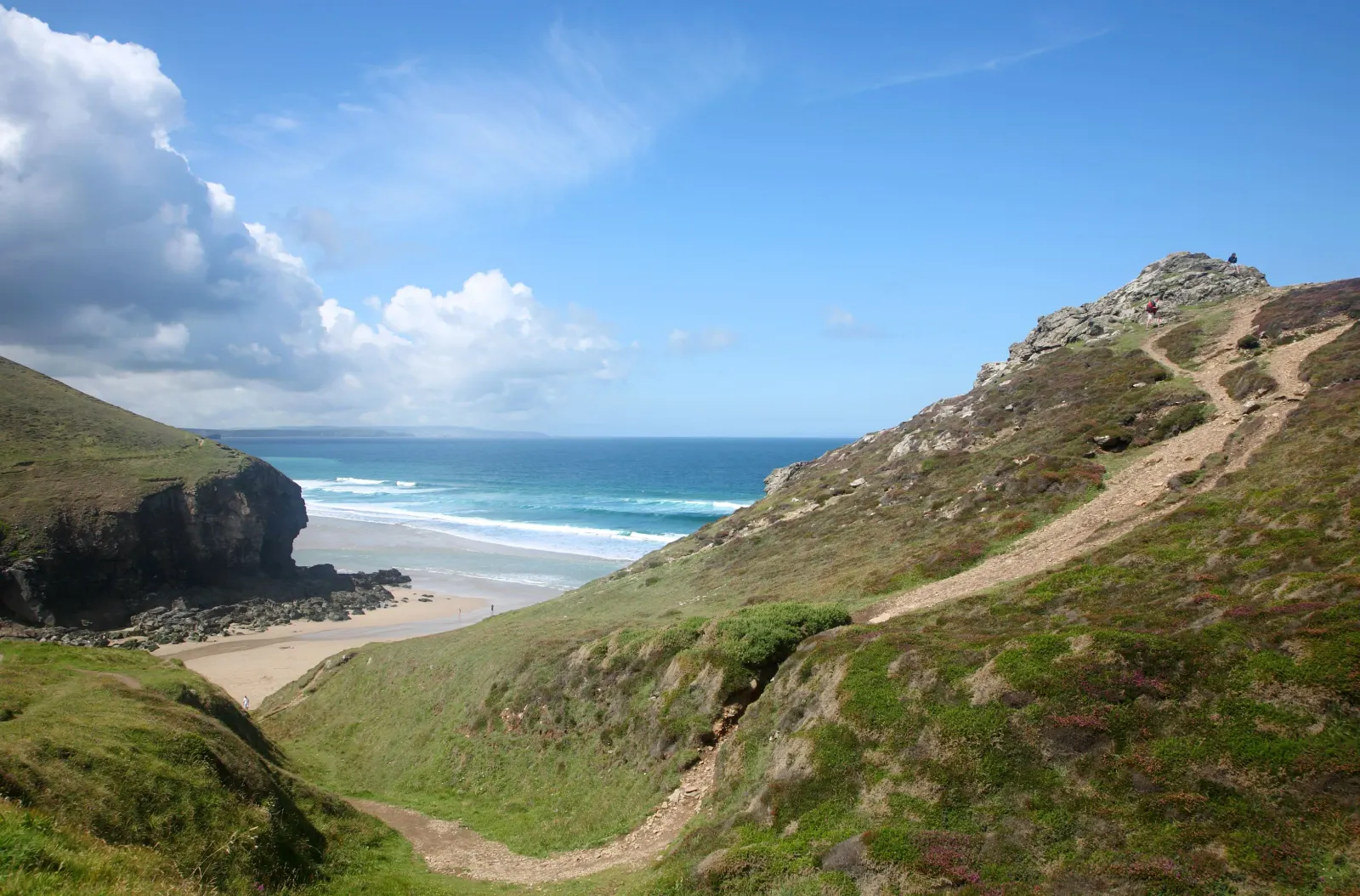
Clodgy Point and Penwith Headlands: West of town, the coast path climbs over granite cliffs towards Clodgy Point and the wilder Penwith coastline where it’s rougher, windier, and feels a world away from ice creams on Fore Street, and on the right day you might spot gannets diving offshore or even the back of a basking shark in summer.
A calmer patch of sand just along the coast path, Carbis Bay is known for paddleboarding and sea swims. It grabbed global headlines during the G7 Summit in 2021, but most of the time it’s more about kayaks and picnic rugs than politics.
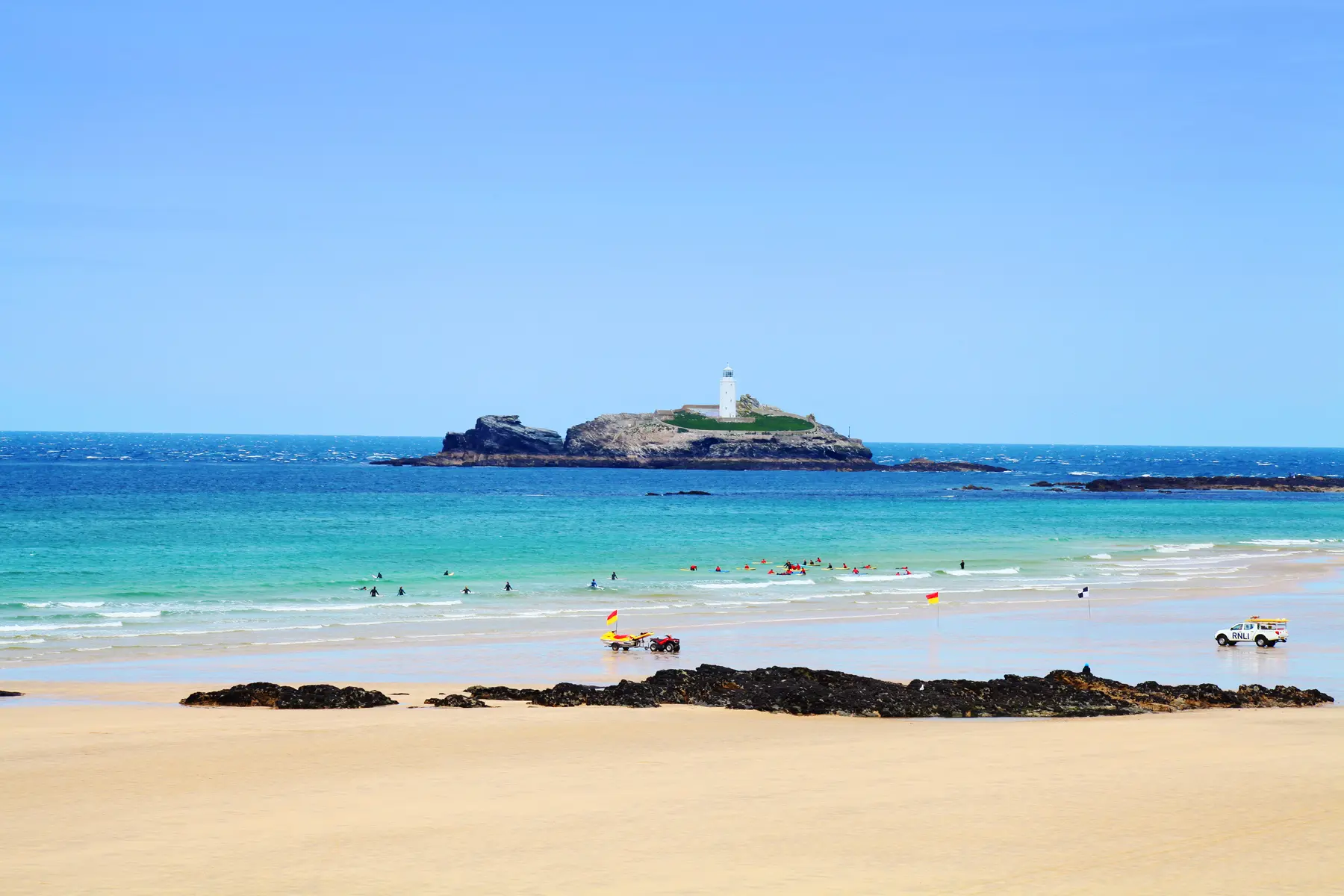
Godrevy and Gwithian: A little further east beyond Hayle, Godrevy’s lighthouse stands guard over the bay, famously inspiring Virginia Woolf’s To the Lighthouse.15 The cliffs and dunes here are great for walking, while Gwithian beach stretches endlessly for kitesurfers, dog walkers, and anyone who likes their sandy beaches a bit less crowded.
Food and Drink
Food in St Ives is never just background – it’s baked into the day. You can wander from a pasty in a paper bag to a beach café with sea spray on the windows, then find yourself at a table where the fish on your plate probably came in on the tide that morning. It’s not about showiness so much as freshness, and whether you’re ducking into a pub, chasing a cream tea, or settling into something fancier, the whole town smells faintly of the sea and butter.
Cafés and Coffee Houses
St Ives does cafés the way it does beaches – a little crowded in summer, but each one has its own corner of charm. Some have stunning sea views, others have big slabs of cake, and a few feel more like someone’s living room than a business. Here are a handful worth pausing in.
Porthmeor Beach Café: Right on the sand, this is the place where breakfast can merge into lunch without you noticing. Glass walls pull in the sea views, the menu swings from small plates to seafood platters, and evenings sometimes roll into cocktails by the surf.
The Yellow Canary Café: Just off Fore Street, The Yellow Canary16 has been fuelling shoppers since the 1970s. It’s not posh, but it’s got strong coffee, toasted sandwiches, and plenty of homemade cakes and the regulars wouldn’t have it any other.
Scoff Troff Café: With a name you can’t forget, Scoff Troff17 takes the hearty route: stacked breakfasts, big sandwiches, and smoothies if you’re feeling virtuous. It’s dog friendly, so expect to see a few sandy paws under the tables.
The Cornish Deli: Half café, half deli, this little spot on Chapel Street is where you go for local produce turned into generous plates, like Cornish cheese platters, crab sandwiches, and strong coffee. It’s a bit hidden away, but that just makes it all the more special.18
Pubs
St Ives doesn’t really do quiet corners when it comes to pubs, and even the smallest ones have a hum of chatter, and most come with a whiff of sea air. Some love to talk about their fishing heritage, others really enjoy their live music, but all of them know how to pour a pint that tastes better after a walk on the sand.
The Sloop Inn: Right on the harbourfront, The Sloop19 is the pub everyone ends up at sooner or later… It dates back to around 1312, which makes it one of Cornwall’s oldest inns, and the walls are thick with stories of fishermen, smugglers, and holidaymakers who stayed longer than planned.
The Union Inn: Perched just off Fore Street, The Union20 is a classic Cornish pub with a reputation for live music. It’s compact, noisy in the best way, and still carries some of the atmosphere of the 19th-century port town, when workers and sailors filled its rooms.
The Queens Hotel: Don’t let the name fool you – it’s a pub first, hotel second. The Queens21 is where you’ll find Cornish ales on tap, hearty food, and a steady stream of locals mixing with visitors, and it’s the sort of place where conversations jump from fishing to football in the same breath.
The Castle Inn: Tucked into Fore Street, The Castle is a low-beamed, proper old Cornish pub that specialises in real ales, with guest taps that change often enough to keep beer fans checking back. It’s one of the cosier stops in town, with a log fire in winter and benches outside in summer.
The Lifeboat Inn: Also overlooking the harbour, the Lifeboat Inn22 is a nod to St Ives’ longstanding connection with the RNLI. It’s a bit bigger than some of the older pubs, with a spacious bar and plenty of seating, and there’s a menu that keeps both families and late-night drinkers happy and well-fed.
Breweries and Distilleries
You don’t have to go far in St Ives to find something brewed, distilled, or pressed into a glass – the town and its neighbours seem to have agreed that if you’re going to live on the Cornish coast, you might as well make drinks that taste like it.
St Ives Brewery: Born in 2010, St Ives Brewery23 has grown from a garage project to a proper Cornish success story. Their flagship beers (Knill by Mouth, Boilers, and Alba IPA) all nod to local landmarks and history, and they’ve even got a taproom at Brewhouse Café on the coast, where you can sip with sea views and a plate of food alongside
St Ives Cider: Run by a husband-and-wife team just outside town, St Ives Cider24 presses Cornish-grown apples into crisp, small-batch ciders. They do everything from traditional still scrumpy to modern sparkling styles, and you’ll find their bottles in local pubs and shops across west Cornwall.
Polgoon Vineyard & Orchard: A short hop down the road in Penzance, Polgoon Vineyard25 produces award-winning wines and ciders on a south-facing slope overlooking Mount’s Bay, and visitors can take tours, taste their sparkling rosé or still white wines, and wander the orchards that supply their cider line.
Curio Spirits Company: A little further afield, Curio Spirits26 crafts small-batch gin and vodka infused with coastal botanicals like rock samphire. It’s not technically St Ives, but its products pop up all over the town’s bars and shops, tying the flavour of the Cornish coast into every glass.
Farm Shops
Cornwall does supermarkets, yes, but St Ives and its neighbours still have those little food stops where what’s on the shelves actually grew or grazed nearby. They’re the sort of places where you leave with muddy potatoes, a wedge of cheese, and usually something you didn’t plan to buy, and you’re one hundred percent happy about it all.
Bosavern Community Farm: Not exactly a farm shop, more of a working community farm that sells its veg direct, but worth knowing about because it’s where you’ll get boxes of seasonal produce, eggs with the occasional feather still clinging on, and proper sourdough bread – it feels earthy and no-nonsense, because it is.27
Trevaskis Farm: A short drive from St Ives, Trevaskis28 is part pick-your-own, part farm shop, part café, with strawberries in summer, root veg in winter, and shelves full of jams, chutneys, and local meats. Families pile in for the “pick your own” fields, but plenty just come for the food shop that’s crammed with Cornish staples.
Trink Dairy: Trink Dairy29 is a great place to do some shopping – it’s where milk still tastes like milk, and if you’ve forgotten what that’s like, just have a sip and it’ll all come flooding back to you. It’s not homogenised, so you might find cream floating on the top, but it’s all the better for it. You can even use self-service vending machines to get the freshest pint possible.
Places to Stay in St Ives
St Ives is one of those special types of season towns where the bed you wake up in makes all the difference to your day – sleep by the harbour and you’ll wake up to gulls, or head up the hill and you’ll get sea views that totally make the climb worth it. And from B&Bs to self-catering cottages to gorgeous bespoke hotels, the options are as mixed as the tides. Plenty of visitors decide one stay isn’t enough and end up looking for a holiday home, drawn in by the idea of waking up to the harbour all year round.
Expedia.com: If you prefer to browse rather than decide right away, Expedia.com lists hundreds of St Ives options, from small B&Bs on cobbled streets to luxury apartments with balconies over the harbour, and the filters make it easy to compare pricing, parking, or which places really are dog-friendly, so it all helps you make the right choice. Check availability and best prices.
Best Value Hotels:
Looking for a comfortable stay without overspending? St Ives has a great range of well-rated mid-range hotels, ideal for enjoying its beaches, galleries, and vibrant seaside atmosphere. Check latest deals & availability.
Boutique & Character Stays:
For something more distinctive, St Ives offers plenty of characterful stays—from stylish boutique hotels to charming seaside guesthouses full of Cornish charm. Check latest deals & availability.
Dog-Friendly Places to Stay:
Travelling with your dog? You’ll find a variety of pet-friendly options in and around St Ives, with access to coastal paths, scenic walks, and dog-friendly beaches nearby. Check latest deals & availability.
Self-Catering & Cottages:
Prefer your own space? St Ives has a wide choice of self-catering stays, including seaside cottages, modern apartments, and peaceful retreats just outside the town. Check latest deals & availability.
Featured St Ives Hotels & Accommodation
Treganna Castle Resort:
Treganna Castle Resort is a 72-acre estate on the edge of town, and it really does do the whole package with hotel rooms, self-catering lodges, tennis courts, and indoor pool, and beautiful gardens rolling down towards the sea. Plus, it’s family-friendly, but it’s still peaceful enough for couples too. Check availability and best prices.
The Western Hotel:
The Western Hotel30 is one of the oldest lodging places in town. It’s on Gabriel Street, which means it’s nice and central, and there’s a bar that doubles as a lively music venue, which means the chances of stumbling into a folk music gig after dinner are fairly high. Check availability and best prices.
Carbis Bay Hotel:
A little outside the centre but – wonderfully – right on the sand, the Carbis Bay Hotel is essentially luxury with a view. It’s got a spa, restaurants, and private access to Carbis Bay beach, and it’s so impressive that world leaders even stayed there during the G7 Summit in 2021. Check availability and best prices.
History of St Ives
St Ives doesn’t do straight lines – its past zigzags from saints and seine nets to steam trains and sculpture. Here’s the long story, with dates to hang your hat on and a few rabbit-hole facts along the way.
c. 5th–12th Centuries: Saint, Shoreline and a Name Takes Root
Legend says an Irish teenager, St Ia, crossed the sea on a leaf and gave the place its name; the parish church later kept her on the letterhead. Whether or not that’s true… well, we wouldn’t like to say, but what we can say for sure is that a chapel site on The Island (the headland above St Ives Harbour) has medieval roots, and St Ives’ natural cove was already doing what it still does best: shelter boats from Atlantic moods.
Archaeological digs on The Island have uncovered early Christian inscribed stones and evidence of burials, suggesting this headland was not just a lookout but also a sacred site from at least the 6th century. The dedication to St Ia places St Ives in the same missionary wave that linked Cornwall with Ireland, Wales and Brittany, a cultural triangle often overlooked in “English” histories of the period.
1410–1542: A Parish in Stone, and a Town on the Rise
The granite Parish Church of St Ia went up between 1410 and 1434, its tower staking a claim over the roofs and masts below, and rights of sepulture (burial) arrived in 1542, finally letting locals be laid to rest at home rather than trekking to Lelant. The church’s prominence mirrors the town’s: St Ives was now more than a scattering of cottages by a beach.
The church was financed by wealthy fishing families and merchants whose prosperity depended on pilchards, and the richly carved bench ends (many of which survive) are unusual survivals of late-medieval Cornish woodwork. It was also one of the few parish churches in west Cornwall to include a Lady Chapel, reflecting both devotion and local pride.
1487–1490: Markets, Fairs and a Market House
1487 brought a royal charter for a Saturday market and twice-yearly fairs, and sources tie the original Market House to around 1490.31 In a fishing port, a guaranteed market wasn’t just handy; it was oxygen. (The Market House footprint still centres the town today.)
Medieval market rights also allowed tolls to be collected, and surviving borough accounts from the 16th century show fines for selling fish outside the official market – a small-town version of regulation that kept profit flowing to the corporation.
1549: Rebellion, Rope, and a Grim Lunch Invitation
During the Prayer Book Rebellion, the Crown’s provost marshal Anthony Kingston summoned St Ives’ portreeve John Payne to lunch… and had him hanged before the pudding arrived. It’s a jolting footnote that shows how far national policy could reach into a small Cornish port.32
St Ives was not unique in its punishment – across Cornwall, officials who resisted the new English-language prayer book faced similar brutal reprisals. For a town whose life revolved around Cornish-speaking fisherfolk, the rebellion was not just about religion but about culture itself.
1639: Borough Status and a Working Harbour
A Royal Charter of Incorporation (1639)33 reshaped local government (portreeve to mayor; jurats to aldermen) and formalised control over the harbour and markets). Administration might sound dull, but this is when St Ives grows into a town that runs itself: fixing quays, policing dues, and minding the fishery that paid the bills.
Borough records from this period show disputes over quay space between St Ives and neighbouring fishing villages like Hayle and Lelant, underlining how valuable harbour control had become in a century when pilchard exports were rising.
1700s–1890s: Piers, Pilchards and a Skyline of Sails
Engineer John Smeaton built the big pier between 1767–1770,34 a new idea that sheltered the inner harbour; a later extension in the 1890s took it further seaward and added the cast-iron lighthouse you see today. Beneath that protection, the pilchard industry boomed through the 18th and 19th centuries: seiners hunted shoals, women salted, pressed and packed fish in the seine cellars, and barrels sailed for Catholic Europe where Lenten Fridays kept demand reliable.
At its height, St Ives exported tens of thousands of hogsheads of pilchards annually to Spain and Italy. Local historian John Tregenza estimated that in the 1820s as many as 1,500 people in the town depended directly on the pilchard trade. The smell of curing fish became so strong that visitors complained about it, though the profits more than compensated for locals.
1877–1892: The Railway Arrives, then Standard Gauge
On 1st June 1877, the St Ives Bay Line from St Erth opened,35 delivering holidaymakers and artists as reliably as it carried fish. In 1892 the route converted to standard gauge, linking St Ives cleanly into the Great Western web. And these trains didn’t just bring visitors; they changed who could imagine living and working here.
Within a decade of the line opening, boarding houses sprang up around Porthminster, turning St Ives into a seasonal resort as well as a fishing town. Guidebooks from the 1880s were already advertising the town as “salubrious,” showing how quickly the railway reshaped its reputation.
1880s–1930s: From Net Lofts to Studios
By the 1880s–1900s, artists had colonised the net lofts above Porthmeor Beach, evolving into the now Grade II* Porthmeor Studios,36 arguably the oldest continuously used artists’ studios in Britain. The St Ives Society of Artists (1927) gave the colony structure and swagger, exhibiting locally and on tour. Fishing continued below; paint flew upstairs.
Among the earliest arrivals were Julius Olsson and Adrian Stokes, who encouraged marine painting students to set up easels on the beach itself. Their teaching linked St Ives into the wider European plein-air movement, drawing parallels with artists’ colonies in Brittany.
1938–1940s: Shipwreck, Lifeboats and War
In January 1938, the SS Alba grounded off Porthmeor in a gale, and the rescue turned tragic when the St Ives lifeboat capsized; five of Alba’s crew died.37 The incident haunted the town, and later inspired paintings by Alfred Wallis. During the war, the Mariners’ Church (now the Society’s gallery) was requisitioned as a field hospital; artists and evacuees arrived, and St Ives’ modern art chapter accelerated.38
1949–1975: Hepworth, Nicholson and the St Ives School
Barbara Hepworth bought Trewyn Studio in 1949, carving in the open air among palms and granite; with Ben Nicholson and Naum Gabo (wartime arrivals), she helped anchor the post-war St Ives School of abstraction. Hepworth lived and worked here until her death in 1975; her studio became the Barbara Hepworth Museum & Sculpture Garden soon after.
1993–2017: Tate St Ives and a New Kind of Pilgrimage
The Tate Gallery, now Tate St Ives, opened in 1993, answering the obvious question: if modern British art has a seaside capital, why isn’t there a gallery here? A major extension in 2017 doubled exhibition space and eased the crowds. Between Tate, Leach Pottery (founded 1920), and the Hepworth, the culture-to-ice-cream ratio in town got pleasantly skewed.
2000s–Present: Festivals, Footfall and a Living Harbour
The fishing fleet is smaller, but St Ives Harbour still works for its keep; Smeaton’s Pier remains the town’s granite seat in any weather. Culture now shares the diary with surfing at Porthmeor Beach, family days on Harbour Beach and Porthminster, and September’s art-heavy festival season,39 and the flow of visitors is helped by one of the UK’s most scenic branch lines; the St Ives Bay Line40 has become an attraction in its own right.
Modern Developments
By the mid-20th century, St Ives had morphed from fishing port to tourist magnet, but that came with its own growing pains – holiday cottages and second homes began snapping up old fishermen’s dwellings, sometimes sitting dark for months of the year. For locals, it created tension with full streets in August, and ghostly lanes in January. It’s a pattern that hasn’t gone away, though campaigns for affordable housing have been pushing back since the 1980s.
A Cultural Heavyweight
When Tate St Ives opened in 1993, it gave the town a new kind of pull, and the £20 million extension in 2017 only underlined it. Suddenly there was space for bigger shows, fewer queues, and a reason to wander beyond the sand… Add in the Barbara Hepworth Museum and the Leach Pottery, and St Ives stopped being seen as just a seaside resort with pretty views – it became a place where art is as much a draw as the beaches.
Tourism and the Economy
Tourism keeps St Ives ticking, and nowhere shows it off better than the September Festival. Started back in 1977, it’s grown into a fortnight of music, poetry, and theatre that spills out onto the streets and fills the pubs, but the flip side is that the town sometimes groans under its own popularity – trains on the St Ives Bay Line crammed shoulder to shoulder, car parks overflowing the minute the sun comes out. Both Cornwall Council and the town council are left playing traffic warden and host at the same time, trying to keep visitors happy without making daily life impossible for the people who actually live here.
Environmental Moves
Plastic reduction campaigns have taken root here too, and beach cafés and independent shops have championed reusables, while local groups have joined the fight to keep St Ives Bay clear of litter and marine pollution. It ties neatly back to Cornwall’s broader identity as a region trying to preserve its coastline while living off it.
Key Buildings in St Ives
St Ives doesn’t really go in for pomp – its best buildings aren’t castles on hills but granite churches, old pubs, and studios where the paint never seems to dry. They’re scruffy in places, surprising in others, and all stitched into the life of the town.
- Parish Church of St Ia: The church of St Ia took shape between 1410 and 1434, and its granite tower still sticks up above the harbour like it’s keeping watch. It’s dedicated to a teenage Irish saint who, legend insists, floated here on a leaf. Inside, there’s a wagon roof and carved bench ends that prove St Ives had a flair for detail long before the Tate rolled in.
- Market House: Right in the centre, the Market House42 is about as St Ives as it gets since it was built around 1490, rebuilt in 1832, it’s been everything from pig fair venue to town hall. The royal charter of 1487 gave St Ives its markets and annual fairs, and the building’s been buzzing with trade and gossip ever since, and today it’s home to the Guildhall, where you’re more likely to find a craft market than livestock.
- The Sloop Inn: Down on the harbourfront, the Sloop Inn has been around since at least 1312, which means it’s been pouring pints for seven hundred years, and with its low ceilings, salty air, and a view across the boats, it’s kept going through fishing booms, smuggling scares, and selfie sticks.
- Porthmeor Studios: Above Porthmeor Beach, old net lofts turned into the Porthmeor Studios in the 1880s. Artists painted upstairs while fish were salted below, and somehow it all worked, and by the 20th century, it was the heart of the St Ives art scene, and it’s still going strong.
- Smeaton’s Pier: John Smeaton built the pier between 1767 and 1770, giving the fishing fleet some proper shelter. In the 1890s it was pushed further out to sea and topped with the cast-iron lighthouse that still flashes today, and walk out along it and you’ll see how the harbour has always been the town’s stage.
Famous People from St Ives
For a town that once made its living gutting pilchards, St Ives has a knack for producing people who ended up shaping art, writing, and even cycling history, and here are just a few to think about.
- Barbara Hepworth: Barbara Hepworth turned up in St Ives during the war, when London was getting dangerous, and she more or less settled in for good. She worked out of a place called Trewyn Studio, and if you walk through it now – it’s the Barbara Hepworth Museum and Sculpture Garden – you can still see her bronzes scattered between the trees and shrubs, as if she’d only just left them there.
- Bernard Leach: Potter, teacher, cultural bridge-builder… Bernard Leach43 did a lot from his little corner of St Ives. He set up the Leach Pottery in 1920 and trained people who would carry his ideas all over the world, and if you’ve ever seen someone get misty-eyed about the perfect bowl, odds are Leach had something to do with it.
- Virginia Woolf: Woolf’s family rented Talland House when she was a child, and those summers left their fingerprints all over her work. The lighthouse at Godrevy became To the Lighthouse, and the pull of St Ives haunted her writing long after she left.44
- Alfred Wallis: Wallis45 wasn’t trained, didn’t have fancy brushes, and often painted on scraps of cardboard, but his fishing scenes caught the eye of the modernists… and now he’s in the Tate. He painted ships the way he remembered them, not how they looked, which might explain why his work still feels alive.
Education in St Ives
Ask anyone who grew up here and they’ll tell you school days in St Ives stick with you. The buildings are modest, the numbers smaller than in bigger towns, but the sense of place – sea air drifting through the windows, festivals spilling into the term calendar – makes education here feel a little different.
Nursery and Early Years
St Ives has a few nurseries that serve as the first stop for local children. They’re not huge, so parents tend to know the staff by name, and children often bump into their playmates again on the beach at weekends. Places like The Barn Day Nursery are long-standing, while newer childcare groups have cropped up to meet growing demand from families moving into the town. The emphasis is on small-scale care rather than glossy facilities, but most parents would say that suits St Ives just fine.
Primary
At primary level, children usually begin at either St Ives Infant School46 or St Ives Junior,47 which sit close together in the centre of town, or at St Uny CofE Academy48 over in Carbis Bay. These schools are central to community life; sports days draw big crowds, Feast Day parades march straight past the gates, and the annual school productions are practically town events. Standards vary if you comb through Ofsted reports, yet many families choose them for the sense of continuity – the same faces, the same traditions, the same teachers who’ve taught siblings and sometimes even parents.
Secondary
There’s only one option in town for the older years: St Ives School49, a compact secondary that sits on the hillside with sea views most schools would envy, though pupils probably take them for granted. The school has steadily improved its results, and it’s earned a reputation for encouraging creativity, especially in art and design, which feels fitting given the town’s reputation.
Further Education
Once GCSEs are finished, teenagers usually travel, and the closest option is Penwith College in Penzance, part of Truro and Penwith College,50 which has grown into one of the county’s strongest providers for A-levels and vocational courses. Cornwall College[60] in Camborne is another familiar destination, and those aiming for something more specialist often go further afield. St Ives itself doesn’t run a sixth form, so the daily commute becomes part of life at 16, but with good rail and bus links, it’s not as much of a hurdle as it sounds.
Demographics of St Ives
Looking at the figures for St Ives gives a different perspective on the town, beyond the galleries and the harbour, and Census data paints a picture of a community that has held fairly steady in numbers, has grown older in profile, and remains rooted in Cornish and wider UK identity. And unlike larger centres such as Truro, Newquay, or Redruth, St Ives hasn’t expanded much in recent years, and its smaller scale is part of what keeps it feeling distinct.
Population and Change
The 2021 Census recorded 10,756 residents in the parish of St Ives, a slight drop from 11,435 in 2011.51 While Cornwall as a whole grew by 7.1% over the same period, reaching around 570,300 people,52 St Ives has been one of the exceptions, showing how coastal towns don’t always follow the county-wide trend.
Age Profile
St Ives reflects the wider ageing of Cornwall, with the county’s median age rose to 47 years in 2021, compared with 40 across England, and in St Ives itself, the census shows fewer children and teenagers than you might expect, a solid working-age population, and a significant proportion aged 65 and over. This balance makes the town feel older on the ground, with many households shaped by retirement moves and long-term residents who have remained here well into later life.
Birthplace and Migration
St Ives, much like the rest of Cornwall, is still largely home to people born in the UK, and the census makes that plain, with only small numbers coming from Europe or further afield. Movement into the town is steady rather than hurried, and unlike busier places such as Truro or Plymouth, a new family here doesn’t just blend in, they’re often quickly drawn into the life of the town.
Ethnicity and Identity
When it comes to ethnicity, Cornwall remains one of the least varied parts of England and Wales, and in 2021, almost 97% of people identified as white, a figure that’s barely changed since 2011. St Ives follows the same pattern, where diversity is present but limited, but what’s stronger is the pull of Cornish identity. In St Ives it’s easy to see in the annual parades, the school events, and in the quiet but firm way many residents describe themselves as Cornish first.
Crime in St Ives
When you walk the streets of St Ives, it doesn’t feel like a town with a crime problem, and that impression lines up with the data. A recent safety assessment places St Ives among the top ten safest small towns in Cornwall, and overall, as the 36th least dangerous location out of 212 in the county, based on crimes per 1,000 people, which came in at 51.53
That figure isn’t just kinder to St Ives than to Cornwall as a whole, it also compares favourably with national benchmarks: the town’s crime rate is 5% lower than Cornwall’s average, 18% below the South West region, and 30% under the England, Wales & Northern Ireland average. In short, St Ives is quieter than many places people might expect.
Types of Crime
Dig a little deeper at your local police site and the picture becomes more tangible. In June 2025, violence and sexual offences made up the largest share of reported crime, with 27 incidents – nearly half the month’s total. Anti-social behaviour followed, with 13 incidents, then criminal damage and arson at 7, and theft in various forms was present but less prominent. And while shops can see their fair share of trouble, bike theft is rare enough to barely register.54
Emergency Situations
That’s not to say St Ives is immune to headline-grabbing moments. One notable exception came in late August 2025, when the fire escape of a flat collapsed, injuring four family members, one of whom suffered potentially life-changing wounds. Emergency crews and the Health and Safety Executive were called in, and the event served as a reminder that serious incidents can, on rare occasion, rock this tightly knit community.
Transport in St Ives
St Ives sits at the end of a pretty line and a stubborn little road. Getting here is part postcard, part puzzle. It’s Cornwall in a nutshell.
Driving and Parking
From the A30 you peel off at Lelant and take the A3074, a ribbon of bends that drops you towards the bay. It looks simple on a map and then you meet the summer queues – the old streets weren’t built for holiday traffic, so most people do the sensible thing and leave the car on the hill at Trenwith long-stay,55 then ride the shuttle or walk down to the seafront. Smaller car parks at Barnoon and The Island are closer to the beaches but fill before the gulls have finished breakfast in August. If you’re arriving from Truro or Plymouth, plan your timings and your patience; both help more than any sat-nav.
Train
The neat way in is by rail; change at St Erth on the Cornish main line and take the St Ives Bay branch, ten minutes of cliff-edge track that feels like a film location. Trains run through the day and hook you back to Truro, Plymouth and the rest of the South West without the car park dance. Step off at Porthminster and you’re already looking at the beach.
Bus
Buses stitch St Ives to the rest of west Cornwall. Services run to Penzance, Hayle and Truro, steady in daylight, thinner in the evenings, and in town, the little shuttles up and down the hill do the heavy lifting between the big car park and the harbour. On wet days they’re a blessing; on sunny days they save your calves.
Boat
No commuter ferries here, but the harbour is busy when the weather plays ball. Skippers run seasonal trips to Seal Island, mackerel fishing jaunts, and little cruises that nose along the coast towards Godrevy. It’s travel with a grin rather than a timetable, and it reminds you why St Ives exists at all.
Walking and Cycling
Once you’ve arrived, your best transport is your feet, especially because beaches, galleries and the town centre sit close together, with steep bits that wake the legs and lanes that still feel like a fishing town, and the South West Coast Path passes the door, so a short stroll can turn into a proper cliff walk if you let it. Cycling is possible, e-bikes make it friendlier, though the cobbles and gradients keep you honest.
Is St Ives Worth Visiting?
It depends who you ask, but most people end up saying yes. You’ll hear grumbles about the crowds in summer and the uphill walks from the car parks, but then you look out over the harbour or watch the sun drop behind Porthmeor and the complaints don’t seem to matter. St Ives has that mix of ordinary life and holiday escape that makes it stick in people’s heads. You don’t need an itinerary here – just a bit of time to wander, dip your toes in the sand, and see what all the fuss is about. And if you’re making a longer trip through west Cornwall, pairing it with a stop at Land’s End gives you two of the region’s most famous views in the same journey.
Article Sources
- St Ives Museum (2025) St Ives Museum. Available at: https://www.stivesmuseum.co.uk/ (Accessed: 30 August 2025) St Ives Museum[↩]
- St Ia of St Ives: a Byzantine saint in early medieval Cornwall? (2024) Caitlingreen.org. Available at: https://www.caitlingreen.org/2018/01/st-ia-of-st-ives-byzantine-saint.html Dr. Caitlin R Green[↩]
- St Nicholas Chapel – St Ives Town Council, Cornwall (2024) St Ives Town Council, Cornwall. Available at: https://stivestowncouncil-cornwall.gov.uk/places/st-nicholas-chapel/ (Accessed: 30 August 2025) St Ives Town Council[↩]
- Discover Smeaton’s Pier & History In St Ives Cornwall (2020) St Ives By The Sea. Available at: https://www.stivesbythesea.co.uk/blogs/st-ives/smeatons-pier-st-ives-cornwall St Ives By The Sea[↩]
- St. Ives (2022) The Malakoff Garden, St Ives Cornwall – What A View!, St Ives By The Sea. Available at: https://www.stivesbythesea.co.uk/blogs/st-ives/the-malakoff-garden-st-ives-cornwall (Accessed: 30 August 2025) St Ives By The Sea[↩]
- Tate (2019) Barbara Hepworth Museum and Sculpture Garden | Tate, Tate. Available at: https://www.tate.org.uk/visit/tate-st-ives/barbara-hepworth-museum-and-sculpture-garden Tate[↩]
- Portthmeor Beach (2025) (no date) TripAdvisor. Available at: https://www.tripadvisor.co.uk/Attraction_Review-g186243-d189207-Reviews-Porthmeor_Beach-St_Ives_Cornwall_England.html Tripadvisor[↩]
- Ten of Cornwall’s beaches receive Blue Flag status (2019) Cornwall.gov.uk. Available at: https://www.cornwall.gov.uk/council-news/communities-and-housing/ten-of-cornwall-s-beaches-receive-blue-flag-status/ (Accessed: 31 August 2025) Cornwall Council[↩]
- Visit Cornwall | Beaches: St Ives Harbour Beach (2023) Visitcornwall.com. Available at: https://www.visitcornwall.com/things-to-do/beaches/st-ives-harbour-beach Visit Cornwall[↩]
- Tate (no date) Tate St Ives, Tate. Available at: https://www.tate.org.uk/visit/tate-st-ives Tate[↩]
- Meor Studio (2016) Seal Island – St Ives Cornwall, St Ives Cornwall. Available at: https://www.stives-www.cornwall.co.uk/seal-island Meor Studio[↩]
- Atlantic Grey Seals (2024) Cruise Loch Linnhe. Available at: https://cruiselochlinnhe.co.uk/atlantic-grey-seal-page/ (Accessed: 31 August 2025) Cruise Loch Linnhe[↩]
- St Ives Town Trail – Walk (no date) South West Coast Path. Available at: https://www.southwestcoastpath.org.uk/walksdb/466 South West Coast Path[↩]
- Carbis Bay Blue Flag Beach (2021) Carbis Bay Estate. Available at: https://www.carbisbayhotel.co.uk/the-beach Carbis Bay Estate[↩]
- Barnett, D. (2022) Flash of genius: how a Cornish lighthouse inspired Virginia Woolf’s fictional icon, the Guardian. The Guardian. Available at: https://www.theguardian.com/books/2022/jul/24/flash-of-genius-how-a-cornish-lighthouse-inspired-virginia-woolfs-fictional-icon (Accessed: 1 September 2025) The Guardian[↩]
- Home & Online Shop – The Yellow Canary Cafe – St Ives, Cornwall (2021) The Yellow Canary. Available at: https://theyellowcanary.co.uk/ (Accessed: 1 September 2025) The Yellow Canary[↩]
- Scoff Troff Cafe, St Ives (no date) TripAdvisor. Available at: https://www.tripadvisor.co.uk/Restaurant_Review-g186243-d8395771-Reviews-Scoff_Troff_Cafe-St_Ives_Cornwall_England.html Tripadvisor[↩]
- The Cornish Deli – Home (2025) Cornishdeli.com. Available at: https://www.cornishdeli.com/ (Accessed: 1 September 2025) Cornish Deli[↩]
- Sloop Inn, St Ives, Cornwall | One of Cornwall’s Oldest & Most Famous Inns (2024) Sloop-inn.co.uk. Available at: https://www.sloop-inn.co.uk/ (Accessed: 1 September 2025) Sloop Inn[↩]
- The Union Inn, St Ives, Cornwall | Pubs And Restaurants St Ives (2016) Love St Ives. Available at: https://www.love-stives.co.uk/the-union-inn (Accessed: 1 September 2025) The Union Inn[↩]
- The Queens, St Ives (no date) TripAdvisor. Available at: https://www.tripadvisor.co.uk/Restaurant_Review-g186243-d2099045-Reviews-The_Queens-St_Ives_Cornwall_England.html Tripadvisor[↩]
- Lifeboat Inn, St Ives | St Austell Brewery (2019) Lifeboatinnstives.co.uk. Available at: https://lifeboatinnstives.co.uk/ (Accessed: 1 September 2025) Lifeboat Inn[↩]
- St.Ives Brewery – The Art of Brewing – Cornish Craft Beer (2015) St.Ives Brewery. Available at: https://stives-brewery.co.uk St.Ives Brewery[↩]
- St Ives Cider – Handmade with care in small batches (2025) Stivescider.co.uk. Available at: https://stivescider.co.uk/ (Accessed: 1 September 2025) St Ives Cider[↩]
- Polgoon Vineyard and Orchard produces artisan Wines, Ciders & Juices in Cornw (2018) Polgoon. Available at: https://www.polgoon.com Polgoon Vineyard and Orchard[↩]
- Curio Spirits (2018) Curio Spirits. Available at: https://curiospirits.co.uk Curio Spirits[↩]
- Bosavern Community Farm – Veg Boxes – Education – Community (2020). Available at: https://www.bosaverncommunityfarm.org.uk Bosavern Community Farm[↩]
- Welcome to our website! | Trevaskis Farm (2025) Trevaskisfarm.co.uk. Available at: https://www.trevaskisfarm.co.uk Trevaskis Farm[↩]
- Knowles, C. (2021) Welcome to Trink Dairy – Trink Dairy, St Ives, Trink Dairy, St Ives. Available at: https://www.trinkdairy.co.uk Trink Dairy[↩]
- The Western Hotel (2025) Hotelstives.com. Available at: https://www.hotelstives.com/ (Accessed: 1 September 2025) The Western Hotel[↩]
- History of The Market House, St Ives. Developed by St Ives Archive (no date). Available at: https://stivestowncouncil-cornwall.gov.uk/wp-content/uploads/2024/09/PA24_01083-HISTORY_OF_THE_MARKET_HOUSE_ST_IVES_-_BY_ST_IVES_ARCHIVE-7832152.pdf (Accessed: 1 September 2025) St Ives Council[↩]
- John Payne Memorial – St Ives | Cornwall Guide Images (2011) Cornwalls.co.uk. Available at: https://www.cornwalls.co.uk/photos/john-payne-memorial-st-ives-3680.htm (Accessed: 1 September 2025) Cornwalls.co.uk[↩]
- Constantine (2015) Constantinecornwall.com. Available at: https://constantinecornwall.com/a-history-of-st-ives Constantine in Cornwall[↩]
- Discover Smeaton’s Pier & History In St Ives Cornwall (2020) St Ives By The Sea. Available at: https://www.stivesbythesea.co.uk/blogs/st-ives/smeatons-pier-st-ives-cornwall St Ives by the Sea[↩]
- St Ives Branchline Opens | On this Day | Penwith Local History Group | Penzance, Cornwall, UK (no date) Penwith Local History Group. Available at: https://www.penwithlocalhistorygroup.co.uk/on-this-day/?id=148 Penwith Local History Group[↩]
- Porthmeor Studios Overview : Borlase Smart John Wells Trust (no date) www.bsjwtrust.co.uk. Available at: https://www.bsjwtrust.co.uk/artists-studios/porthmeor-overview Borlase Smart John Wells Trust[↩]
- 1938 A double disaster in St Ives (2018) Rnli.org. Available at: https://rnli.org/magazine/magazine-featured-list/2018/april/1938-a-double-disaster-in-st-ives (Accessed: 1 September 2025) RNLI[↩]
- About the Mariners’ Church – St Ives Society of Artists (2022) Stisa.co.uk. Available at: https://stisa.co.uk/number-5-ipsa-aliquid-ea-laboriosam-minus-et-modi-reiciendis/ (Accessed: 1 September 2025) St Ives Society of Artists[↩]
- Home – St Ives September Festival 2025 (2025) St Ives September Festival 2025. Available at: https://www.stivesseptemberfestival.co.uk/ (Accessed: 1 September 2025) St Ives September Festival[↩]
- St Ives Bay Line | Train travel guide (2025) Great Scenic Railways. Available at: https://greatscenicrailways.co.uk/lines/st-ives-bay-line/ (Accessed: 1 September 2025) Great Scenic Railways[↩]
- BBC News (2016) ‘St Ives referendum: Second homes ban backed by voters’, 6 May. Available at: https://www.bbc.co.uk/news/uk-england-cornwall-36204795 BBC[↩]
- The Market House – St Ives Town Council, Cornwall (2024) St Ives Town Council, Cornwall. Available at: https://stivestowncouncil-cornwall.gov.uk/places/the-market-house/ (Accessed: 2 September 2025) St Ives Town Council[↩]
- The Leach Pottery (no date) The Leach Pottery. Available at: https://www.leachpottery.com The Leach Pottery[↩]
- esdale77 (2019) Virginia Woolf in Cornwall – The Cornish Bird, The Cornish Bird. Available at: https://cornishbirdblog.com/virginia-woolf-in-cornwall/ Cornish Bird Blog[↩]
- Tate (no date) Alfred Wallis 1855–1942, Tate. Available at: https://www.tate.org.uk/art/artists/alfred-wallis-577 Tate[↩]
- St Ives Infant School (2025) Cornwall.sch.uk. Available at: https://www.st-ives-inf.cornwall.sch.uk/web/ (Accessed: 2 September 2025) St Ives Infant School[↩]
- St Ives Junior School – Learning Together, Free to Fly (2024) Stivesjunior.org.uk. Available at: https://stivesjunior.org.uk/ (Accessed: 2 September 2025) St Ives Junior School[↩]
- Home (2025) Stuny.org.uk. Available at: https://www.stuny.org.uk/ (Accessed: 2 September 2025) St Uny CofE Academy[↩]
- St Ives School (2024) Stivesschool.net. Available at: https://www.stivesschool.net/web/ (Accessed: 2 September 2025) St Ives School[↩]
- College courses in Cornwall – Truro and Penwith College (2019) Truro & Penwith College. Available at: https://www.truro-penwith.ac.uk Truro and Penwith College[↩]
- St. Ives (E04011556) – ONS (2021) Ons.gov.uk. Available at: https://www.ons.gov.uk/explore-local-statistics/areas/E04011556-st-ives (Accessed: 2 September 2025) Office for National Statistics[↩]
- Office for National Statistics (2022) How the population changed in Cornwall, Census 2021 – ONS, www.ons.gov.uk. Available at: https://www.ons.gov.uk/visualisations/censuspopulationchange/E06000052 Office for National Statistics[↩]
- Buck, T. (2024) CrimeRate, Crimerate.co.uk. Available at: https://crimerate.co.uk/cornwall/st-ives CrimeRate.co.uk[↩]
- St Ives Town (no date) Police.uk. Available at: https://www.police.uk/pu/your-area/devon-and-cornwall-police/st-ives-town/?tab=Statistics St Ives Town[↩]
- Trenwith Long Stay – St Ives Parking (2021) St Ives Parking – Taking the stress out of parking in St Ives. Available at: https://stives-parking.co.uk/car-park/trenwith/ (Accessed: 2 September 2025) St Ives Parking[↩]
Frequently Asked Questions
St Ives is special for its golden beaches, turquoise waters, and strong arts heritage. It’s home to the Tate St Ives, independent galleries, and a historic fishing harbour, all set along one of Cornwall’s most scenic coastlines.
It depends on what you’re looking for. St Ives is often seen as nicer for beaches, coastal scenery, and art galleries, while Penzance offers a larger town feel, seafront promenade, and better transport links. Both have their own charm in west Cornwall.
St Ives is right on the coast, with several beaches within walking distance of the town centre. Popular beaches like Porthmeor, Porthminster, and Porthgwidden are just a few minutes’ walk, making St Ives one of Cornwall’s most beach-accessible towns.
Yes — St Ives is one of the more expensive towns in Cornwall, especially for accommodation, dining, and property, due to its popular beaches, art scene, and high tourist demand. Prices are typically highest during summer and peak holiday seasons.
Yes — St Ives is well worth a day trip, offering beautiful beaches, a historic harbour, art galleries like Tate St Ives, and coastal walks, all within easy walking distance of the town centre. However, it is likely you will decide to stay for longer!
In St Ives, several hotels offer beautiful sea or harbour views, including Harbour Hotel St Ives overlooking Porthminster Beach, Primrose House St. Ives near sandy shores with scenic vistas, and Harbour View House Hotel St Ives with panoramic harbour views. Nearby options like Boskerris Hotel and Treloyhan Manor St Ives also offer excellent views across St Ives Bay and Carbis Bay.
Take a mainline train to St Erth, then change to the St Ives Bay Line, a scenic branch line with regular services to St Ives station. The journey from St Erth takes about 10 minutes and stops near Carbis Bay along the coast.
Yes — St Ives is dog-friendly, with coastal paths, harbour walks, and many cafés and pubs welcoming dogs. Some beaches allow dogs year-round or outside summer restrictions, making it a popular spot for dog-friendly holidays in Cornwall.
Top attractions in St Ives, Cornwall, include Tate St Ives, the historic harbour, and beaches like Porthmeor and Porthminster. Visitors also enjoy Barbara Hepworth Museum and Sculpture Garden, coastal walks, and the town’s independent galleries and shops.
Yes — St Ives is popular for surfing, with Porthmeor Beach offering consistent waves for beginners and experienced surfers. Local surf schools provide lessons and equipment hire, making it a top destination for surfing in Cornwall.
Some of the best hotels in St Ives, Cornwall include Tregenna Castle Resort for panoramic coastal views and family stays, Harbour Hotel St Ives overlooking Porthminster Beach, and Harbour View House Hotel St Ives for boutique sea and harbour views. Other excellent options nearby include the luxury Carbis Bay Hotel & Estate and the newly revamped Pedn Olva with rooftop vistas.
Yes — St Ives is accessible by bus, with regular services from Penzance, Truro, and other Cornish towns. Local buses stop near the town centre and beaches, making it easy to explore St Ives and the surrounding coast without a car.
Written by
Lisamarie is a writer and researcher with a long-standing love for Cornwall – its towns, coastlines, folklore, and everything in between. Most of her work involves blogging and articles, often focused on places and people, which pairs neatly with her fiction writing since both sides of her work let her balance research with imagination (and indulge a fondness for obscure facts). She lives with her husband, daughter, and a cat called Cheryl in a cottage in the Kent countryside, where she writes, paints, and watches horror films.
35 articles published on Cornwall.co.uk
Read more from Lisamarie Lamb →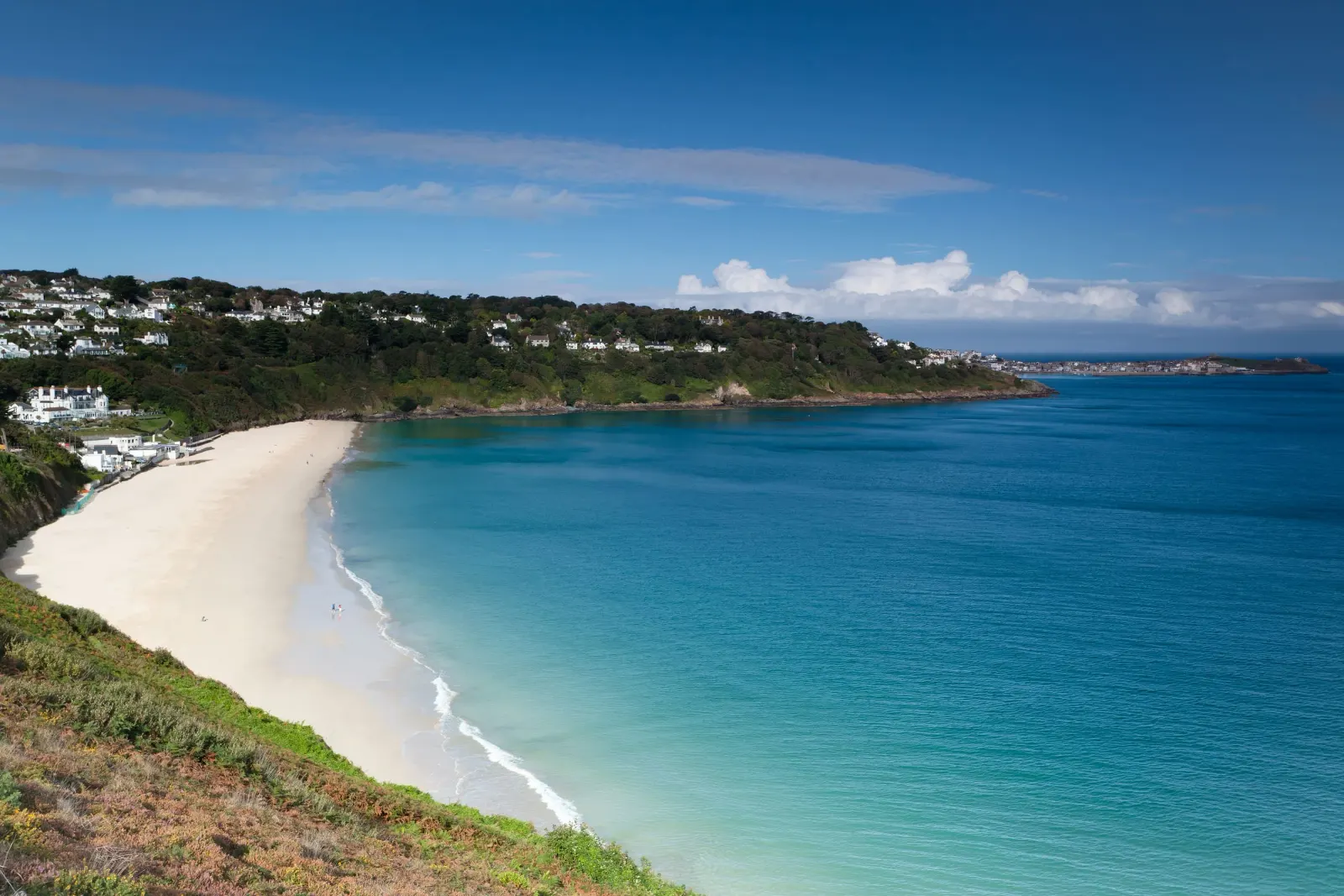
Comments
No comments yet — be the first to share your thoughts.
Leave a comment
Your email won’t be published. Comments are checked before they appear.