

35 articles
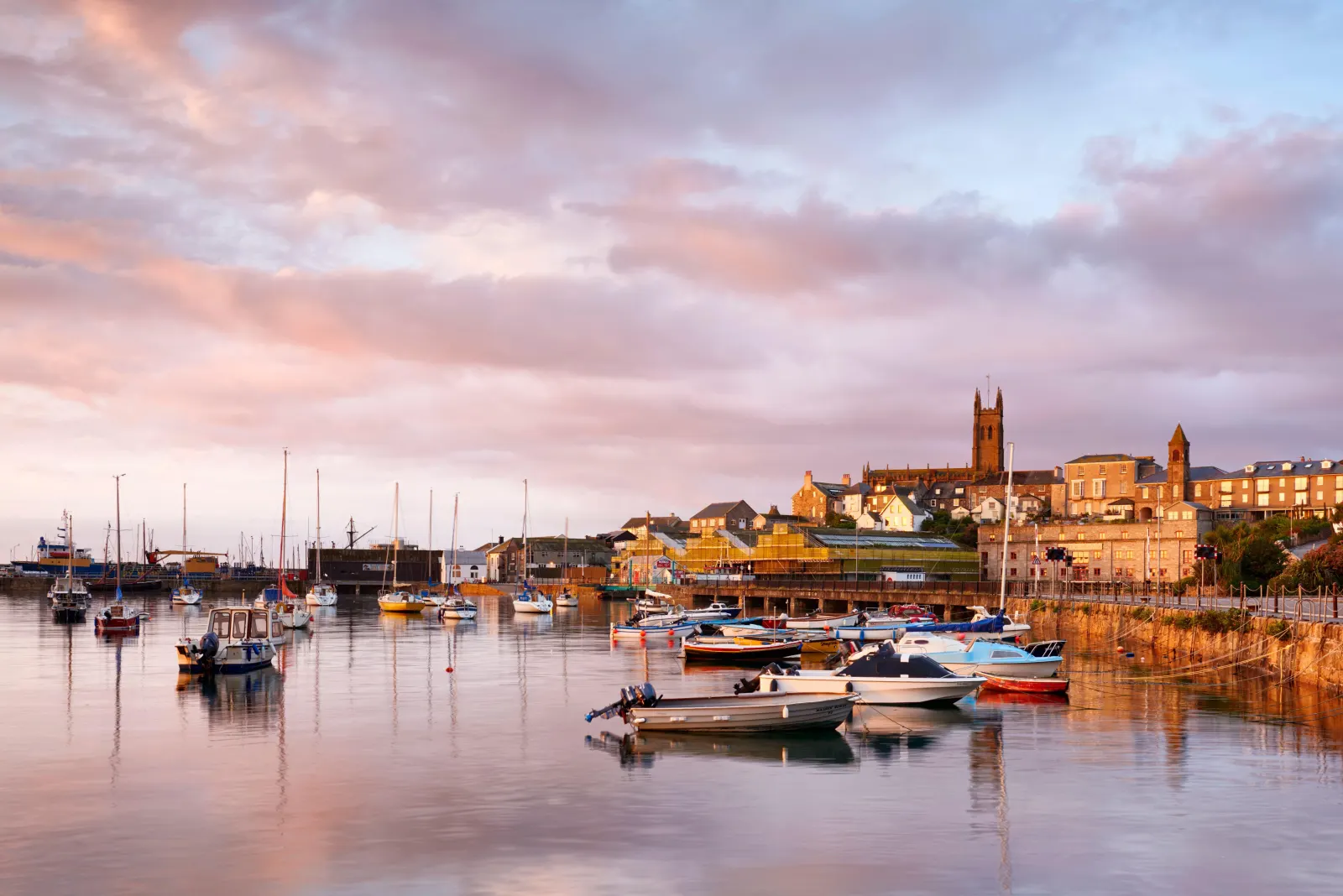
Penzance sits low on the coast, looking out at Mount’s Bay, but the town doesn’t announce itself with grandeur… It creeps up on you instead. You notice the mix first – a market street that never really slows, old stone walls beside shopfronts, the harbour with boats that still matter, and so much more. It isn’t a town that’s been smoothed down for visitors, which is half the reason people return. There’s music when festivals roll through, quieter days when the wind off the sea pushes everyone indoors, and always that sense of being at the end of the line but not quite finished. Penzance is many things at once, and that untidiness is what gives it life.
Penzance images
Things to See and Do in Penzance
Penzance doesn’t really reveal itself in order. You can head for the harbour, the galleries, or the gardens, but something else usually interrupts on the way. A mural, a busker, the sound of a festival band rehearsing – the town throws up small surprises that make the plan you started with feel less important.
Historical Attractions
Penzance doesn’t hand you its past on a plate. It comes in bits – a dome you can’t miss on Market Jew Street, a pub name that somehow ended up in Treasure Island, a lido that still smells faintly of salt and concrete. The town has never really polished its history; it just keeps living with it.
Chapel Street and the Admiral Benbow: Walk Chapel Street and you’ll hit layers that don’t quite line up. Smart Georgian frontages, small Cornish cottages, and then the Admiral Benbow,1 which looks like the sort of place that has heard more stories than it’s told. It dates back to the 1600s, when smuggling wasn’t an exception but an economy. People here call it a “free port,” though customs officers had other names for it… Stevenson borrowed the inn’s name for Treasure Island, and that’s probably how most people outside Cornwall first heard of it – not through shipping records or parish rolls, but through fiction.
Market House: Market Jew Street takes its name from the Cornish Marghas Yow (Thursday market) and its centrepiece is the granite Market House.2 The Market House went up in 1838, its dome making sure nobody mistook Penzance for a backwater. These days the traffic loops around it and people hurry by on their way down Market Jew Street, but the building still holds its ground in the middle of town.
Penlee House: In Penlee Park sits Penlee House – a Victorian villa converted into an art gallery and museum, and it’s best known for housing the Newlyn School paintings; works that captured the fishing villages of Mousehole, Newlyn and St Ives at the turn of the 20th century.3 Instead of distant landscapes, the artists painted working people, recording Cornish life in a way that feels both everyday and monumental.
Jubilee Pool: Down by Penzance Harbour is the Jubilee Pool,4 an art deco lido opened in 1935. Its triangular design was a civic project that gave the town a salt-water swimming pool unlike anything else in Cornwall, and although storms have damaged it repeatedly, most seriously in 2014, it’s been repaired and reopened with strong community backing.5
Morrab Gardens: Laid out in the 1880s on the grounds of a Georgian house, Morrab Gardens took advantage of Penzance’s unusually mild climate, and subtropical planting gave the gardens a character different from most of Britain, with palms and gunneras thriving where they had no right to. The gardens remain free to enter, part civic park, part horticultural experiment that has quietly endured for over a century.6
Family Activities
Penzance definitely isn’t short of things that work well for families, whether it’s letting off steam by the sea or finding a rainy-day option that doesn’t feel like a compromise.
Scillonian Ferry Trips: The Isles of Scilly might seem a world away, but families can get a taste of them on the Scillonian III ferry. The boat leaves Penzance Harbour most mornings in summer, and even if you don’t stay overnight, the journey itself becomes part of the adventure; children crowd the rails to watch for dolphins, adults brace for the swell past Land’s End, and everyone ends up with a story by the time they return.7
Trengwainton Garden: Just outside town, the National Trust’s Trengwainton Garden gives families wide lawns, winding paths, and the sort of giant leaves that children use as umbrellas, and it’s less formal than some Cornish gardens, which makes it better for exploring with kids. In spring, rhododendrons blaze; in autumn, it’s all about the apples.8
Newlyn Filmhouse: A short walk from Penzance, Newlyn Filmhouse9 is a converted fish merchants’ store that now screens everything from blockbusters to children’s matinees. Families often use it as a break from beaches and gardens, with a café attached so you can make an afternoon of it.
Play Zones and Indoor Spaces: Rainy days are part of Cornish holidays, and Penzance has a handful of soft play centres and leisure activities to fall back on, and for families in self-catering accommodation looking to fill a wet afternoon, they’re a lifesaver.
Festivals for All Ages: The Golowan Festival10 and Mazey Day aren’t just spectacles for adults – schools from across Penwith build the giant sculptures, and children march them proudly through Market Jew Street in midsummer. It’s noisy, colourful, and firmly rooted in Cornish tradition, and that makes it a chance for young visitors to feel part of something much bigger.
Outdoor Activities
Being in Penzance means the outdoors is never optional – the sea, the cliffs, and the gardens keep pulling you out, making this corner of west Cornwall built for walking, swimming, and stretching the day long past the point you thought it would end.
Sandy Beaches of Mount’s Bay
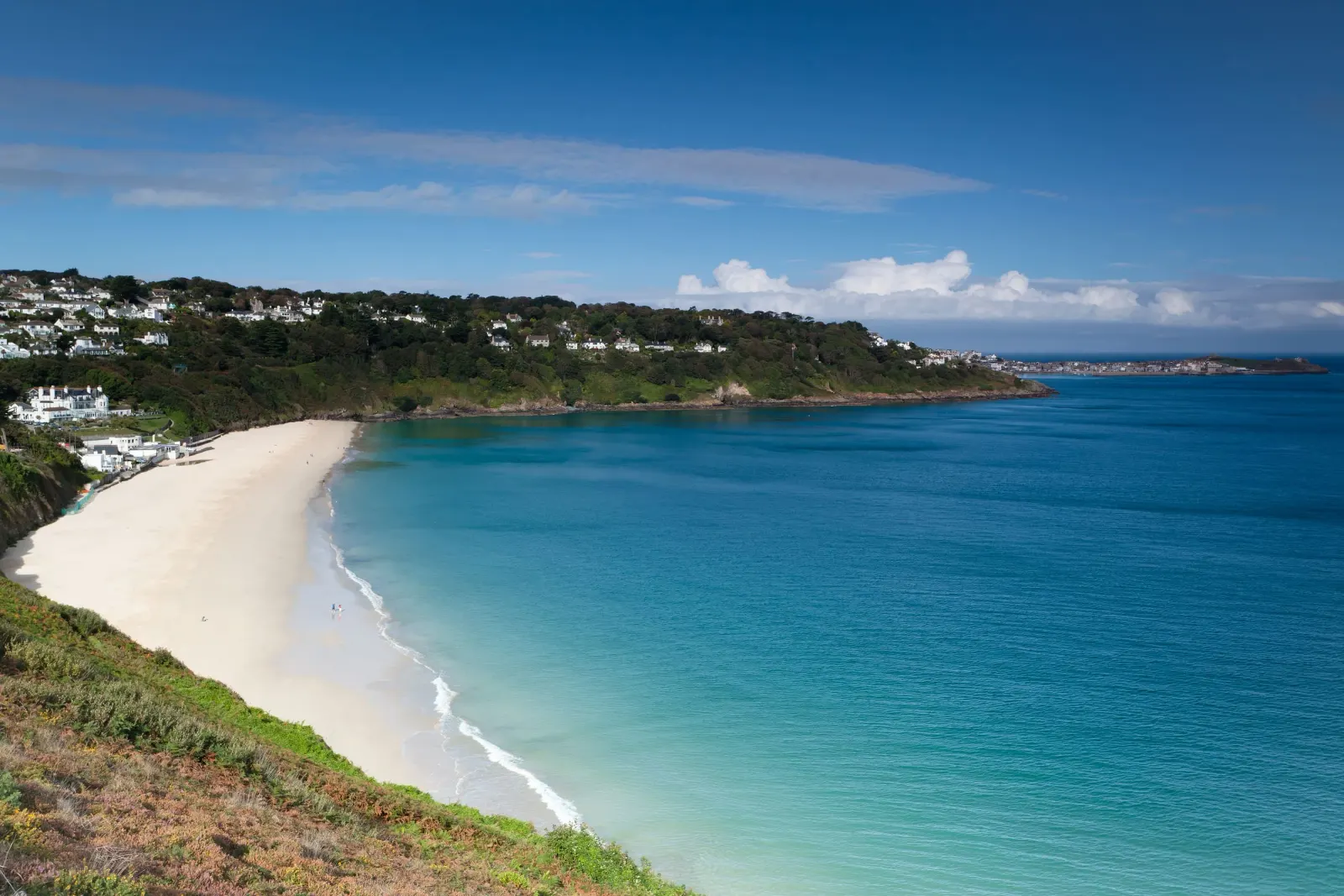
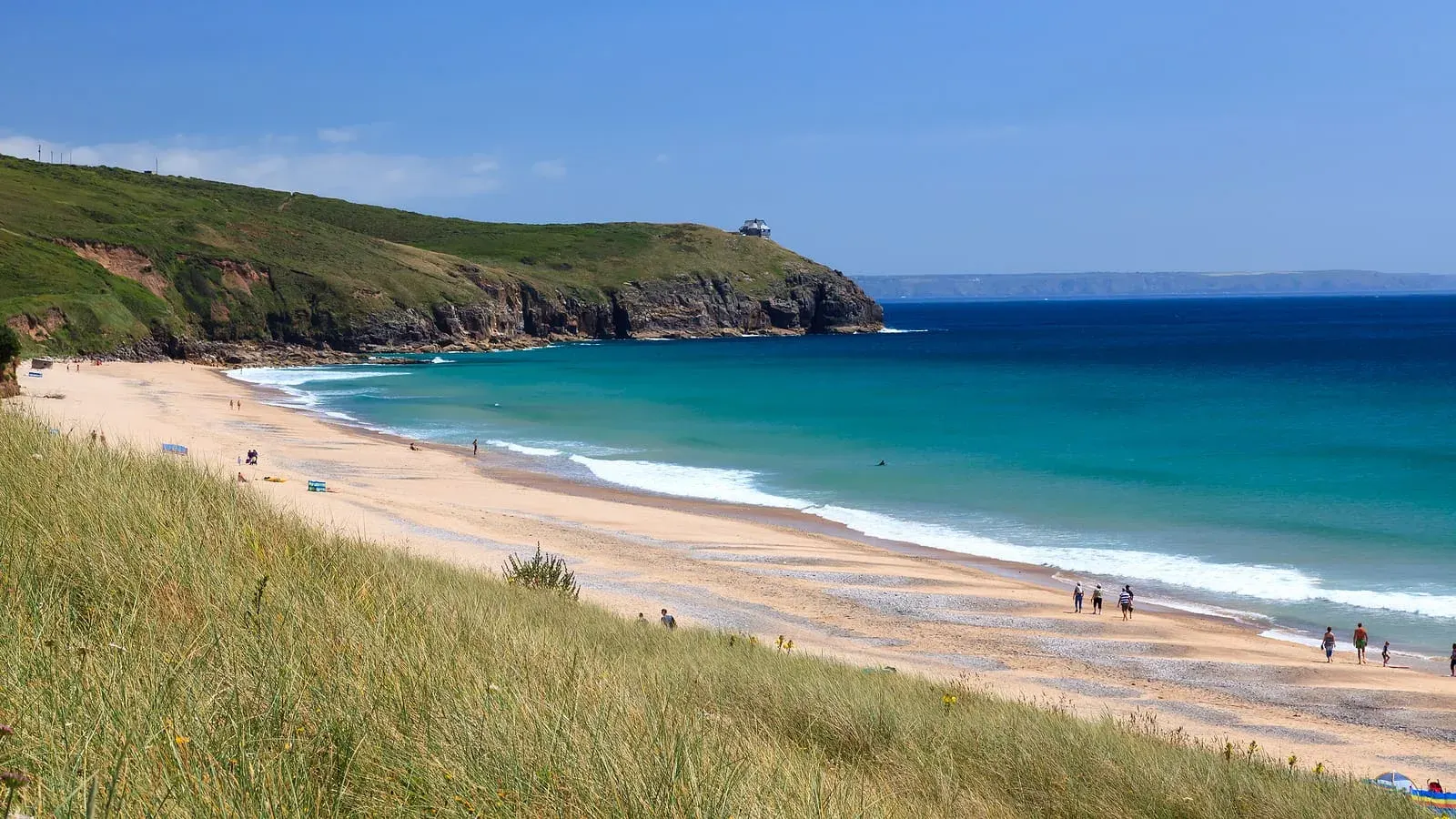
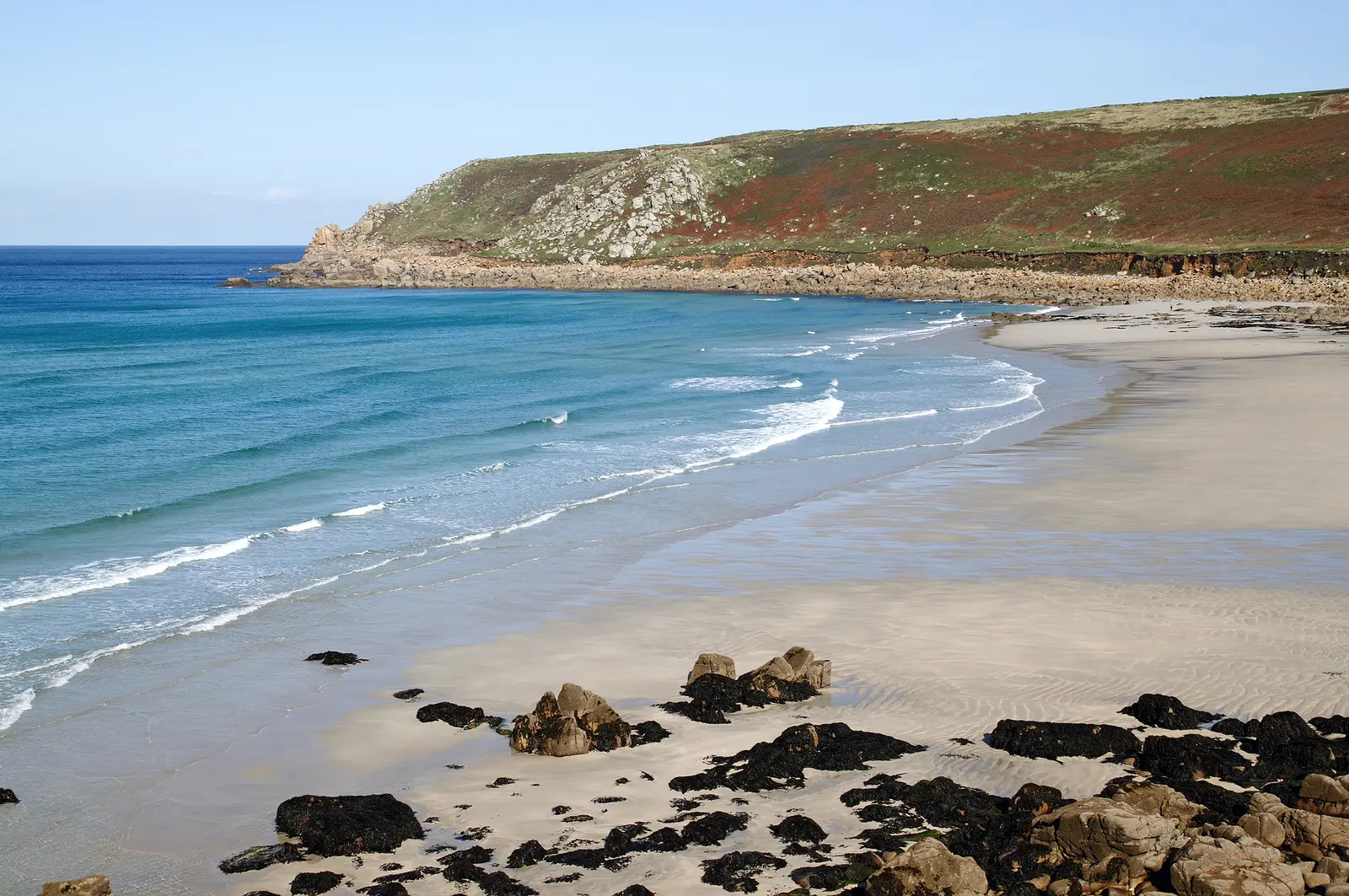
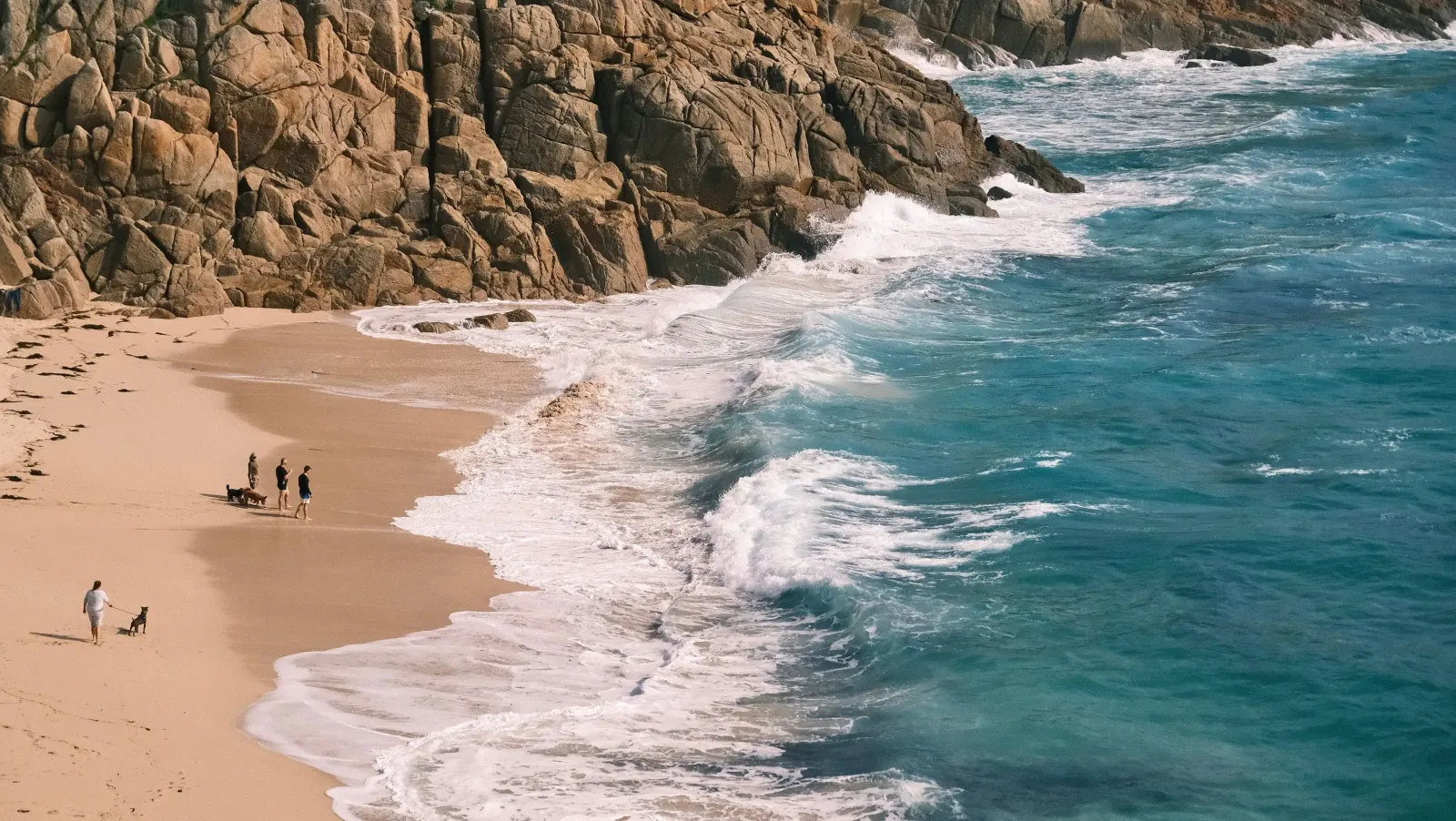
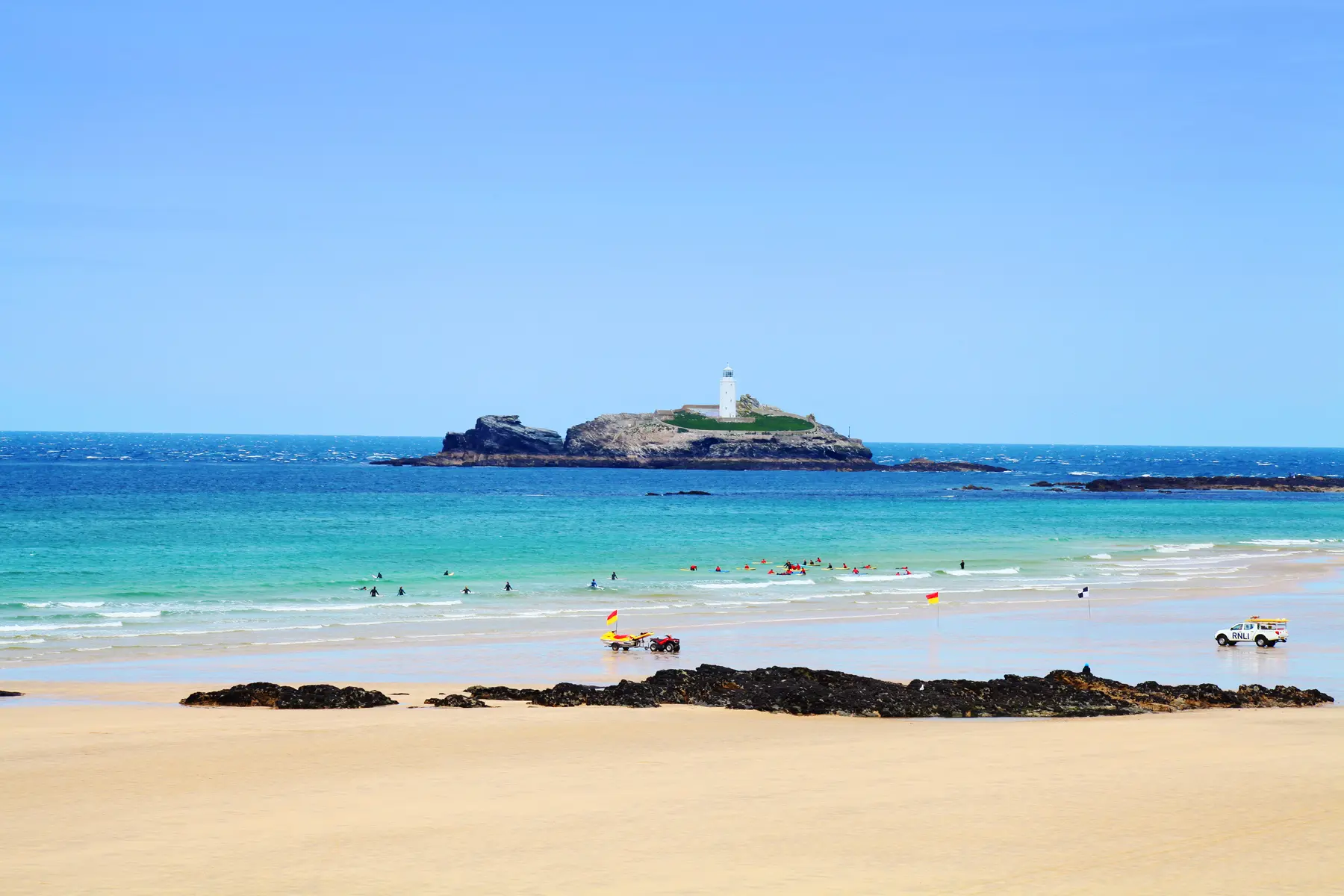
Families and surfers drift to Marazion Beach11 for wide sands and safe shallows, with St Michael’s Mount12 rising just offshore. On the far side of the bay, Sennen offers wilder waves and sunsets that seem to drag half the town up to the cliffs to watch. Mousehole, by contrast, is more about paddling in the harbour than chasing surf.
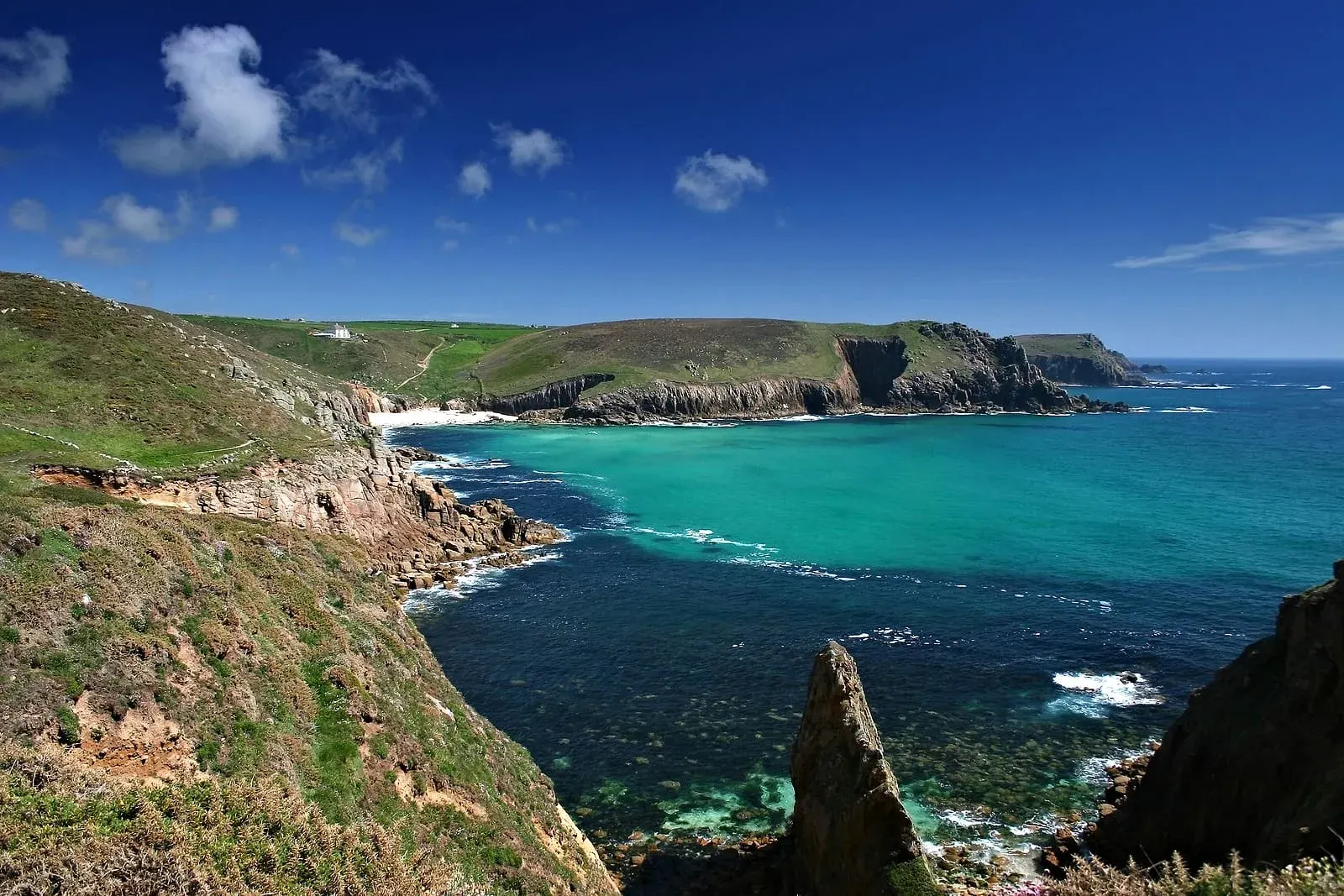
Coastal Walks: The South West Coast Path threads through Penzance, east towards Newlyn and west to Land’s End. Each stretch feels different: fishing boats and harbours one way, gorse-topped cliffs the other – walk far enough and you’ll find yourself looking back at Penzance as if it belongs to another country.
Outdoor Swimming: Beyond the town’s lido, Mount’s Bay itself is a playground for open-water swimmers. Locals take to the water year-round, a habit that looks bracing in December but keeps growing in popularity. The curve of the bay softens the swell, making it one of the more forgiving places for sea swimming in Cornwall.13
Wildlife and Boat Trips: Boats leave Penzance Harbour through the summer to watch for dolphins, seabirds, and, if you’re lucky, basking sharks. They don’t head far – nothing like the long haul to the Isles of Scilly – just enough to give you a dose of sea air and the chance to see what’s moving in the bay.
Parks and Green Space: Penlee Park14 is where people head when they just want open space. There are tennis courts, grass to stretch out on, and plenty of room for kids to tear about. It doesn’t have the formality of Morrab Gardens, but that’s the point – it feels more like a park for everyday use. In summer the open-air theatre brings it alive at night, long after the dog walkers have gone home.
Food and Drink
Eating in Penzance can feel like two towns at once. Down by the harbour you find fresh fish and Cornish pasties carried straight out of the oven, while Chapel Street leans towards cafés, restaurants, and the kind of independent shops that mix food with stories. Some places trade on the view across Mount’s Bay, others on recipes passed down for generations, but either way you don’t go hungry here.
Cafés and Coffee Houses
Penzance has a café culture that feels different to the bigger Cornish resorts. Instead of rows of identikit chains, most of what you’ll find are small, independent shops that locals use as much as visitors.
The Honey Pot: The Honey Pot,15 just around the corner from Chapel Street, has been part of Penzance life for years. It’s the kind of café where the menu is simple but done well, and where you end up catching bits of chat from the next table – fishermen swapping news, someone talking about a gallery opening, and always at least one grumble about the weather.
The Cornish Hen Deli: More than just a coffee stop, The Cornish Hen combines a café with a deli counter stacked with local produce. You can eat in or take away bread, cheeses, and chutneys – a good option for those in self-catering accommodation nearby.16
Archie Brown’s: Part wholefood shop, part vegetarian café, Archie Brown’s17 has been part of Penzance since the 1990s. The upstairs café serves hearty vegetarian and vegan meals alongside strong coffee, and it really feels closer to a community hub than a quick stop-off.
Mr Billy’s: If you wander into Mr Billy’s,18 you’ll find a cosy café-slash-teashop where the air smells of roasted Cornish coffee and neatly timed tea pots. Since 2009, it’s been serving breakfasts, lunches, and rotating specials made from sourdough and locally roasted beans, all served with a friendly nod that locals seem to cherish. There’s something fun and theatrical about how seriously they take proper tea times.
Duke Street Café: Duke Street Café,19 just a few minutes from Penzance Harbour, is the kind of place that feels warm even before the coffee hits your lips. It’s housed in what used to be a modest fisherman’s home, and now slings locally roasted espresso alongside chunky open sandwiches, many of which come piled high on Cornish bread.
Pubs
Penzance has the kind of pubs that tell you as much about the town as the museums do. Some love their history, others reinvent themselves as modern Cornish drinking spots, but most still have the mix of chatter, ale, and slightly creaky floorboards that make a pub feel like a pub.
The Crown Inn: Down a side street near the harbour, The Crown Inn20 is a small freehouse with a reputation that stretches well beyond Penzance, and it’s owned by the Cornish Crown Brewery, so the beers are brewed just up the road and change regularly. The pub is compact, the atmosphere relaxed, and the beer range alone makes it worth the walk.
The Lamp & Whistle: On a corner not far from Market Jew Street, The Lamp & Whistle21 has carved out a different identity – with Victorian décor and an eclectic crowd, it feels part continental café, part local boozer. Its rotating ales and Cornish gins draw in visitors, but it’s the character, which is warm and slightly eccentric, that keeps regulars coming back.
The Star Inn: Over in Newlyn, The Star Inn22 is one of those proper Cornish pubs that still feels closely tied to the fishing port. The beer is local, the food is hearty, and the talk is as likely to be about the catch as it is about football; it’s the kind of place that still treats pub life as part of everyday life, not an added extra.
The Turk’s Head: On Chapel Street you’ll find The Turk’s Head,23 which claims to be the oldest pub in Penzance, dating back to the 13th century. The story goes that it was once ransacked by pirates, and the low beams and uneven floors make you believe it could well be true, and these days it mixes Cornish ales with pub classics, but the building itself is half the experience.
The Admiral Benbow: Famous for its mention in Treasure Island, the Admiral Benbow on Chapel Street is a pub that really wants you to know about its past; inside are maritime relics, wood panelling, and a sense of theatre. Tourists come for the Stevenson connection, locals come because the beer is good, and the two mingle in a way that’s very Penzance.
Breweries and Distilleries
Beer and spirits in Penzance have their own following. Some places are small and experimental, others more established, but they all reflect the town’s knack for mixing tradition with a slightly rebellious streak.
Cornish Crown Brewery: The Cornish Crown24 is Penzance’s best-known brewery, and its beers turn up on taps all over west Cornwall. Based on a site just outside the town centre, it produces a range that runs from easy golden ales to stronger brews that make you take your time. And although the Crown Inn near the harbour acts as its showcase, bottles also find their way into independent shops up and down the South West.
Pocketful of Stones Distillery: If you want something stronger, Pocketful of Stones Distillery25 has been carving a name for itself from a base in Newlyn. They make gins, vodkas, and liqueurs that feel tied to where they come from – seaweed, foraged herbs, and flavours lifted straight from the Cornish coast find their way into the stills. You can book a tour or a tasting, and it’s as much about the stories and the humour of the place as it is about the drinks themselves.
Farm Shops
Farm shops around Penzance are more than just pit stops – they’re part of how people here buy food, and for visitors in self-catering cottages they’re especially handy, stocking Cornish produce that doesn’t always make it into the supermarkets.
Polgoon Vineyard & Orchard Shop: Just outside town, Polgoon is best known for its wine and cider, but the farm shop sells much more; you’ll find Cornish cheeses, chutneys, and their own jams alongside bottles from the vineyard. It’s a good stop if you want something local for a picnic on the sandy beaches of Mount’s Bay, or a bottle to take back home.26
Bosavern Community Farm: Over towards St Just, Bosavern is a community-run farm with a shop that sells organic vegetables, eggs, and honey. It’s less organised than some farm shops, but that’s part of its character – it’s about keeping food production rooted in the local community rather than turning into another chain.27
St Buryan Farm Shop: Just a short drive from Penzance, on the stretch toward Sennen and Land’s End, this place is the kind of Cornish operation that puts everything on the shelf that’s grown, hunted, or baked on the farm – grass-fed beef, roasted pasties, homemade cakes, and even a café area for a needed caffeine pit stop and cream tea in the midst of shopping.
Places to Stay in Penzance
People stay in Penzance for all sorts of reasons – a week by the sea, a night before the Isles of Scilly ferry, or just because it’s cheaper than St Ives. The choice reflects that. You’ve got big hotels on the seafront, old houses turned into guesthouses, and plenty of self-catering dotted about town. None of it feels manufactured; it’s the mix that makes it work.
Expedia.com:
If you want everything laid out on one page, Expedia.com’s Penzance listings cover the lot: hotels, guesthouses, cottages, and budget rooms. It’s good for last-minute planning or if you want to compare what else is on offer across Cornwall. Check availability and best prices.
Best Value Hotels:
For a comfortable stay without overspending, Penzance has a great selection of well-rated mid-range hotels—ideal for enjoying the seafront, town centre, and easy access to West Cornwall. Check latest deals & availability.
Boutique & Character Stays:
If you’re after something with a bit more flair, Penzance offers a mix of boutique hotels, historic inns, and elegant guesthouses full of character. Check latest deals & availability.
Dog-Friendly Places to Stay:
Bringing your dog along? Many Penzance stays are pet-friendly, with access to coastal paths, nearby beaches, and scenic walks across West Cornwall. Check latest deals & availability.
Self-Catering & Cottages:
For more space and flexibility, Penzance has a variety of self-catering options, including sea-view apartments, cosy cottages, and peaceful retreats nearby. Check latest deals & availability.
Featured Penzance Hotels & Accommodation
The Queens Hotel:
Right on the promenade, The Queens is the sort of Victorian pile you notice as soon as you hit the seafront. Rooms facing Mount’s Bay give you St Michael’s Mount framed in the distance, and downstairs still has that slightly grand, slightly old-fashioned atmosphere. Check availability and best prices.
Artist Residence:
Chapel Street has its share of character buildings, but this one has been turned into a boutique stay with a bit of swagger. The rooms don’t match on purpose, the bar gets as much use as the reception, and the whole place feels plugged into the town around it. Check availability and best prices.
Blue Seas B&B:
Smaller, quieter, and a little more homely, Blue Seas28 sits across from the promenade. The draw here is the personal touch – breakfast with local produce, a few rooms looking straight out across the bay, and owners who can point you towards walks or beaches that don’t always make the guidebooks.
The Lugger Inn:
On the edge of town towards Newlyn, The Lugger is a pub with rooms. It’s straightforward – nothing fancy – but it keeps you close to the harbour and gives you a base that feels like part of the working town rather than just the visitor side of it. Check availability and best prices.
History of Penzance
Penzance has never been just one thing. It’s been a fishing village that smelled of pilchards, a Georgian market town with a dome that shouted ambition, a seaside resort at the very end of the railway, and a stage for midsummer fire and noise. The name itself means “holy headland,” but over the centuries the town has been holy, hungry, battered by storms, raided by Spaniards, and occasionally reborn with a bit of swagger. What follows isn’t a straight line but a story that lurches, stalls, and takes off again – exactly what you’d expect at the far edge of Cornwall.
Before 1600: Holy Headland and a Fishing Village
The name Penzance comes from the Cornish Pensans – “holy headland” – referring to a chapel that once stood on the point above Mount’s Bay.29 By the Middle Ages, the natural cove was already home to a small community living much like their neighbours in Mousehole and Newlyn, where fishing shaped everything, but so did danger from the sea. In 1595 Spanish raiders landed in Mount’s Bay, burning parts of Penzance, Newlyn, and Mousehole, and for a settlement at the far edge of England, it was a stark reminder that isolation never meant safety.30
1600–1700: Charters, Borough Powers and Market Jew Street
In 1614, James I granted Penzance its first charter,31 followed by borough status and a mayoral system in 1639. This gave locals the right to control their own harbour, fairs, and markets – vital for a town built on fishing and trade. The main thoroughfare, still called Market Jew Street, takes its name from the Cornish Marghas Yow or “Thursday Market,” and it’s been the town’s commercial heart ever since.
1700–1830: Smugglers, Streets and Georgian Penzance
The 18th and early 19th centuries saw Penzance grow into a confident market town, and Chapel Street filled with fine Georgian houses and businesses, from genteel residences to inns with less polished reputations. The Egyptian House,32 built in 1835, remains a striking example of Victorian exoticism, and the Parish Church of St Mary’s,33 consecrated in 1836, gave the town a new skyline. The Admiral Benbow, one of Chapel Street’s best-known inns, became tangled in stories of smuggling – some exaggerated, some real, all part of the town’s Cornish identity.
1760s–1800s: Piers, Pilchards and a Harbour Economy
The harbour was at the centre of Penzance life. The South Pier had medieval beginnings, but it was the big rebuilds of the 18th and 19th centuries that made it a real refuge for the fishing boats. When the Albert Pier and its lighthouse followed in the 1800s, it marked Penzance out as the main port of Penwith rather than just another stop along the bay. The pilchard trade dominated – men at sea, women salting and packing in the cellars, children carting loads to the quayside. Barrels of fish sailed across Europe, especially to Catholic countries where fasting rules kept demand high.
1830–1850s: Markets, Domes and Civic Confidence
By the 1830s, Penzance was thinking bigger. The granite Market House went up in 1836–38, crowned with a classical dome designed by Bristol architect William Harris. It didn’t just give stallholders somewhere dry to trade – it made a statement that Penzance was the market town of Penwith. Outside, Market Jew Street thrived with stalls and shops, and Chapel Street kept its mix of chapels, pubs and Georgian façades. This was also when Morrab Gardens were laid out as a public space, bringing a subtropical twist thanks to the town’s unusually mild climate.
1852–1890s: Rails, Steam and a Changing Reputation
The railway reached Penzance in 1852,35 making the town the terminus for the south west. For the first time, visitors could travel directly from London Paddington to west Cornwall without the uncertainty of coach travel. The line quickly changed how people saw the town: it was still a working fishing port, but now it was also a seaside resort. Hotels grew along the seafront, boarding houses opened to catch the trade, and steamships to the Isles of Scilly turned the harbour into a hub for islanders as well as tourists.
1890s: Riots, Nets and Newlyn Tensions
Fishing wasn’t always a steady livelihood. In 1896, nearby Newlyn saw violent riots when Cornish fishermen tried to enforce the traditional Sunday rest, attacking trawlers that landed fish on the Sabbath.36 Troops and even a torpedo boat were sent to calm things down, and Penzance, as the administrative centre, was drawn into the fallout. The riots underlined just how fragile fishing communities could be, caught between local tradition and outside pressure.
Early 1900s–1930s: Promenades and Art Deco Ambition
The turn of the century gave Penzance a civic makeover when St John’s Hall opened in 1867 as a serious town hall, and in the 1930s, the seafront was reshaped with the opening of the Jubilee Pool, a bold art deco lido that pushed out into Mount’s Bay. Opened in 1935, it symbolised optimism in the interwar years. Even today, the curved white walls look like something dreamt up in Miami rather than Cornwall.
1920s–1930s: Art, Artists and Penlee House
Meanwhile, art was becoming part of the town’s identity. The Newlyn School37 had already put neighbouring Newlyn on the artistic map in the late 19th century, and their works found a permanent home at Penlee House, a Victorian villa turned gallery. These paintings, showing everyday life in fishing villages like Mousehole, Newlyn and Penzance itself, captured the character of west Cornwall at a moment when it was changing quickly.
1939–1945: War on the Edge
The war years reached Penzance quickly. Ships came and went under watchful eyes, and the skies over Mount’s Bay were busy with planes on patrol. Families from cities were billeted into schools and spare rooms, and the coast bristled with fortifications in case an invasion came, but people carried on with work and shopping, only under ration books, blackout curtains, and the constant knowledge that news might be bad.
1950s–1970s: Decline and Shifts
Fishing still mattered after the war, but it no longer held the same grip on the town. The pilchard trade faltered, squeezed by quotas and foreign competition, and tourism began to take the lead – trains rolled in full of summer visitors, and the Scillonian ferries carried families off to the Isles of Scilly. Some of Penzance’s finest streets, like Chapel Street and Market Jew Street, wore their age more heavily, their elegant Georgian fronts looking a bit tired.
1980s–1990s: Festivals, Fire and Rebirth
By the late 20th century, Penzance had started finding its voice again, and in 1991, the Golowan Festival returned after a century away, bringing fire, colour, and processions back to midsummer, and Mazey Day, with its parades and giant sculptures made by local schools and artists, quickly became the highlight. What had once been banned as unruly now became the town’s most joyful spectacle.
Elsewhere, Morrab Gardens, first laid out in the 1880s, became another sort of pride. Palms and subtropical plants flourished in Cornwall’s mildest corner, offering a free public garden that looked like nowhere else in Britain.
2000s: Storms and Sustainability
The new century reminded Penzance that living by the sea means living with risk. In 2014, storms tore into the Jubilee Pool, closing it for repairs, and locals refused to let it go: funds were raised, repairs made, and by 2016 the lido reopened with a twist – a small geothermal pool, the first of its kind in the UK, piping heat up from deep below the granite. It was part restoration, part reinvention.38
Modern Developments
Penzance hasn’t stood still. The town has had to rebuild after storms, rethink how its harbour works, and face the same housing pressures as the rest of west Cornwall. At the same time, it’s found ways to enjoy its past without getting stuck there – an Art Deco lido turned geothermal, festivals brought back to life, and high streets that still feel more Cornish than chain store.
Harbour and Waterfront
The harbour is still central to Penzance, though fishing is only part of the picture now. Ferries for the Isles of Scilly dominate the daily timetable, and the waterfront has had steady investment – resurfaced quays, repairs to the Albert Pier, and work to keep the harbour functioning as both a working port and a passenger gateway.
Independent Shops and Town Life
On land, the town centre has seen independent shops take over where chains have retreated. Many mix retail with cafés or small galleries, giving Chapel Street and Market Jew Street a different rhythm to other towns in the south west. It feels more rooted in local identity, tied to makers, artists, and Cornish produce.
Housing and Pressure
Like much of west Cornwall, Penzance wrestles with housing. Prices rise as second homes and self-catering rentals pull properties away from full-time use, sparking the same debates that echo in St Ives and Marazion. The question of who the town is for has become one of the loudest conversations in recent years.
Tourism and Festivals
Tourism hasn’t faded. Families come for the sandy beaches of Mount’s Bay, day-trippers arrive at Britain’s most south-westerly mainline station, and midsummer is dominated by the Golowan Festival, with Mazey Day still filling the streets. The mix of culture and coast keeps visitors coming, while Penzance carries on as the civic hub of Penwith.
Key Buildings in Penzance
Penzance isn’t just about the sea and the festivals – its buildings tell the story just as clearly. Granite civic halls, eccentric frontages, chapels turned into pubs, and a lido that looks like it belongs in Miami all mark out how the town has grown and changed. Some belong to the Georgian age of merchants and markets, others to the civic pride of the Victorians, and a few are pure 20th-century optimism. Walk through the centre and you can trace the town’s ambitions in stone, glass, and even the odd splash of colour.
- Market House: The Market House sits squarely in the middle of Market Jew Street, its granite walls and classical dome impossible to miss. Built in the late 1830s by Bristol architect William Harris, it gave Penzance a proper centre of gravity. The arcades below were packed with traders, and upstairs Lloyds Bank39 set up shop – a tenant that, surprisingly enough, is still there today.
- Chapel Street and the Admiral Benbow: Chapel Street is the showpiece of Georgian and early Victorian Penzance. Grand houses, chapels, and eccentricities all line the slope down towards the harbour. Among its most famous stops is the Admiral Benbow, a 17th-century inn that later became a smugglers’ haunt. The pub is now Grade II listed, packed with maritime relics, and immortalised in Robert Louis Stevenson’s Treasure Island, where it was the fictional starting point of Jim Hawkins’ adventure.
- Egyptian House: Just along Chapel Street sits the flamboyant Egyptian House, which was built in 1835–36, and it’s one of Britain’s best surviving examples of Egyptian Revival style, all lotus columns and painted detail. Originally, it was a geological museum and mineral shop, but it later became offices, and today it’s owned by the Landmark Trust, who let out its apartments as holiday lets.
- Penlee House: Penlee House started life in 1845 as a comfortable Victorian villa for the Branwell family, set in gardens that still feel sheltered from the bustle of town, and after changing hands, it was taken on by the council and, by 1949, opened its doors as a public gallery and museum. Inside you’ll find the finest collection of Newlyn School paintings in the country, shown alongside archaeology and local history. What was once a private home now works as one of Penzance’s proudest public spaces, with the surrounding park a reminder of how wealth from the 19th century ended up being shared with everyone.
Famous People from Penzance
Plenty of people from Penzance, or linked to it, have managed to make their mark well beyond Cornwall. Some were born here, others just carried the town’s name into the spotlight, but in one way or another they took a piece of west Cornwall out into the wider world.
- Sir Humphry Davy: Humphry Davy40 is still the name most people reach for when you ask about Penzance’s famous sons. Born on Market Jew Street in 1778, he went from a local boy to one of the leading scientists of his age; he was the man who gave miners their safety lamp and pulled new elements out of the unknown. His statue stands outside the Market House, a daily reminder that someone who shaped modern science started out in a small Penwith town.
Education in Penzance
As the biggest town in west Cornwall, Penzance doesn’t just educate its own children – families from across Penwith look to its schools and colleges too. There are small primaries tucked into neighbourhoods, one of the county’s largest secondaries, and a college site that keeps further education local. Like much else here, it’s a mix of old institutions with deep community roots and newer setups shaped by what people need today.
Primary Schools
Each corner of Penzance has its own primary. St Mary’s Catholic Primary School45 on Peverell Road offers a faith-based route, while Pensans School46 (once Penzance Junior) sits close to the centre and serves a larger catchment. Families on the western side often choose Alverton Primary School,47 while in nearby Madron, St Maddern’s Primary48 links a smaller village setting to the town. Whatever their size, these schools tend to lean into local identity, weaving Cornish culture and history into lessons and projects.
Secondary Schools
The biggest name here is Humphry Davy School, carrying the title of the town’s most famous scientist. It’s on Coombe Road and draws students from across Penwith, balancing academic subjects with a strong tradition in music and the arts. Just outside town in Heamoor, Mount’s Bay Academy49 has built a reputation since converting to academy status in 2011, adding a focus on sport and creative subjects. Between them, they give teenagers in this part of Cornwall solid choices close to home.
Further and Adult Education
Post-16 options centre on Truro and Penwith College,50 which has a full campus in Alverton. Students can stay in Penzance for A-levels, vocational training, or apprenticeships rather than commuting up the line to Truro. The college also runs evening classes and short courses, so adult learners can pick up a new language, build IT skills, or return to study later in life. It keeps education part of daily life in the town, not just something for school leavers.
Demographics of Penzance
Penzance isn’t just a holiday stop on the map – it’s home to thousands of people whose lives give the town its character. The 2021 Census shows a place that’s older than the national average, still mostly UK-born, but carrying a strong Cornish identity that you won’t find everywhere else.
Population and Age
The town parish counted just over 20,000 residents in 2021,51 with around 15,000 in the built-up core. What stands out is age: Penzance, like much of west Cornwall, has far more retirees than teenagers. Nearly one in five residents is over 65, while children make up a noticeably smaller slice. It gives the town a slower pace in parts, and you notice it in everything from who’s on the buses to who fills the cafés on weekday mornings.
Country of Birth and Ethnicity
Most people in Penzance were born in the UK – more than 14,000 out of 20,000. Migration here happens at a gentler rate than in bigger towns, so families who’ve moved in from elsewhere tend to stand out rather than blend into the background. Ethnically, the town mirrors Cornwall as a whole: over 95% identify as White, with small but slowly growing groups identifying as Asian, Black, or Mixed heritage.
Cornish Identity
One thing the Census makes clear is just how strong Cornish identity runs in this part of the county. Across Cornwall, about 18% of people chose to identify as Cornish, and in Penzance North, it was closer to one in four. That shows up in everyday life: from Cornish flags flying in windows, to the pride schools take in teaching local history, to the way people describe where they’re from. For many, it’s not enough to say “English” or even “British” – Cornish is its own answer.
Households and Homes
Penzance follows the wider Cornish trend of smaller households, often with older residents living alone or couples without children at home, and there are multi-generation houses too, but the age profile tips things toward retirement living. Add to that a visible number of second homes and self-catering lets, and you get a housing mix where some properties are lived in year-round and others light up only in summer. It’s a balance the town is still working out.
Crime in Penzance
Crime isn’t usually what people remember about Penzance, but it’s real, and for a town with around 15,000 in the built-up area, it’s worth knowing where things stand. The latest data shows an uptick in certain crime types, especially around violence and theft, but the reality often depends on where you live or walk – in some pockets things feel quiet, in others noticeably less so.
Overall Crime Rate
According to the 2025 snapshot, Penzance has an overall crime rate of 90 crimes per 1,00052 people, which is nearly 70% higher than Cornwall’s 53 per 1,000 average, and it puts Penzance in the top five most dangerous small towns in Cornwall, a headline that can feel dramatic, though context matters.
Violent Crime and Theft
These aren’t just numbers – they’re calls for help, arrests, and headlines. Violence and sexual offences accounted for 934 incidents in 2025, at about 42 per 1,000 people, up from 894 reports in 2024. Shoplifting, theft from the person, and robbery are also higher than in neighbouring areas, pointing to a need for vigilance in crowded places.
Streets Speak Differently
Crime levels shift hard depending on location. As an example, one address near Penwith Street reported 55.5 crimes per 1,000 residents over a recent 12-month period, which is a low ranking (2/10) compared to most of England.53 That tells us that while the town average is high, many streets fall well below the mean.
Cornwall in Context
It’s not all gloom. Cornwall overall has a crime rate of about 53 per 1,000, making Penzance stand out, but heart of Cornwall remains safer by comparison.
Transport in Penzance
Penzance might be at the very tip of Cornwall, but it doesn’t feel cut off because the links in and out are stronger than you might expect for a town at the far end of the map. You can get here by road, by rail, by bus, or even by boat across Mount’s Bay to the Isles of Scilly, and once you’ve arrived, most of the town is close enough to reach on foot.
By Train
The railway has been central to Penzance since Victorian times; it’s still the western end of the Great Western main line, with direct trains to London, Bristol and Exeter. The Night Riviera sleeper service is one of the last of its kind in Britain – you can board in Paddington, drift off somewhere past Reading, and wake up looking at the harbour. And the station itself sits right by the seafront, so you’re in the middle of things as soon as you step off the train.
By Road
Driving here means taking the A30, the main route through Cornwall, as it winds past Bodmin, Truro, and Hayle before narrowing at the far end of the peninsula. Parking isn’t always easy in summer, but there are long-stay car parks close to the harbour and promenade, and many people make the drive part of the trip, carrying on from Penzance to Land’s End, Sennen or St Just.
By Bus
Penzance is the hub for buses across Penwith, and services run to nearby places like St Ives, Mousehole, and Land’s End, with longer routes heading east to Truro, Falmouth and Newquay. The bus station sits next to the railway station, so it’s simple to swap between the two, and for visitors without a car, buses are a straightforward way to see the far west.
By Boat
The harbour is home to the ferry that connects Penzance to the Isles of Scilly between spring and autumn. The crossing takes about three hours and can be bumpy on rough days, but for islanders it’s a lifeline, and for visitors it’s part of the adventure. Smaller boats also leave from the harbour for wildlife trips into Mount’s Bay, looking for dolphins, seals and seabirds.
On Foot and By Bike
The town itself is easy to manage without a car, and most shops, schools and public buildings are within a short walk, and the promenade runs right along the bay to Newlyn. Cyclists use the same route, along with national network paths that cut through west Cornwall. For a place that feels like the end of the line, getting around Penzance is simple once you’re here.
Is Penzance Worth Visiting?
Yes, but not in the bucket-and-spade way you might expect. Penzance has its sandy side, with Mount’s Bay and the long promenade stretching to Newlyn, but it’s also a working town with real edges. You’ll find Georgian streets, an Art Deco lido, and views across to St Michael’s Mount that are hard to beat. Festivals like Golowan fill the streets with midsummer fire and colour, and ferries for the Isles of Scilly leave right from the harbour. It’s not polished in the way St Ives is, but that’s part of its draw – a place where everyday life and holiday moments sit side by side.
Article Sources
- Historic Pirate Food Pub in Penzance Cornwall (no date) The Admiral Benbow. Available at: https://www.thebenbow.com/ The Admiral Benbow[↩]
- Market House | The Architectural Heritage Fund (2022) Ahfund.org.uk. Available at: https://ahfund.org.uk/projects/market-house/ (Accessed: 4 September 2025) The Architectural Heritage Fund[↩]
- AWelcome to Penlee House Gallery & Museum – Penlee House (2025) Penlee House. Available at: https://penleehouse.org.uk/ (Accessed: 4 September 2025) Penlee House[↩]
- Jubilee Pool | Jubilee Pool (2022). Available at: https://jubileepool.co.uk Jubilee Pool[↩]
- BBC News (2016) ‘Jubilee Pool lido in Penzance reopens after storm damage’, 28 May. Available at: https://www.bbc.co.uk/news/uk-england-cornwall-36406203 BBC News[↩]
- Welcome to Morrab Gardens in Penzance, Cornwall (2019) Morrab Gardens. Available at: https://www.morrabgardens.org/ (Accessed: 4 September 2025) Morrab Gardens[↩]
- Scillonian Ferry | Isles of Scilly Travel (2017) Isles of Scilly Travel. Available at: https://www.islesofscilly-travel.co.uk/scillonian-iii/ Isles of Scilly[↩]
- Trengwainton Garden | Cornwall (no date) National Trust. Available at: https://www.nationaltrust.org.uk/visit/cornwall/trengwainton-garden National Trust[↩]
- Newlyn Filmhouse | Home (2025) Newlyn Filmhouse. Available at: https://newlynfilmhouse.com/NewlynFilmhouse.dll/Home (Accessed: 4 September 2025) Newlyn Filmhouse[↩]
- Home – Golowan (2024) Golowan. Available at: https://golowanfestival.org Golowan[↩]
- Visit Cornwall | Beaches: Marazion Beach (2023) Visitcornwall.com. Available at: https://www.visitcornwall.com/things-to-do/beaches/marazion-beach Visit Cornwall[↩]
- St Michael’s Mount Cornwall – Historic Castle & Island (no date) St Michael’s Mount. Available at: https://stmichaelsmount.co.uk St Michael’s Mount[↩]
- toddbarden (2021) Wild Swimming in Penzance | The Complete Guide | Love Penzance Blog, Love Penzance – the official Penzance Cornwall website. Available at: https://lovepenzance.co.uk/blog/cold-comforts-a-complete-guide-to-wild-swimming-in-penzance/ Love Penzance[↩]
- Penlee Park – Penzance Council (2023) Penzance Council. Available at: https://www.penzance-tc.gov.uk/penlee-park/ (Accessed: 4 September 2025) Penzance Town Council[↩]
- The Honey Pot Café – Homemade food in the heart of Penzance, Cornwall. (2025) Thehoneypotpz.com. Available at: https://thehoneypotpz.com The Honey Pot Café[↩]
- The Cornish Hen Deli – Love Penzance – the official Penzance Cornwall website (2023) Love Penzance – the official Penzance Cornwall website. Available at: https://lovepenzance.co.uk/business/the-cornish-hen-deli/ (Accessed: 4 September 2025) Love Penzance[↩]
- Health Food Shop & Café | Archie Brown’s | Penzance, Cornwall (2016) Archie Browns. Available at: https://www.archiebrownswww.cornwall.co.uk/penzance (Accessed: 4 September 2025) Archie Brown’s[↩]
- Home (2025) Website of mrbillys! Available at: https://www.mrbillys.com/ (Accessed: 4 September 2025) Mr Billy’s[↩]
- Welcome to Duke Street Cafe (2018) Duke Street Cafe. Available at: https://www.dukestreetcafe.co.uk/ (Accessed: 4 September 2025) Duke Street Cafe[↩]
- Home – The Crown, Penzance (2025) The Crown, Penzance. Available at: https://www.thecrownpenzance.co.uk/ (Accessed: 4 September 2025) The Crown[↩]
- The Lamp & Whistle (2025) (no date) TripAdvisor. Available at: https://www.tripadvisor.co.uk/Attraction_Review-g186240-d5912650-Reviews-The_Lamp_Whistle-Penzance_Cornwall_England.html Tripadvisor[↩]
- The Star Inn (2025) (no date) TripAdvisor. Available at: https://www.tripadvisor.co.uk/Attraction_Review-g1604568-d7946839-Reviews-The_Star_Inn-Newlyn_Penzance_Cornwall_England.html Tripadvisor[↩]
- Our menu (2025) The Turks Head, Theturkshead.pub. Available at: https://www.theturkshead.pub/ (Accessed: 4 September 2025) The Turks Head[↩]
- Cornish Crown, locally brewed real ale from Cornwall. (2014) The Crown, Penzance. Available at: https://www.thecrownpenzance.co.uk/cornish-crown-ales/ (Accessed: 4 September 2025) Cornish Crown[↩]
- Cornish Spirits Distilled With Passion | Pocketful of Stones (2025) Pocketful of Stones. Available at: https://www.pocketfulofstones.co.uk/ (Accessed: 4 September 2025) Pocketful of Stones[↩]
- Shop | Polgoon Vineyard & Orchard (2015) Polgoon. Available at: https://www.polgoon.com/shop/ (Accessed: 4 September 2025) Polgoon[↩]
- Bosavern Community Farm – Veg Boxes – Education – Community (2020). Available at: https://www.bosaverncommunityfarm.org.uk/ Bosavern Community Farm[↩]
- Blue Seas (2018) Home – Blue Seas, Penzance, Blue Seas, Penzance. Available at: https://www.blueseashotel-penzance.co.uk/ (Accessed: 5 September 2025) Blue Seas[↩]
- History and Heritage – Love Penzance – the official Penzance Cornwall website (2022) Love Penzance – the official Penzance Cornwall website. Available at: https://lovepenzance.co.uk/discover/history-and-heritage/ Love Penzance[↩]
- Spanish Attack Mounts Bay | On this Day | Penwith Local History Group | Penzance, Cornwall, UK (2016) Penwith Local History Group. Available at: https://www.penwithlocalhistorygroup.co.uk/on-this-day/?id=181 (Accessed: 5 September 2025) Penwith Local History Group[↩]
- Penzance Charter of Incorporation | On this Day | Penwith Local History Group | Penzance, Cornwall, UK (2016) Penwith Local History Group. Available at: https://www.penwithlocalhistorygroup.co.uk/on-this-day/?id=128 (Accessed: 5 September 2025) Penwith Local History Group[↩]
- The Egyptian House | The Landmark Trust (2025) Landmarktrust.org.uk. Available at: https://www.landmarktrust.org.uk/search-and-book/landmark-groups/egyptian-house/ (Accessed: 5 September 2025) The Landmark Trust[↩]
- Penzance: St Mary the Virgin Church (2025) Achurchnearyou.com. Available at: https://www.achurchnearyou.com/church/2406 A Church Near You[↩]
- sardine006 (2024) Back in the day, when sardines were pilchards. – Cornish Sardines, Cornish Sardines. Available at: https://www.cornishsardines.org.uk/back-in-the-day-when-sardines-were-pilchards (Accessed: 5 September 2025) Cornish Sardines[↩]
- All Change! | The Penwith Papers | Penwith Local History Group | Penzance, Cornwall, UK (2023) Penwith Local History Group. Available at: https://www.penwithlocalhistorygroup.co.uk/the-penwith-papers/?article=All+Change%21&id=49 (Accessed: 5 September 2025) Penwith Local History Group[↩]
- The Newlyn Fishing Riots of 1896 – Kernow Goth (2025) Kernowgoth.org. Available at: https://kernowgoth.org/cornish-heritage-and-culture/cornish-seafaring-fishing/the-newlyn-fishing-riots-of-1896/ (Accessed: 5 September 2025) Kernow Goth[↩]
- Tate (2017) Newlyn school | Tate, Tate. Available at: https://www.tate.org.uk/art/art-terms/n/newlyn-school (Accessed: 5 September 2025) Tate[↩]
- Geothermal Pool – Jubilee Pool, Penzance, Cornwall (2020) Jubilee Pool. Available at: https://jubileepool.co.uk/about-jubilee-pool/geothermal/[↩]
- Lloyds Bank Penzance | Personal Banking, Personal Finances & Bank Accounts in Cornwall (2025) Lloydsbank.com. Available at: https://branches.lloydsbank.com/cornwall/market-house (Accessed: 6 September 2025) Lloyds Bank Penzance[↩]
- Davy Monument, Market Place, Penzance, Cornwall | Educational Images | Historic England (2025) Historicengland.org.uk. Available at: https://historicengland.org.uk/education/schools-resources/educational-images/davy-monument-market-place-penzance-6759 (Accessed: 6 September 2025) Historic England[↩]
- Maria Branwell – Mother of the Brontë sisters (2016) Cornwall Guide. Available at: https://www.cornwalls.co.uk/history/people/maria_branwell.htm Cornwalls.co.uk[↩]
- Richard Quiller Couch | Arthur Quiller-Couch (2025) Arthurquillercouch.com. Available at: https://www.arthurquillercouch.com/content/richard-quiller-couch (Accessed: 6 September 2025) Arthur Quiller-Couch[↩]
- The Pirates of Penzance | Discover Opera (no date) English National Opera. Available at: https://www.eno.org/operas/the-pirates-of-penzance/ English National Opera[↩]
- Wootton, B. (2019) Art Centre Penryn, Art Centre Penryn. Available at: https://www.artcentrepenryn.org/woc-brenda-wootton (Accessed: 6 September 2025) Art Centre Penryn[↩]
- Home (2025) Cornwall.sch.uk. Available at: https://www.st-marys-rc-pz.cornwall.sch.uk/ (Accessed: 6 September 2025) St Mary’s Catholic Primary School[↩]
- Pensans CP School (2025) Pensansprimary.co.uk. Available at: https://www.pensansprimary.co.uk/web/ (Accessed: 6 September 2025) Pensans CP School[↩]
- Alverton Primary School (2024) Alverton.org.uk. Available at: http://www.alverton.org.uk/web/ (Accessed: 6 September 2025) Alverton Primary School[↩]
- Madron Daniel C of E School (2025) Cornwall.sch.uk. Available at: https://www.st-madderns.cornwall.sch.uk/web/ (Accessed: 6 September 2025) Madron Daniel C of E School[↩]
- Home – Mounts Bay Academy (2025) Mounts Bay Academy. Available at: https://mountsbay.org/ Mounts Bay Academy[↩]
- College courses in Cornwall – Truro and Penwith College (2019) Truro & Penwith College. Available at: https://www.truro-penwith.ac.uk/ Truro and Penwith College[↩]
- Penzance (no date) Census Data UK. Available at: https://censusdata.uk/e63007065-penzance Census Data[↩]
- Buck, T. (2025) CrimeRate, Crimerate.co.uk. Available at: https://crimerate.co.uk/cornwall/penzance (Accessed: 6 September 2025) Crimerate.co.uk[↩]
- TR18 2ET (2024) Crystal Roof. Available at: https://crystalroof.co.uk/report/postcode/TR182ET/crime (Accessed: 6 September 2025) Crystal Roof[↩]
Frequently Asked Questions
It depends on what you’re after. St Ives is famous for its stunning beaches, art galleries, and coastal charm, making it ideal for sightseeing and seaside holidays. Penzance offers a historic town feel, shops, and access to nearby attractions like St Michael’s Mount. Both are in Cornwall, but St Ives is more scenic, while Penzance is more practical for exploring the area.
Penzance is known for its historic harbour, seaside charm, and vibrant arts scene. It’s a gateway to St Michael’s Mount, offers Cornish cuisine, and hosts festivals and events year-round. The town blends coastal beauty, shopping, and cultural attractions, making it a top destination in Cornwall.
In Penzance, you can explore the historic harbour, visit St Michael’s Mount, enjoy beach walks, and discover local museums and galleries. The town also offers Cornish shops, restaurants, and lively festivals, making it ideal for culture, history, and seaside activities in Cornwall.
Penzance sits right on the Cornish coast, so many beaches are within walking distance, including Promenade Beach (shingle/sand, rockpooling at low tide), the nearby Eastern Green (sandy, good for families, dog-friendly all year), and Wherrytown (pebbles/silt).
Living in Penzance is generally more affordable than popular Cornish towns like St Ives, but housing costs can be high due to its coastal location. Overall, daily living expenses are moderate, with local shops, markets, and transport keeping costs reasonable.
Choose Penzance for its stunning coastal views, historic streets, and vibrant arts scene. The town offers easy access to beaches, gardens, and nearby attractions like St Michael’s Mount, making it perfect for culture, nature, and seaside experiences in Cornwall.
You can reach Penzance from London by train, coach, or car. The train from London Paddington takes around 5–6 hours, while driving is roughly 300 miles (5–6 hours) via the M4 and A30. Coaches offer longer but affordable journeys, making it easy to explore Cornwall’s coast and attractions.
You can take a direct train to Penzance from London Paddington, with a journey time of around 5–6 hours. Trains run via Reading, Exeter, and Plymouth, offering scenic views of Cornwall along the way. Connections are also available from other major UK cities, making Penzance easy to reach by rail.
Yes, Penzance is dog-friendly. Many hotels, cafes, and pubs welcome dogs, and you’ll find dog-friendly beaches and coastal walks nearby, making it easy to enjoy a Cornwall holiday with your pet.
Yes, Penzance is a popular place to live with a vibrant town centre, stunning coastal views, and a strong sense of community. Its arts scene, beaches, and historic charm make it appealing for both families and retirees.
Yes! Penzance and surrounding areas are great for surfing – Mounts Bay offers consistent waves for beginners and experienced surfers (best in winter). Local best bets include Sennen Cove & Gwenver (most consistent, west-facing) for Atlantic swells and Porthcurno (beautiful but can be powerful).
The best things to do in Penzance with kids include exploring The Pirates Quest, visiting Morrab Gardens, enjoying a day at Penzance Promenade and beaches, and taking a trip to nearby St Michael’s Mount. Family-friendly activities like mini-golf, ice cream stops, and coastal walks make Penzance ideal for a fun day out with children.
Written by
Lisamarie is a writer and researcher with a long-standing love for Cornwall – its towns, coastlines, folklore, and everything in between. Most of her work involves blogging and articles, often focused on places and people, which pairs neatly with her fiction writing since both sides of her work let her balance research with imagination (and indulge a fondness for obscure facts). She lives with her husband, daughter, and a cat called Cheryl in a cottage in the Kent countryside, where she writes, paints, and watches horror films.
35 articles published on Cornwall.co.uk
Read more from Lisamarie Lamb →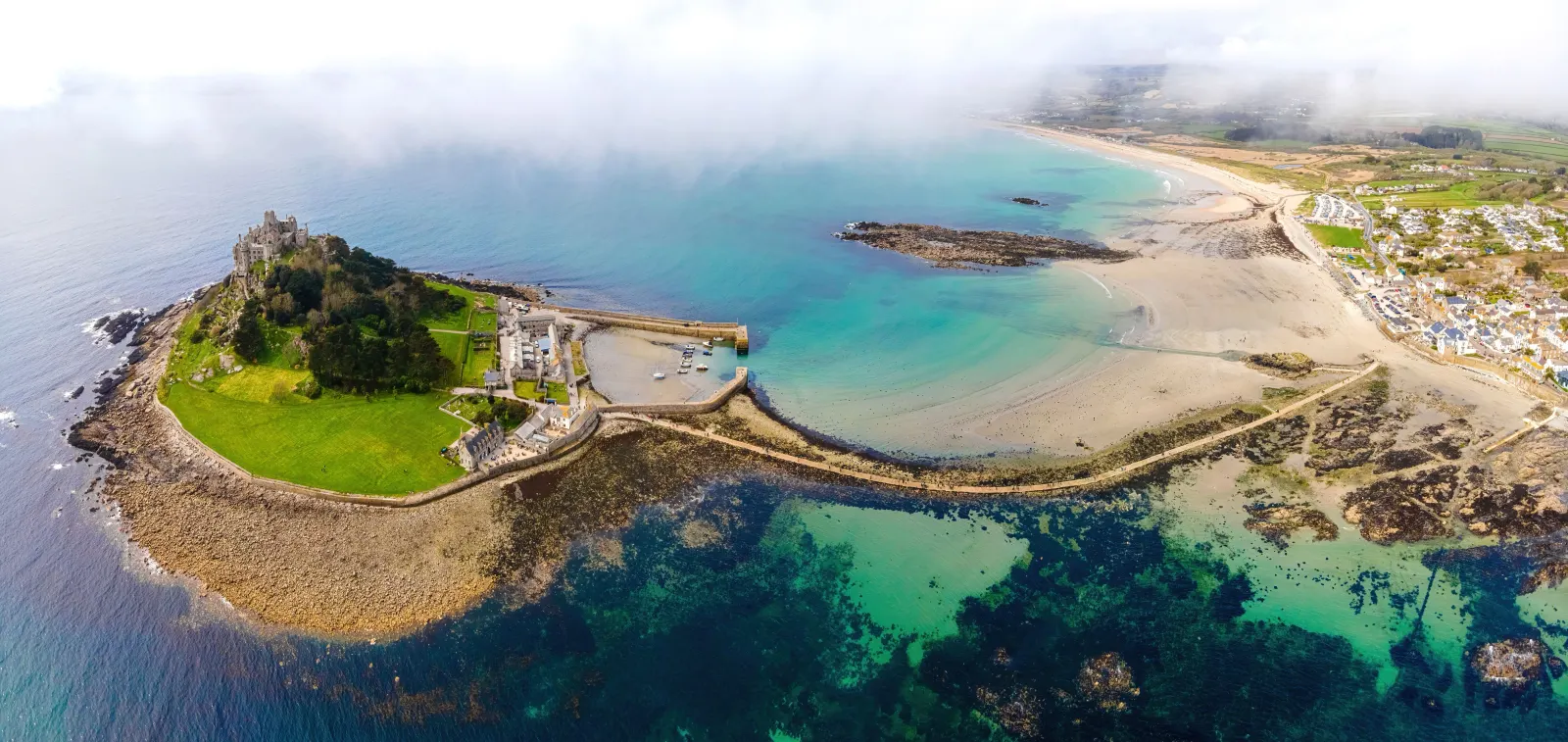
Comments
No comments yet — be the first to share your thoughts.
Leave a comment
Your email won’t be published. Comments are checked before they appear.