

9 articles
Cornwall’s myths and legends speak of many unusual sprites. One such mythological creature is the bucca (or bucka).
But what kind of creatures are bucca? And what tales are told about them?
What is a Bucca?
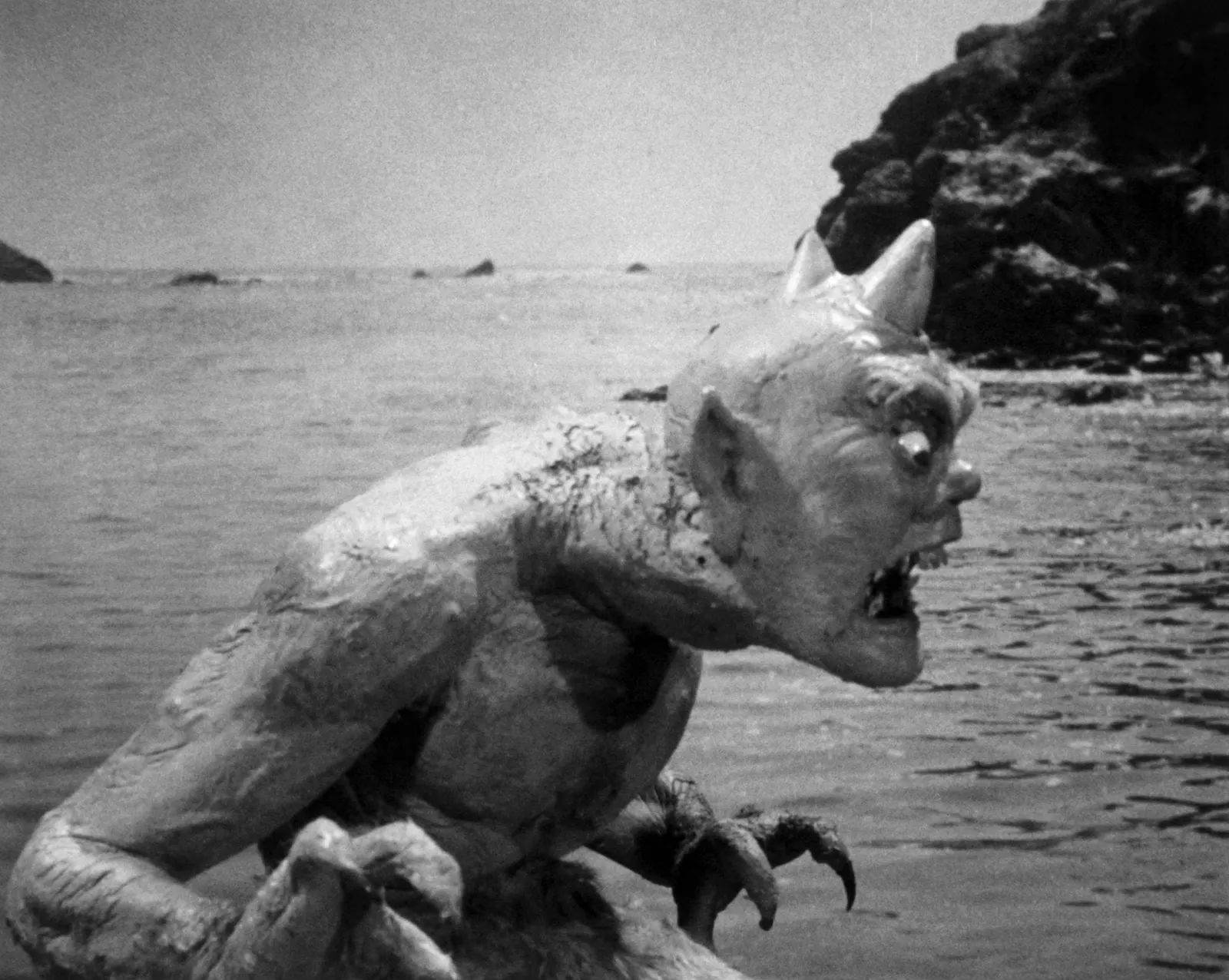
Bucca (sometimes called Bucka) are a uniquely Cornish folkloric creature. They are a kind of hobgoblin from Cornwall’s distant past, associated with caves, and coastal areas. The surviving tales of bucca come from the west of Cornwall and most of these concern coastal communities or places near the coast. They are often thought of as the sea spirits of Cornwall.
Types of Bucca
In their dealings with people, bucca can either be benevolent or malign. Benevolent bucca are called white bucca (bucca widn, gwidden or gwyn). Malevolent bucca, are black (bucca-boo or bucca-dhu).1
Although many tales specifically identify bucca as sea-spirits, some stories are set a little further inland (although rarely far from the coast). Occasionally bucca simply appear as a kind of hobgoblin and are not always overtly described as sea-spirits. Bucca-boo in particular might occasionally be portrayed more like lesser devils.
Indeed, Bucca-boo are the true bogeymen of Cornish folklore. In past times, if a child threw a tantrum, Cornish parents tried to quieten them by telling them bucca-boo would come to get them if they didn’t behave!2
Sea Bucca
Many old bucca stories come from Cornwall’s coastal communities. Cornish fishermen regarded them as sea-spirits and used to set aside a small portion of their catch as an offering to them. This, they hoped, would bring them luck in their fishing (or at least stave off ill-fortune). Offerings of this sort were still being made in the early 19th century in the ports of Newlyn and Mousehole.3
These folk superstitions led one 19th century vicar to speculate that perhaps bucca had originally been an ancient pagan storm god. This explained why folk were still making votive offerings to bucca to propitiate them.2
Was the vicar onto something? Victorian folklorist, William Bottrell of Penzance, noted that these same fishermen also felt it brought them good luck if they made sure their cats were well fed and looked after. So, happy cats, in addition to offerings for bucca, helped ensure good fortune at sea!3 A Cornish cat deity seems unlikely, so perhaps the good reverend was not onto something after all.
Bucca of Newlyn
Newlyn fishermen tell of a sea bucca who was friendly with the locals in past times. When out at sea, he had a fishtail, but when he came ashore, his tail transformed into legs. His skin was leathery and brown, like that of a conger eel and he had bladderwrack (a kind of seaweed with many small green bladders) for hair.
He helped the locals by driving fish into their nets and so they called him bucca widn. The fishermen were keen to remain on good terms with him, so they decided to leave out presents of food on the beach. Unfortunately, they did not realise that as he was a creature of the sea, he only ate seafood. He was not at all pleased with the heavy cake, figgy hobbin and other such fare the Newlyn folk baked for him.
Spitting out the cake in disgust, bucca grew very angry and became bucca-dhu. He howled and called up a great storm to punish Newlyn. None of the fishermen were able to put to sea whilst the storm raged and bucca howled. Few even dared to go outside.
At last, the storm eased as bucca’s anger subsided. The locals learnt their lesson and, from that day forth, the fisherman only offered fish to bucca.4
Bucca of St Just
Tales of bucca are also known inland, although even these stories are typically set in places no more than a mile or two from the coast. Those engaged in tin-mining or bringing in the harvest also made token offerings to bucca.
Failing to observe this custom brought ill-fortune, just as it did for a certain fellow by the name of Tom Trevorrow. Tom was mining for tin near the neolithic site of Ballowall, at near Saint Just on Cornwall’s far western coast. When the knockers and bucca who dwelt there asked him to leave them a few crumbs from his lunch, he rudely refused and ate the whole thing himself.
The locals warned him that he should have left them a few crumbs, since it was the custom. They also told him that the mine workings had been entered by a black buck goat some time back. As far as anyone knew the goat had never left; which led to locals to suspect the goat had been a black bucca in goat form all along.
Sure enough the spirits cursed Tom and he had a nasty accident. He was nearly killed and so badly injured that he couldn’t work for a good while. Thereafter, the bad luck followed him wherever he went. In the end Tom had to turn to a local conjurer to lift the curse the bucca and knockers had placed on him.3
Ballowall Barrow:
- Grid reference: SW 35525 31250
- What3words: ///awaiting.blotting.decking
Bucca of St Buryan and Lamorna
There are a number of tales of bucca haunting caves and holes in the ground.
In the tale of The Fairy-Master, a young woman named Grace is warned by her employer not to go near a high rock by the coast. The rock had a hole at its foot, partly concealed by thickets, which he tells her is haunted by bucca-boos. Those foolish enough to stray too close are liable to be dragged off never to be seen again.3
In the tale of Duffy and the Devil, a bucca-boo named Tarraway haunts an ancient manmade cave, known as a Fogou, in Grambler Grove. The 19th century folklorist William Bottrell observed that it still had a sinister reputation as the haunt of witches and bucca-boos in his day. At the time, the Cornish believed that most of the Fogous were haunted by ‘beings of a fearful nature’ and were generally avoided as a result.3
These days the Fogou at Grambler Grove is known as the Boleigh Fogou, near St Buryan. It is only around a mile away from Lamorna Cove on the coast, a place which also has associations with bucca.
The Lamorna bucca was said to have once been a prince but was transformed into a bucca by a witch. He dwells in sea caves near to the Cove and, although he is generally benign, he can sometimes fly into a terrible rage. The local fishermen generally avoid him so as not to risk upsetting him. Despite this, they say he is always friendly and kind towards children.5
Fun Fact: You can still visit the Boleigh Fogou today. You’ll find it in the grounds of the Rosemerryn Wood holiday home near Boleigh in west Cornwall. But you’ll need to ask the owner’s permission before visiting.
Rosemerryn Wood Holiday Home (Boleigh Fogou):
- Grid reference: SW 43681 25183
- What3words: ///similar.unearthly.acrobatic
Lamorna Cove:
- Grid reference: SW 44990 24087
- What3words: ///venue.tinny.goodbyes
Cornish Fogous
Fogous are manmade caves that are unique to west Cornwall in mainland Britain. They were constructed in the iron age (between around 400 BC and 100 AD). There are fewer than 15 known examples but their original function remains unknown to this day.4 They take the form of an underground tunnel, sometimes with a side tunnel, and typically vary from around 5-20m in length.
Originally, they were located near or beneath iron age settlements. Given the effort required to construct them, they must have held considerable significance for these people. Some believe they served as a refuge, others that they were used for storage, and some that they had a ceremonial significance.4
The refuge theory seems unlikely as they typically only had a couple of entrances. So, once you were inside you were easily cornered. As they are usually damp and prone to getting waterlogged in heavy rain, they are only suitable for storing a limited number of things. This tends to suggest a ceremonial use of some kind was more likely.
If these places did have a pagan ceremonial significance, this might explain their later associations with bucca-boos and witches (at Boleigh), ugly spriggans (at Higher Bodinnar) or a fearful spirit (at Pendeen).3
Pendeen Vau (Fogou): Note, this Fogou is on private land.
- Grid reference: SW 38366 35537
- What3words: ///tint.offshore.widest
Higher Bodinnar Fogou (also known as Giant’s Holt):
- Grid reference: SW 41514 32298
- What3words: ///truffles.highs.goggle
Bucca-boos and the Devil
Bucca-boos can be depicted as agents of the Devil and sometimes even as lesser devils themselves.1 In the tale of Duffy and the Devil, which takes the form of a folk play, the primary antagonist is Tarraway (a Rumpelstiltskin like creature). As the story unfolds, he is depicted as both a devil and a bucca-boo. The two identities are used interchangeably.3
In The Knockers of Ballowall a bucca takes the form of a black buck goat. Black goats have diabolical associations going back to medieval times. In 1127, the Anglo-Saxon Chronicles described the demonic huntsmen of the Wild Hunt as being mounted on black buck goats as well as horses.7
The Old Lady of Saint Levan
The fact that bucca-boo had diabolical connections shows just how frightening these spirits could be. The fear they inspired is well illustrated by the tale of the old lady who lived in Saint Levan.
The old lady was a keen card player and despite her advancing years she insisted on staying out late at night, playing cards in a nearby village. Her stepdaughter felt that such behaviour was unbecoming but, despite her pleas, the old woman refused to give up playing.
Exasperated, the stepdaughter decided that drastic means were needed to put a stop to her shenanigans. And so, she hired a man servant to dress up in a white sheet and pretend to be a fearful spirit. The plan was for him to waylay the old woman on her way back from her card game late one night and give her a scare. With any luck the old dame would be so frightened that she would give up her unseemly nocturnal games once and for all.
And so it was that the mischievous young ghost set out one night to ambush the old woman. He chose a good spot and sat on a stile that he knew his intended victim would pass. But things did not go quite as he’d planned!
Sure enough the old dame eventually passed by. However, far from being frightened the old woman sat next to the young man and greeted him “hello bucca widn”. She then asked how he was doing with bucca-dhu so close behind him!
A chill suddenly gripped the young man. He dared not look around for fear of bucca-dhu. Instead, he ran away as fast as he could. They say he was never quite the same again.
As for the old lady, she made her way home unperturbed and enjoyed many more long years of card games!8
Fish and Chips
So, the next time you find yourself eating a hearty helping of Cornish fish and chips, just think, perhaps your fish found its way into the fisherman’s net thanks to a friendly water spirit like bucca-widn!
Article Sources
- O’Connor, M. (2025). The Little History of Storytelling in Cornwall. Cheltenham: The History Press[↩]
- Simpson, J. & Roud, S. Oxford Dictionary of English Folklore. Oxford: Oxford University Press[↩]
- Gutenberg.org. (2025). The Project Gutenberg eBook of Traditions and Hearthside Stories of West Cornwall, Second Series, by William Bottrell. [online] Available at: https://www.gutenberg.org/files/41761/41761-h/41761-h.htm [Accessed 20 Aug. 2025] The Project Gutenberg eBook[↩]
- Chorlton, A. (2025). Cornish Folk Tales of Place – Traditional Stories from Mid and West Cornwall. Cheltenham: The History Press[↩]
- Rawe, DR. (1972). Traditional Cornish Stories and Rhymes. Padstow: Lodenek Press
- Time Team, Season 3, Episode 1 (1996) [TV programme]. Channel 4. 07 January
- Garmonsway, G.N. (1972). The Anglo-Saxon Chronicle. London: Everyman’s Library
- Briggs, K. (2002). British Folk-Tales and Legends. Abingdon: Routledge
Frequently Asked Questions
Bucca (sometimes called Bucka) are supernatural spirits native to Cornwall. They are a Cornish type of hobgoblin, associated with caves, and coastal areas. Some stories portray them as sea spirits. Benevolent bucca are ‘gwidden’ (white) but malevolent bucca are ‘dhu’ (black).
According to the old stories, bucca are primarily found near the coast in West Penwith, in the far west of Cornwall. You might try looking in Lamorna Cove, exploring the Boleigh Fogou or along the coast in the vicinity of Newlyn and Mousehole.
Bucca or Bucka is used for Celtic hobgoblins, natives to the coastal communities of west Cornwall. Similar words are used for hobgoblin-like creatures across the United Kingdom: the English use ‘puck’, the Welsh ‘pwca’ and Scots ‘bwca’.
The etymology of the Cornish word ‘bucca’, has ancient antecedents. In the Celtic world, the Welsh use ‘pwca’, the Scots ‘bwca’ and the Irish ‘púca’. Similar words also appear in other north European traditions: ‘puca’ in Old English (which later became ‘puck’) and ‘púki’ in Old Norse.
Bucca is a legendary Cornish sea spirit believed to control storms and fishing luck along the coast of Cornwall, England.
Bucca can be both benevolent and dangerous, helping fishermen when pleased and causing storms when angered.
The Bucca legend originates in West Cornwall, especially around fishing villages like Newlyn, Mousehole, and Lamorna Cove.
Bucca is often described as having dark skin, seaweed-like hair, and an appearance shaped by the ocean.
Bucca is a Cornish mythological sea spirit, distinct from fairies or gods, though linked to ancient Celtic nature spirits.
“Bucca calling” refers to strong coastal winds, believed to signal the presence of the sea spirit.
The name Bucca likely comes from Celtic roots and is linked to words for spirit, goblin, or supernatural being.
In Cornish legend, Bucca could control storms, influence fish shoals, and affect sailors’ fate.
Written by
Paul Watts is a local writer based in Launceston with a keen interest in history and folklore, having studied A History of Folklore at Oxford University. He is the author of Myths and Legends of the Medieval World (Pen & Sword Books) as well as a leading medieval history blog (named a ‘Top blog’ by Feedspot in 2025)
9 articles published on Cornwall.co.uk
Read more from Paul Watts →
Comments
No comments yet — be the first to share your thoughts.
Leave a comment
Your email won’t be published. Comments are checked before they appear.