

35 articles
Cornwall might look like the end of the line on a map, but if you’ve ever been, you’ll know it doesn’t feel that way. It has a personality all of its own: fierce, funny, independent, and ancient. And it’s not just about dramatic coastlines and cream teas – the people who live here have a story that goes back thousands of years, well before tourists came for the beaches.
So, who exactly were the Cornish? Where did this strong sense of Celtic identity come from? And how did a group of people on a rocky peninsula manage to hold on to their language, culture, and Celtic roots while most of Britain was moving in a very different direction?
Before the Celts: Life Before Labels
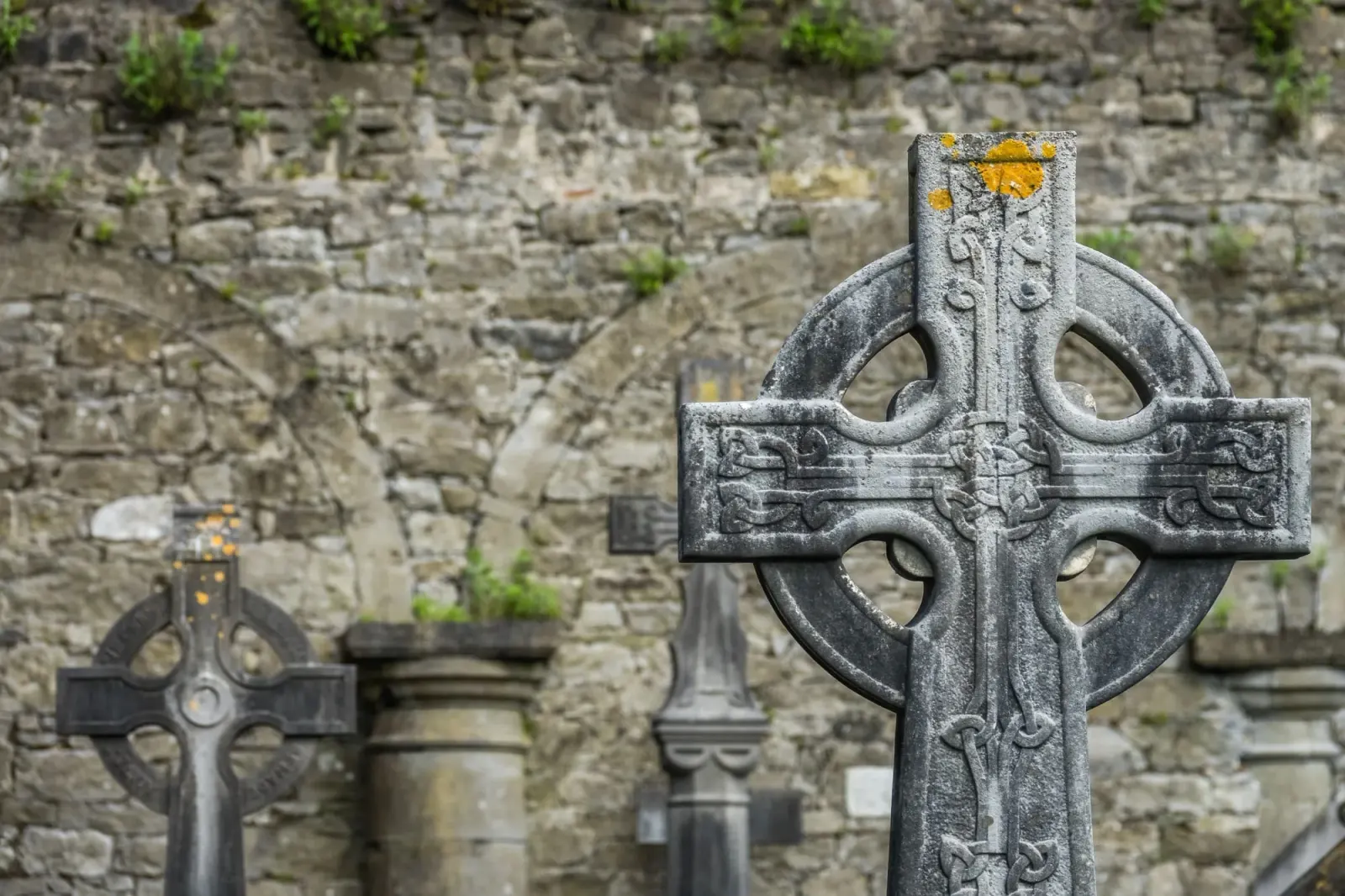
Long before anyone was called Cornish, people were living and thriving in what we now call Cornwall. If you’ve ever visited the standing stones at Boscawen-Un1 or the weather-worn Lanyon Quoit,2 you’ve seen the marks left by Neolithic and Bronze Age communities. They farmed, traded, and buried their dead in ways that still leave a visible trace.
By around 2000 BCE, Cornwall was already trading tin – and not just with the neighbours. This was the age of international travel (for goods, at least), and Cornish tin ended up in places as far-flung as the Mediterranean,3 including the Iberian Peninsula, the Greek islands, Western Europe, and beyond. Not bad for a windswept peninsula.
These early societies weren’t ‘Cornish’ in the modern sense, but they set the stage: outward-looking, independent, and deeply tied to the land.
The Celtic Arrival: Language, Culture, and a Streak of Defiance
By about 500 BCE, the ancient Celts had made their way to Britain, bringing with them a culture that would leave a lasting mark on the west. In Cornwall, the Celtic influence took root in the form of the Brythonic branch – shared with Wales and Brittany – and it’s from this that the Cornish language, Kernewek, eventually developed.4
The Romans came to Britain in 43 CE, but in Cornwall, their impact was limited. There are traces – coins, some settlements, the odd road – but no grand villas or military forts. Cornwall stayed largely outside the empire’s direct control, and as a result, its Celtic culture remained relatively undisturbed.5
Even after the Romans left, Cornwall didn’t slide into the Anglo-Saxon fold. It became part of a kingdom known as Dumnonia, and for a while, the people of Kernow had their own kings, their own churches, and their own very clear sense that they were not English.6
Saints, Strongholds, and a Brush with Arthur
After Rome, the Cornish story takes on a blend of fact and folklore. Christian missionaries arrived from Ireland and Wales, setting up churches and hermitages. Saints like Petroc, Piran, and Ia became household names, and today you’ll still see them on road signs and pub names from Penzance to Bodmin.7
At the same time, Cornwall’s rulers built strongholds and forged legends. Tintagel Castle is perhaps the most famous, dramatically clinging to a cliff and steeped in stories of King Arthur, and while no one’s found a round table there just yet, archaeological digs have uncovered imported pottery and buildings dating back to the 5th and 6th centuries.8
This was a time when Cornwall was still very much its own place; Christian, yes, but culturally closer to Wales and Brittany than to London, or even Scotland.
Language and Loss: The Fight to Stay Cornish
As the Anglo-Saxons moved westward, Cornwall gradually lost its political independence. The Battle of Hingston Down in 838 was the final blow, and over time, English law and power crept in.9 But the culture didn’t go quietly.
The Cornish language continued to thrive well into the Middle Ages, and in fact, by the 14th century, it had developed its own dramatic tradition in the form of The Ordinalia, a series of religious plays written entirely in Cornish, which is still one of the most important works in the Celtic literary tradition.10
But pressure was mounting… By the 16th century, the spread of English – in churches, courts, and schools – was squeezing Cornish out, and then came the Prayer Book Rebellion of 1549, which was a direct response to the English government imposing a new Book of Common Prayer in a language many Cornish people didn’t speak. The rebellion was brutally crushed, and with it went much of the region’s linguistic confidence.11
From Mining to Migration: A Global Cornish Identity
Even as the language faded, the tenacious Cornish identity found other ways to endure, and during the 18th and 19th centuries, Cornwall became a global centre of mining. Its tin and copper were in demand worldwide, and its engineers – known for building massive engines and deep-shaft mines – were considered the best in the business.
When the mines began to decline, thousands of Cornish people packed up and emigrated; they went to Australia, South Africa, Mexico, the US, New Zealand, Portugal ,and even as far as Slovakia, and Serbia …they even worked alongside German miners. Wherever there was rock to be drilled and ore to be hauled. They took their traditions, their surnames, and their pride with them, creating what historians now call the Cornish Diaspora.12
In some ways, Cornwall’s global spread helped preserve its culture, and you’ll find Cornish chapels, choirs, and pasty recipes popping up all over the world – a reminder that you can take the Cornish out of Cornwall, but you can’t take Cornwall out of the Cornish.
I am text block. Click edit button to change this text. Lorem ipsum dolor sit amet, consectetur adipiscing elit. Ut elit tellus, luctus nec ullamcorper mattis, pulvinar dapibus leo.
Revival: Bringing Kernewek Back from the Brink
By the early 20th century, Cornish as a community language had all but disappeared – it seems that Dolly Pentreath of Mousehole, who died in 1777, is often (though not definitely) cited as the last native speaker.13
But that wasn’t the end. In 1904, Henry Jenner published a handbook on Cornish, and the revival began, and by the 1980s, language classes were popping up, bilingual signs were appearing, and Cornish had found its way into Celtic music, festivals, and public life, shared across the Celtic nations, including places like Galician Spain.14
In 2002, Cornish was officially recognised by the United Kingdom under the European Charter for Regional or Minority Languages.15 Then in 2014, the Cornish people were granted national minority status, finally putting them on the same cultural footing as the Scots, Welsh, and Irish, and even the Isle of Man, with whom Cornwall shares much early Gaelic influence.16
Being Cornish Now: Identity in the 21st Century
Today, being Cornish means different things to different people. For some, it’s about ancestry and language. For others, it’s political – a way to push back against rising house prices, second home ownership, and a sense that Cornwall’s needs aren’t always heard in Westminster.
There’s growing support for local autonomy, even a Cornish Assembly, and campaigns like Kernow Matters to Us and parties like Mebyon Kernow are working to keep Cornish identity visible and relevant.
Meanwhile, Kernewek is having a bit of a renaissance… It’s now taught in some schools, used in signage, and supported by a 10-year language strategy launched by Cornwall Council.17 A small number of people speak it fluently, but more use it for greetings, music, or social media. It’s not everyday speech yet, but it’s no longer a forgotten one either.
Conclusion: The Past Still Matters
So, who were the Cornish? They were farmers, miners, saints, rebels, and poets. They were Celts who kept speaking their own language long after the neighbours gave up. They were people who didn’t quite fit the mould, and liked it that way.
And they still are.
Today’s Cornwall might be full of surf shops, art galleries, and Airbnb rentals, but its heart is still ancient, and those Celtic roots haven’t vanished; they’ve just changed shape. They live in the stories, the place names, the protests, and the pride, and they’re in the pasty you buy in Porthleven and the flag someone waves on St Piran’s Day.
In short: the Cornish never went away. They just kept going, adapting, travelling, speaking, and for many, discovering their roots for the first time.
Article Sources
- Boscawen-ûn stone circle (2025) Cornish Ancient Sites Protection Network. Available at: https://cornishancientsites.com/ancient-sites/boscawen-un-stone-circle/ Boscawen-Un[↩]
- Collyer, C. (no date) Lanyon Quoit chambered tomb / dolmen – northwest of Madron, Cornwall. Available at: http://www.stone-circles.org.uk/stone/lanyon.htm Stone Circles[↩]
- Boag-Wyllie, A. (2023) A brief history of mining in cornwall, Wilderness England. Available at: https://wildernessengland.com/blog/mining-cornwall/ Wilders England[↩]
- Writer, S. and T. (2023) Is Brythonic the native language of the British Isles?, The Scotsman. Available at: https://www.scotsman.com/heritage-and-retro/heritage/brythonic-language-of-britain-explained-4147943 The Scotsman[↩]
- SeaDogIT (2020) Roman Cornwall, Cornwall Heritage Trust. Available at: https://www.cornwallheritagetrust.org/timeline/roman-cornwall/ Cornwall Heritage Trust[↩]
- Ertach Kernow – Kings and Cornwall’s History (2023) Kowethas Ertach Kernow – Sharing Cornwall’s historic, cultural & environmental heritage. Available at: https://www.cornwallheritage.com/ertach-kernow-blogs-2022-2023/ertach-kernow-kings-and-cornwalls-history/ Cornwall Heritage[↩]
- White, S. (2022) Cornwall’s bizarrely named pubs – Kilden Mor, Kilden Mor. Available at: https://kildenmor.co.uk/cornwalls-bizarrely-named-pubs/ Kildenmor[↩]
- The Once and Future Site – Anastamos (2017) Chapman.edu. Available at: https://anastamos.chapman.edu/index.php/portfolio-item/the-once-and-future-site/index.html Anastamos[↩]
- Coleman, P.E. (2025) The last battle for Cornwall. Cornwall Yesteryear. Available at: https://cornwallyesteryear.com/the-last-battle-for-cornwall-by-patrick-e-coleman Cornwall Yesteryear[↩]
- Hall for Cornwall (2023) Storypoint 1: The Ordinalia. Hall for Cornwall | Theatre & Arts in Cornwall. Available at: https://www.hallforwww.cornwall.co.uk/heritage/storypoint-1-the-ordinalia/ Hall for Cornwall[↩]
- Ridgway, C. (2017) The Prayer Book Rebellion 1549 – the Tudor Society, Available at: https://www.tudorsociety.com/prayer-book-rebellion-1549/ Tudor Society[↩]
- Hawley, E. (2021) The Cornish diaspora, Notes from the U.K. Available at: https://notesfromtheuk.com/2021/02/05/the-cornish-diaspora/ Notes from the UK[↩]
- Cornwall Guide (2016) Dolly Pentreath – the last native speaker of the Cornish language. Available at: https://www.cornwalls.co.uk/history/people/dolly_pentreath.htm Cornwalls.co.uk[↩]
- Jenner, H. (2008) A handbook of the Cornish language. Project Gutenberg. Available at: https://www.gutenberg.org/ebooks/26192 Gutenberg[↩]
- UK Parliament (2025) Cornish language and heritage (education and recognition) – Hansard. Available at: https://hansard.parliament.uk/Commons/2025-03-26/debates/CB237B10-00F8-4DA3-A58B-FBA1BD796C92/CornishLanguageAndHeritage(EducationAndRecognition) UK Parliament[↩]
- GOV.UK (no date) Cornish granted minority status within the UK. Available at: https://www.gov.uk/government/news/cornish-granted-minority-status-within-the-uk GOV.UK[↩]
- Cornwall Council (no date) Cornish language programme. Available at: https://www.cornwall.gov.uk/parks-leisure-and-culture/the-cornish-language/cornish-language-programme/ Cornwall Council[↩]
Frequently Asked Questions
Yes, the Cornish are a Celtic people with deep roots in the ancient Celtic culture of Britain. Their language, traditions, and heritage link them closely to other Celtic nations like Wales, Scotland, and Ireland.
Celtic culture in Cornwall dates back to the Iron Age, brought by early Celtic tribes who built hill forts like Castle an Dinas and shaped the Cornish language, art, and traditions.
Cornish history is tied to other Celtic regions through shared language, art, and customs, linking Cornwall to Wales, Scotland, and Brittany over centuries of cultural exchange.
The ancient Cornish spoke Cornish (Kernewek), a Celtic language closely related to Welsh and Breton, used in daily life, trade, and culture until the 18th century.
Yes, Cornish (Kernewek) has been revived and is spoken by a growing community, taught in schools, celebrated at festivals like Cornwall Language Week, and recognised as a protected minority language.
Key Celtic traditions included seasonal festivals, storytelling, music, and crafts, with examples like Obby Oss in Padstow and Golowan Festival in Penzance celebrating ancient Celtic customs.
Celtic beliefs shaped Cornish folklore through myths and legends of fairies, giants, and sacred sites, celebrated in festivals like Obby Oss and Golowan, reflecting Cornwall’s ancient Celtic culture.
Cornwall’s Celtic past is seen in stone circles like Mên-an-Tol, hill forts like Castle an Dinas, burial mounds, and metalwork artifacts, revealing Iron Age Celtic tribes and their culture.
Cornish Celtic roots are closely related to Wales and Scotland, sharing language, folklore, and festivals, though Cornwall developed unique traditions like Obby Oss and Cornish mining culture.
Celtic Christianity shaped Cornwall through monasteries, saints, and holy sites, like St. Piran’s Oratory and St. Michael’s Mount, blending Celtic traditions with Christian practices.
Cornwall’s Celtic roots influence language, festivals, music, and folklore, with modern traditions like Obby Oss, Cornish wrestling, and the revival of Kernewek reinforcing local identity.
Yes, through genealogical research, DNA testing, and historical records, people can trace ancestry to Cornwall’s Celtic tribes and medieval Cornish families.
Written by
Lisamarie is a writer and researcher with a long-standing love for Cornwall – its towns, coastlines, folklore, and everything in between. Most of her work involves blogging and articles, often focused on places and people, which pairs neatly with her fiction writing since both sides of her work let her balance research with imagination (and indulge a fondness for obscure facts). She lives with her husband, daughter, and a cat called Cheryl in a cottage in the Kent countryside, where she writes, paints, and watches horror films.
35 articles published on Cornwall.co.uk
Read more from Lisamarie Lamb →
Comments
No comments yet — be the first to share your thoughts.
Leave a comment
Your email won’t be published. Comments are checked before they appear.